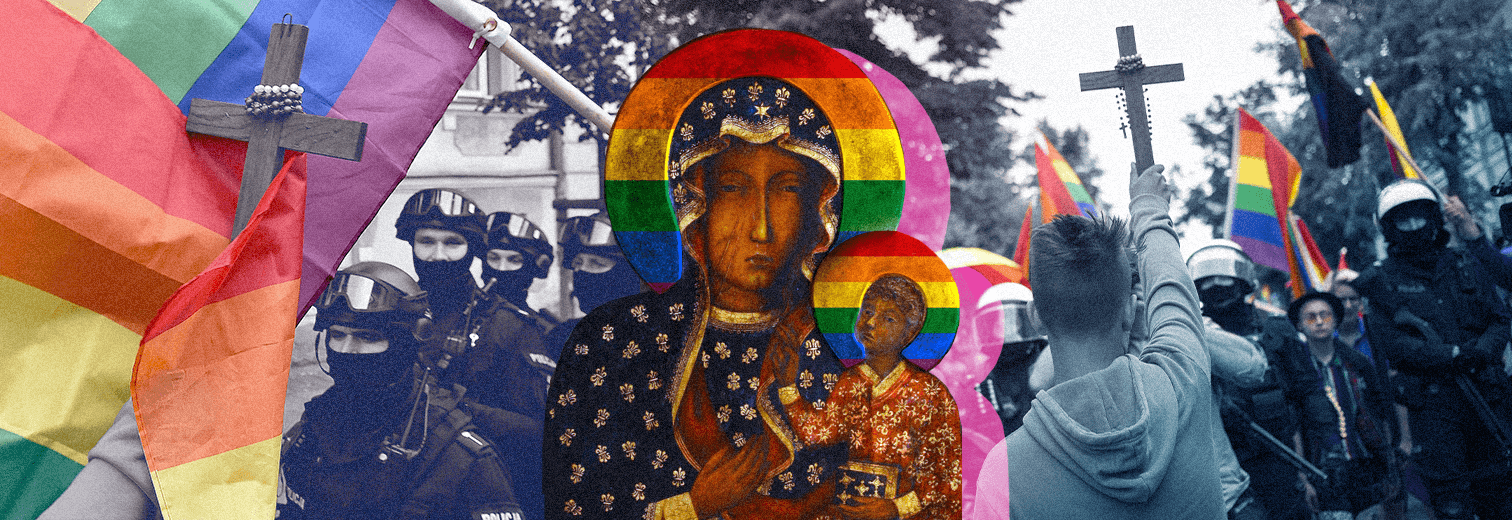
How Queer Soldiers Shape Ukraine’s Defense And Future

Ukraine’s war shows why LGBT rights are part of the struggle for democracy (Photo: NV)
“Don’t ask, don’t tell” remains the unspoken rule for LGBT service members in Ukraine’s Armed Forces. Hiding their identity protects them from prejudice and risks within their units. But being unable to formalize relationships with loved ones has left queer soldiers without protection in their most vulnerable moments: their loved ones and partners can’t visit them if they’ve been injured, are unable to make medical decisions on their behalf, do not receive bereavement benefits, cannot arrange funerals, or even be allowed to identify the body.
An invisibility to most of society, and a lack of legal protections—these are two of the main challenges that continue to haunt LGBT people in Ukraine. Their roots are historical. Valeria Shyrokova has traced the history of the LGBT movement in Ukraine from the Soviet era to the present. This extensive project is based on KGB archives and interviews with LGBT activists and researchers.
“In the eyes of the state, our partners are nobody.” The stories of two queer soldiers about love, death, and the right to be recognized
Maria Zaitseva was born in 2001 in Homel, Belarus. By age 19, she was protesting in central Minsk against the fraudulent presidential election carried out by Belarusian dictator Alexander Lukashenko , even without her family’s support. During one demonstration, she was wounded by a stun grenade. The photo of the bloodied young woman spread worldwide as proof of the Lukashenko regime’s brutality. In 2022, she fled Belarus for Czechia.
After the Russian full-scale invasion of Ukraine that year, Zaitseva began to volunteer with a Czech organization that helped Ukrainian refugees. It was there she met Ukrainian Anna Honcharova from Odesa Oblast, and the two later began dating. That same year, Anna fled the war to Prague. At the start of their relationship, Maria had warned Anna that she planned to join the Ukrainian Armed Forces. The following year, she did.
“Every Belarusian who wants to see Belarus free must fight on Ukraine’s side,” she often said.
In the Second International Legion, Maria began her service as a combat medic, saving wounded servicemembers on the front line in Donetsk Oblast. Later, she retrained as a sniper. She lived for the front—but never told her comrades she was a lesbian.
“She didn’t want people to treat her differently, to face unnecessary questions or explanations. She didn’t want anything distracting her from the fight,” her partner, Anna Honcharova, told NV.
In the Ukrainian Armed Forces, for the “next of kin” line in case of death, Maria listed a Belarusian political activist she had known since 2020, who helped Belarusians fleeing Lukashenko’s regime to Czechia with paperwork and resettlement.
“At first it seemed logical, but after two years together I asked Maria to name me instead. I was already helping her after she was wounded, and I had to pretend to be her sister just to be let into the military hospital. She refused—she didn’t want to explain to headquarters who I was to her,” Anna recalled.
On Jan. 17, 2025, Ukrainian Armed Forces sniper Maria Zaitseva was killed in fighting near Pokrovsk. Anna only learned of her partner’s death from one of Maria’s comrades near midnight, though the “next of kin” had been notified that afternoon.
“I asked why I was the last to find out. The ‘next of kin’ said, ‘I didn’t have the resources to tell you.’ That’s when I realized—I would not only have to survive the death of my loved one, but also fight for my rights,” Anna said.
Anna’s difficulties, beyond grief at the loss of her partner, began almost immediately. The “next of kin” tried to postpone the funeral to avoid turning it into a “political case,” and insisted on cremation, despite Maria informing her friends and Anna that she wanted to be buried in Lukyanivske Cemetery next to her fallen comrade “Minsk.” In general, the “next of kin” tried to act as Maria’s parents wished–though Maria had cut off contact with them in 2020.“All of us—the commander, comrades, and I—didn’t know how to deal with this. We had all heard Maria’s wishes, but the ‘next of kin’ demanded proof in the form of a text message. We didn’t have that. In the end, we managed to defend her will. The ‘next of kin’ even helped find a place next to ‘Minsk.’ It was a tremendous loss, and also a tremendous struggle,” Anna said.
Maria’s funeral attracted controversy despite efforts to avoid politicization. By military tradition, before a coffin is carried to the hearse, it is draped with the State Flag of Ukraine. After burial, the flag is ceremonially handed over to the family. Maria’s coffin bore two banners — the Ukrainian and the Belarusian flags.
Anna held the flags in her hands as the only representative of Maria’s family.
“The ‘next of kin’ insisted the Belarusian flag had to hang in Sviatlana Tsikhanouskaya’s office (the Belarusian president-in-exile – ed.) in Prague, and that I should hand it over immediately,” Anna said.
“This was happening right in the middle of the farewell.”
The funeral also featured religious elements – again, despite Maria’s stated atheism and wish to avoid religious trappings.
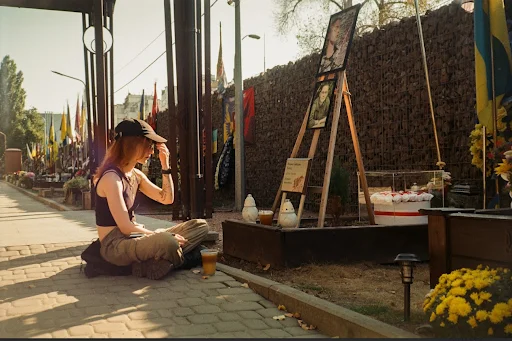
Anna Honcharova at the grave of Maria Zaitseva. Lukyanivske Cemetery. September 2025 / Photo: Anna Honcharova’s archive
A few weeks later, Anna learned from Facebook that Maria had been posthumously awarded the Order of Courage. The award went to the “next of kin.” Maria’s partner was not notified.
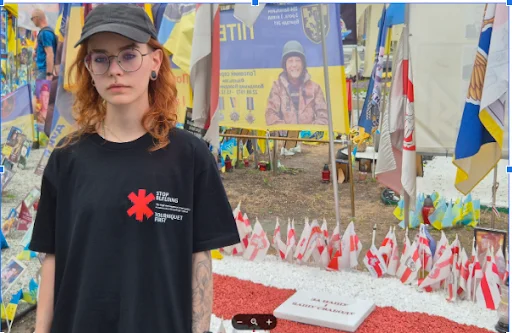
Anna Honcharova near Belarusian flags on Independence Square. September 2025. / Photo: Anna Honcharova’s archive
On Kyiv’s Independence Square, one portion of the memorial to the war dead is ringed with Belarusian flags. honoring the memory of Belarusians who have died defending Ukraine. Maria’s photo was once there, but it has since faded. Anna is now working to restore it.
“Being openly gay is my survival strategy in the Ukrainian army”
Openly gay soldier Oleksandr Zhuhan, a senior mortar gunner in the 241st Brigade, lives with the knowledge that his relationship does not legally exist in Ukraine.
“On Aug. 12, 2025, near Toretsk, I pulled out a wounded soldier. He’d taken a bullet in the leg and couldn’t run. I told him: ‘Crawl,’” Oleksandr told NV. “I ran in the other direction to distract the drones. And I did — they all chased me. My comrades thought I had been killed. For two days I had no contact, concussed. They were calling me after the battle, but I couldn’t hear. Eventually I crawled 13 kilometers with my injury. Those were the longest 13 kilometers of my life.”
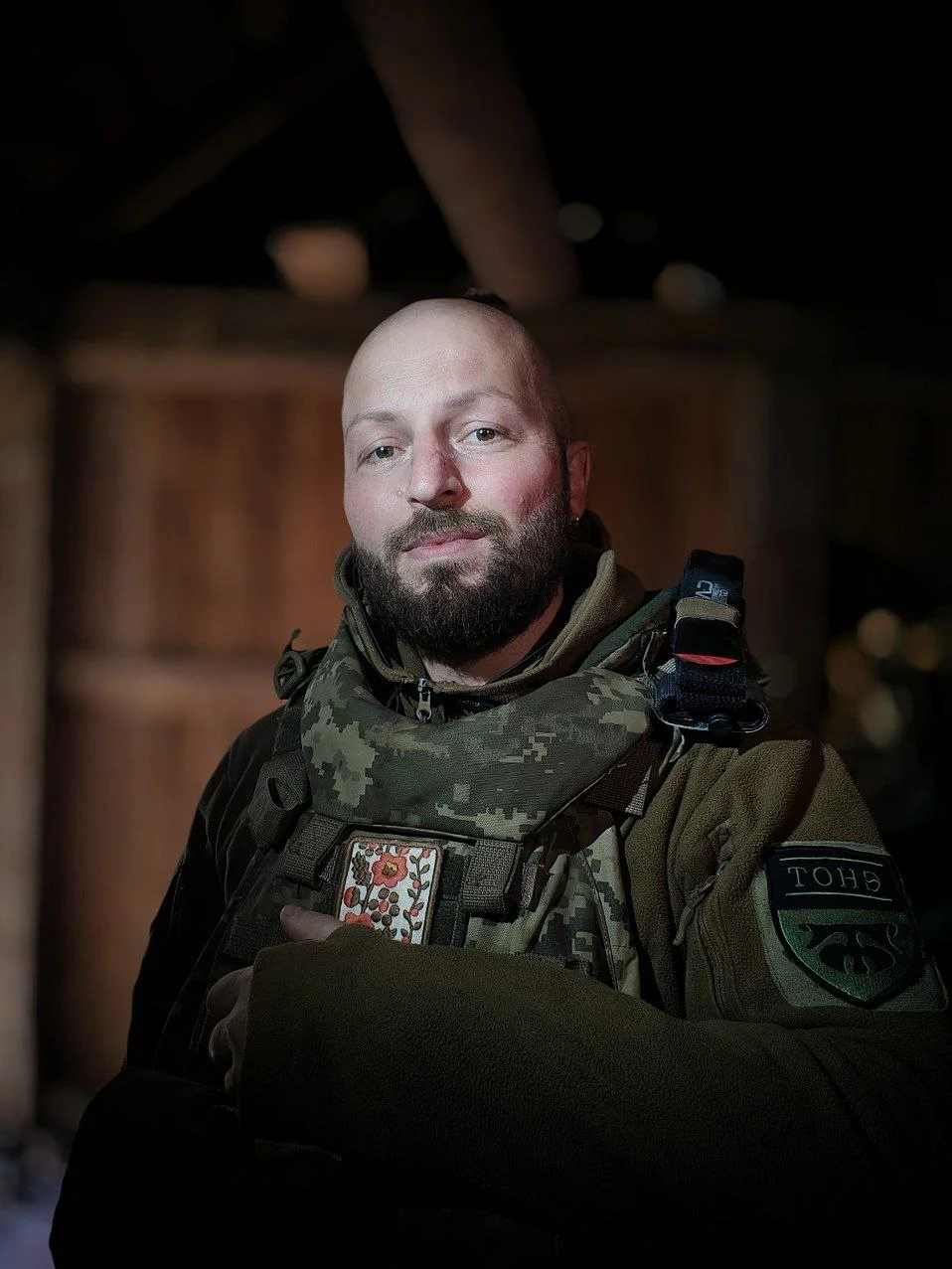
Oleksandr Zhuhan, photo after injury during recovery / Photo: Oleksandr Zhuhan’s archive
That was when Oleksandr thought: If I had died, what would have happened next?
“Of course, we signed papers about who would get state payments in case of death. The family of a fallen soldier is entitled to a one-time payment of 15 million hryvnias (about $370,000),” he explained. “But the law still puts relatives above all. The person you love, the one you’ve spent 10–15 years with, means nothing to the state.”
But it’s not only about money. The partners of LGBT servicemembers remain invisible to the system. They cannot enter intensive care. They have no right to make decisions about treatment or burial. They may not even be officially informed of a death.
Oleksandr’s former partner, with whom he mobilized in February 2022, is nonbinary. He calls them Toha, or Antonina. “Toha never refused a single task,” he said. “They replaced drunkards who couldn’t hold positions, dug out collapsed bunkers under drones. They did the jobs nobody else agreed to. But even that didn’t erase prejudice: ‘A man can’t call himself Antonina and say he’s a she.’”
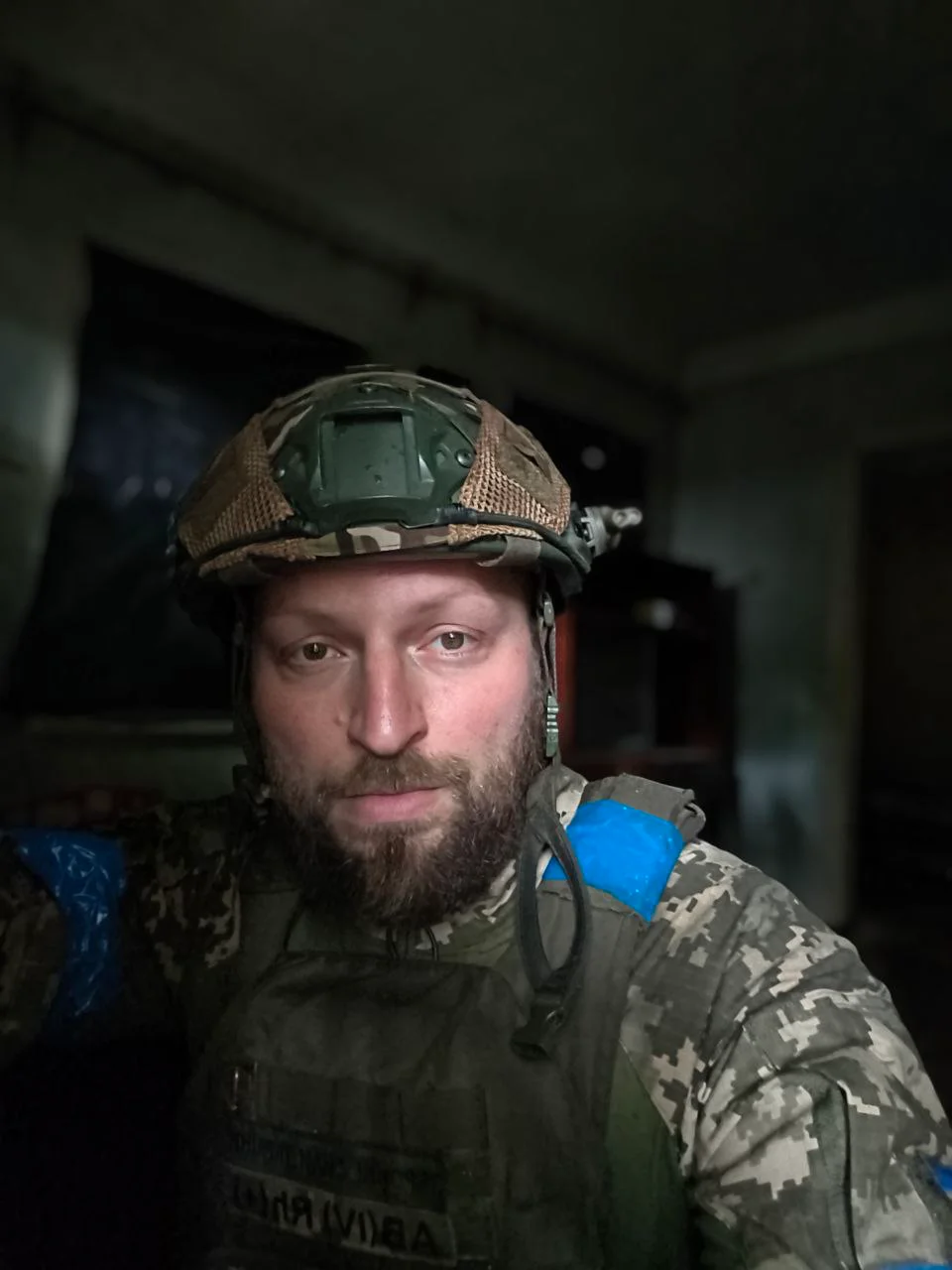
Oleksandr Zhuhan on duty in New York, Donetsk Oblast / Photo: Oleksandr Zhuhan’s archive
Oleksandr does not hide his orientation — he says this is his survival strategy.
“People tell me: you flaunt your gayness! But if, God forbid, I’m killed by my own, it would create a public scandal. I fight, I do my job like everyone else. But without the law, the closest person to me remains nobody. That has to change.”
Anna, who defended Maria’s last wishes after her death, and Oleksandr, who survived his brush with death, echo the common theme throughout their stories: the invisibility of their partners to the law and society, the lack of legal recognition for their relationship, and base prejudice.
This pain has roots in history. The prejudices and laws that render LGBT people “invisible” in Ukraine did not appear from nowhere. They stretch back to Soviet times.
Archives, testimonies, research: LGBT life in the Soviet era
The case of the queer KGB officer
Early 1960s. Kharkiv. Twenty-three-year-old law graduate Petro Oleksiienko comes home past midnight and tells his wife he was “at the bathhouse.” She files a complaint with the Communist Party: the bathhouse closes at nine, their marriage is sexless, and their life together is filled with arguments and fights. At party meetings, Oleksiienko’s colleagues ask bluntly why he “doesn’t live with her like normal people.”

Fragments of the interrogation protocol of the wife, where she describes how she complained about her husband to the party organization. / Photo: State Archive SBU, f. 5, op. 1, spr. 66876-fp, vol. 2
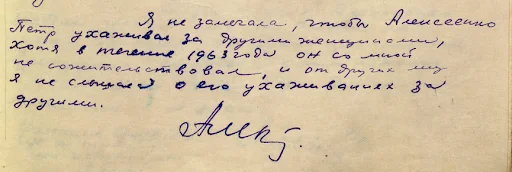
Fragments of the wife’s interrogation protocol, where she explains that she and her husband do not communicate. He does not court other women. / Photo: State Archive SBU, f. 5, op. 1, spr. 66876-fp, vol. 2
The case might not have drawn KGB attention if not for his offenses. Oleksiienko borrowed a large sum from KGB colleagues — supposedly for a refrigerator — and instead of repaying the loan, he disappeared. After 10 days without notice, the KGB declared him wanted.
His escape route led through Kharkiv, Belgorod, Zaporizhzhya, and Nikopol. At first he stayed in hotels, but checking in with documents made hiding difficult. So Oleksiienko changed tactics, spending nights with men he met in parks, in water lines, in courtyards. His criminal case filled six volumes with testimony from such acquaintances. He used fake names, once calling himself Stolnikov when meeting religious figure Kyrylo Sheremetiev.
During interrogations, Oleksiienko called Sheremetiev from Zaporizhzhya a “sectarian” because he organized underground prayers and collected donations for the church. To the KGB, this made him a suspicious figure. Oleksiienko came up with a plan: denounce the “sectarian” as a hostile agent and return to the agency as a hero. He wanted it to look as if he had not fled over unpaid debts, but had been working undercover. He planned to “catch the sectarian in the act” in a park, when men he would plant would invite the holy man to have sex. But the plan failed. The KGB arrested everyone — including Oleksiienko — on charges of sodomy.
However, to every charge, he repeated: “I personally never engaged in sodomy”, “I condemn it”.
But there was already testimony against him and other men in his circle, gathered through cross-examinations. Others relayed intimate details of their relationships.

Confession of Kyrylo Sheremetiev to sodomy / Photo: SBU archive
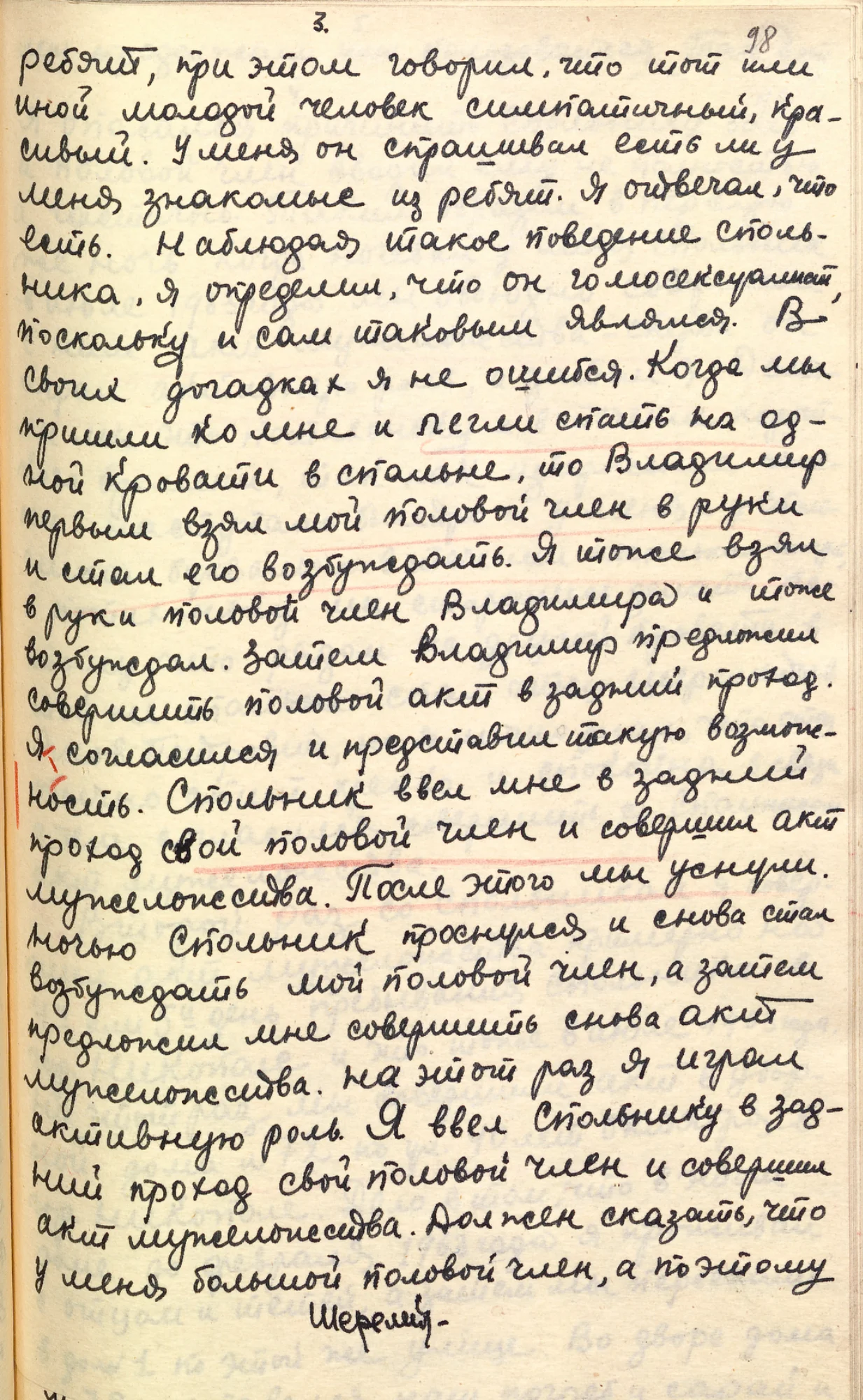
Description of the act of “sodomy” from the KGB interrogation protocol of Kyrylo Sheremetiev: 2 / Photo: SBU archive
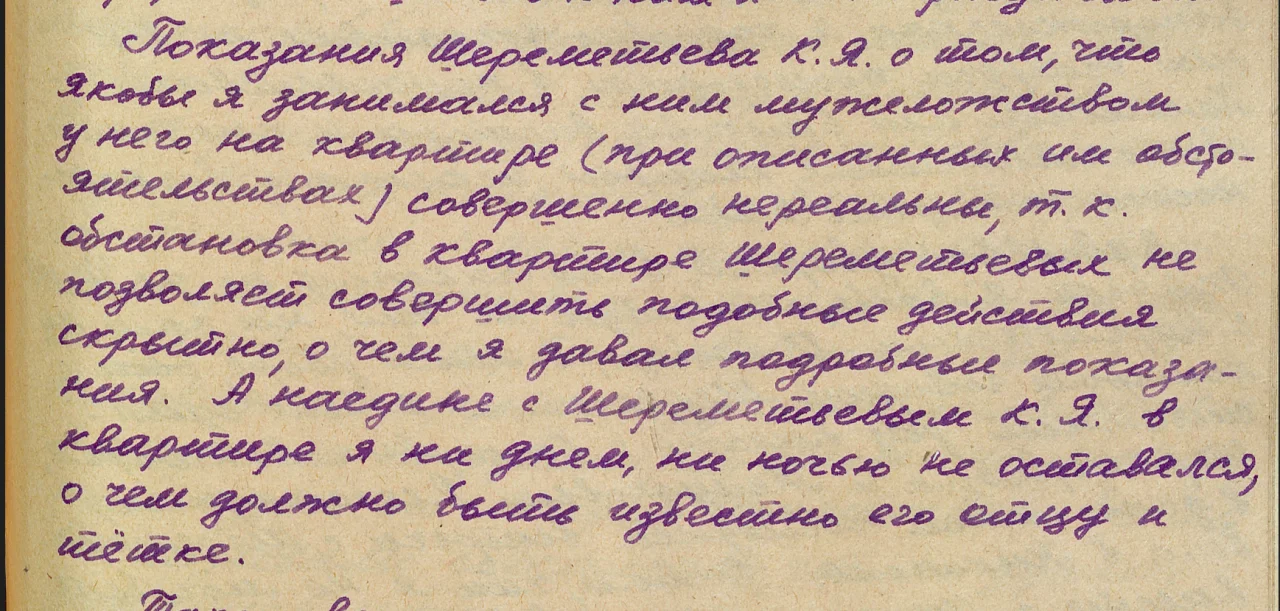
Oleksiienko did not admit to any of the alleged acts of “sodomy” he was accused of by others. Here is his response to the accusations. / Photo: SBU archive
For Oleksiienko, the story ended with a referral to Moscow’s Serbsky Institute, notorious for the Soviet era punishment known as “punitive psychiatry.” Doctors could not establish his homosexuality, but emphasized his “psychopathy.” The court sentenced him to six years in prison. The case file included a photo inscribed “to my beloved friend,” which the KGB treated as evidence.
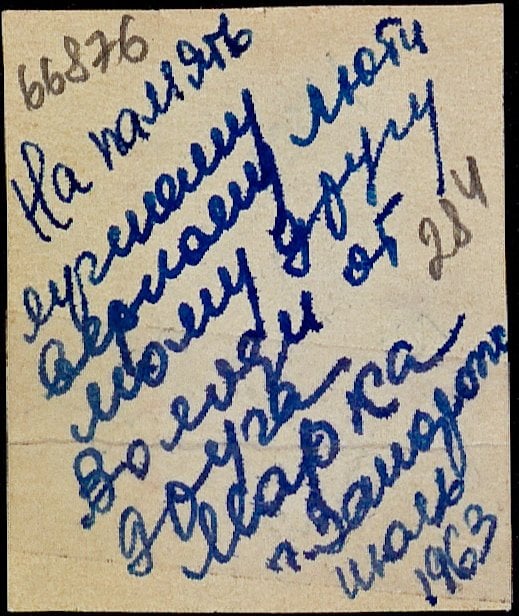
Signed photograph of Petro Oleksiyenko from the case materials / Photo: SBU archive
“This is more than just a personal tragedy,” explained Maksym Kasianchuk, PhD, a researcher of LGBT issues in Eastern Europe and Central Asia. “These archives show that in small and mid-sized cities of the Ukrainian SSR, male homosexual contacts were far more common than previously believed. And they didn’t depend on subcultures or capitals. Before the archives were opened, the narrative was that gay and bisexual people only existed in big cities — Moscow, St. Petersburg. But here we see them in Zaporizhzhya and Nikopol, where men still managed to meet, build relationships, and spend the night together.”
Criminalization and creativity under ban
Anti-sodomy laws also served as a political tool. Film director Serhii Paradzhanov was charged twice by the Soviet authorities: one of the charges was homosexuality, the other Ukrainian nationalism.
His personal file includes quotes that reveal why Soviet authorities saw him as dangerous. Among them: “Expel the red commissars from cinema” (personal file, HDA SBU, f. 16, op. 1, case 1104). In a letter to the publishing house Soviet Encyclopedia, he wrote: “Inform your readers that I died because of the genocidal policies of Soviet power” (1973, preserved in the file as material evidence). In a 1967 conversation with German filmmakers, recorded in a KGB report, Paradzhanov said: “Fascist policy dominates cultural life in the USSR. If I had gone abroad, I would never have returned.”
In another letter he added: “The Soviet authorities fear me because I make honest films” (cited in 1974 investigative materials).
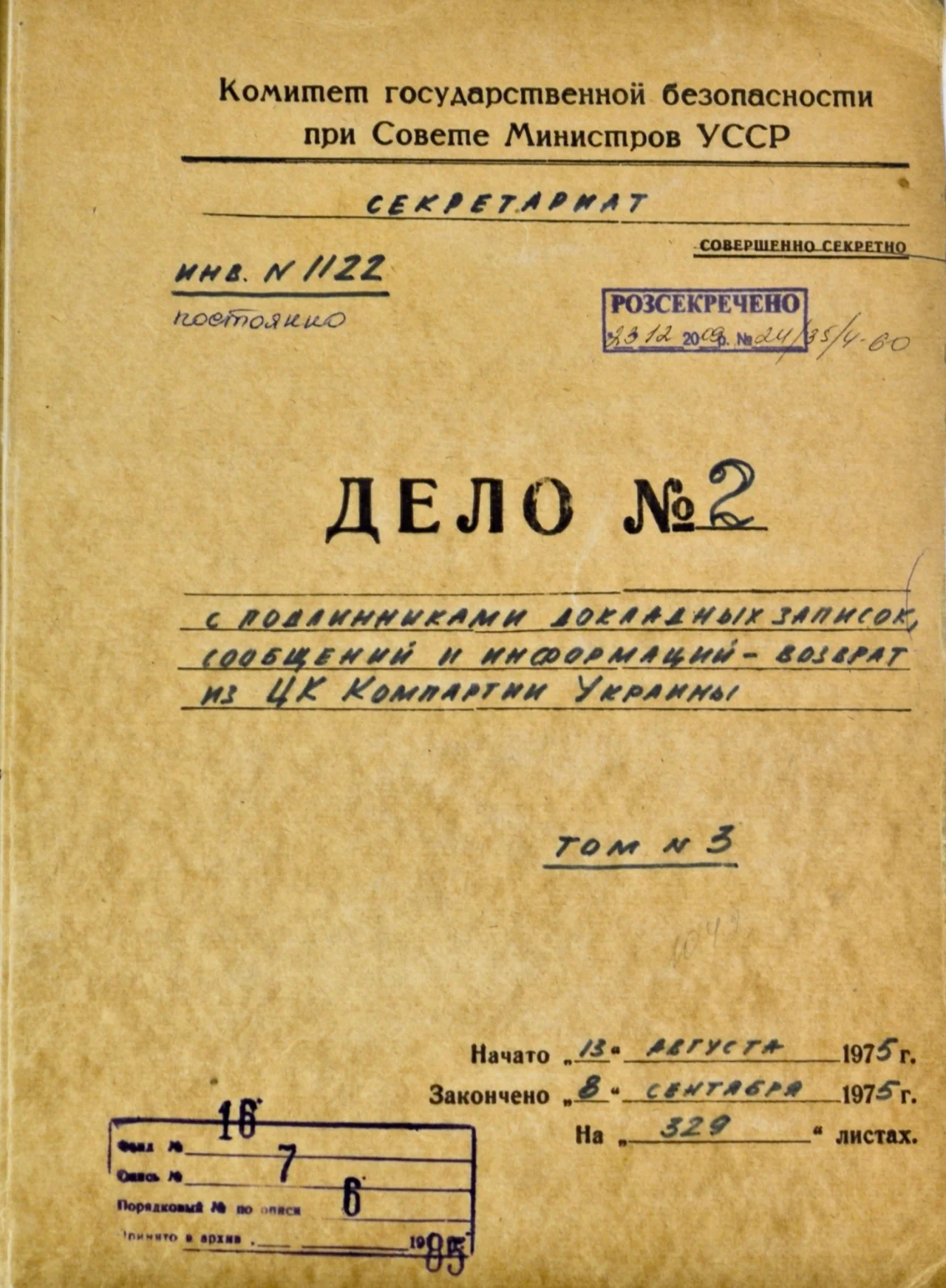
Cover of the KGB of the Ukrainian SSR archival file (1975) containing materials on film director Serhii Paradzhanov. His surname does not appear on the title page — a typical practice of Soviet security services, which marked documents with numbers to conceal the names of individuals even in internal circulation. / Photo: SBU archive
Paradzhanov was arrested in Kyiv in 1973. He was charged with “sodomy,” “distribution of pornography,” and “bribery.” The court sentenced him to five years in a penal labor camp. He served his sentence in Dnipropetrovsk Oblast. In 1977, after numerous public appeals from European intellectuals and artists — from Louis Aragon to Federico Fellini — he was released early, but placed under constant surveillance.
After his release, he was banned from living in Kyiv, Moscow, Leningrad, or Yerevan. Denied the chance to make films, Paradzhanov began creating collages. “They wouldn’t let me make films, so I started making collages. A collage is compressed cinema,” he said.
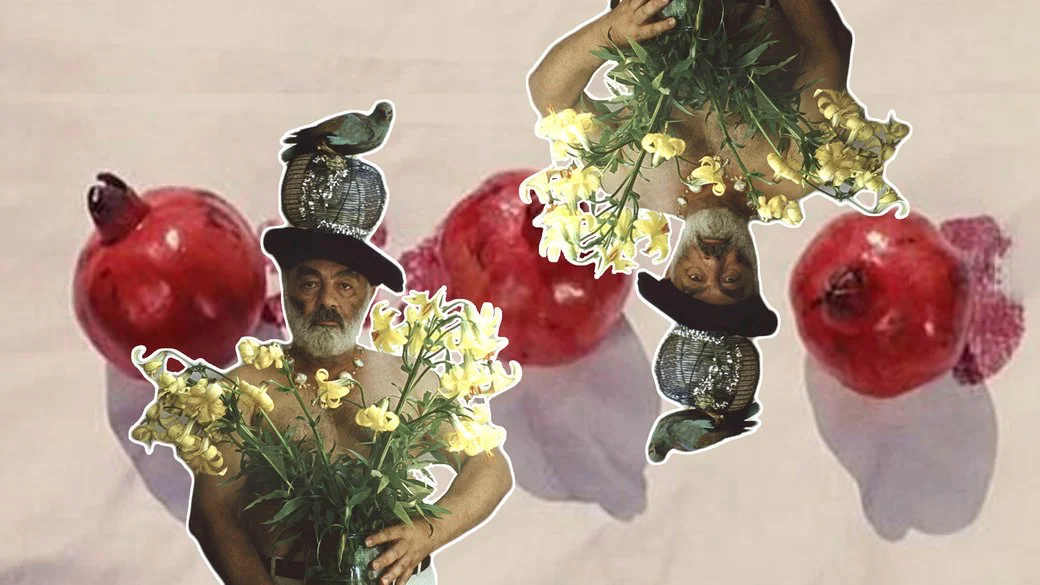
Photo: Suspilne
Soviet anti-homosexuality laws also stole 30 years of life from Naum Shtarkman. Born in Zhytomyr, he was a brilliant pianist, winner of an international competition in Lisbon, and bronze medalist at the first Tchaikovsky Competition — he could have become the face of Soviet music. In 1958, at the start of his career, he was arrested for “sodomy.” For nearly three decades, he was allowed to perform only in provincial halls. Because of his political status as a known gay man, Shtarkman was banned from major stages and from teaching. Only in 1987 did he return to the stage and to teaching at the Moscow Conservatory.
These stories clearly show why queer populations in the Soviet Union remained invisible — it was dangerous to be identified. Men were arrested, women could be sent to forced psychiatric treatment, and people were blackmailed or humiliated in “comrade courts.” A mere mention of deviation from the heterosexual norm could cost someone their job, university admission, or custody rights. Exact figures are unavailable, but historians cautiously estimate that over nearly six decades, around 60,000 people were convicted under the Soviet anti-sodomy laws, peaking in the 1970s and 1980s. Ukraine abolished the law in December 1991, the first post-Soviet republic to do so.
The lives of gay men, lesbians, and bisexuals beyond the archives
“Criminal cases aren’t the only source of information about gay and bisexual people in the USSR,” explained Kasianchuk. “Cities had plishky — public meeting spots for hookups and sex. In Kyiv — Hydropark and the underpass at Bessarabka, in Donetsk — ‘Nadka’ near the Krupskaya Library, in Dnipro — the park near the regional council. The pattern repeated: a park for discreet arrivals and departures, a restroom for sex, and an administrative building nearby. Wealthy men, with money and status, also came. Police either left them alone or released them quickly.”
Dates were sometimes arranged through graffiti, such as “I’ll be here at 3, I give oral.” But plishky were never safe havens. Especially in the last years of the USSR, so-called “repair crews” — groups of teenagers who wanted to “fix the faggots” — would come to mug them.
Listen to the Ukrainian podcast that accompanies this article and features Anna Honcharova on navigating hospital barriers, military bureaucracy, and secrecy while her partner Maria Zaitseva, a Belarusian sniper, fought and ultimately died for Ukraine in January 2025.
Kasianchuk says a safer alternative were kvartyrnyky — small private gatherings “for our own.” “Our own” meant people who wouldn’t inform the authorities and weren’t infected with syphilis. This mattered — receiving syphilis treatment could result in criminal prosecution for the patient and their contacts.
Relationships between queer people were largely sexualized. There was no way to openly declare identity, meet publicly, or talk freely. Sex became the only relatively safe niche for connection. Anonymity also meant invisibility: even participants in kvartyrnyky or plishky would not greet one another in public to avoid suspicion.
By the late 1970s and early 1980s, what is now called a gay subculture began to form. Before then, Kasianchuk says, there was no community — only individuals who did not yet see themselves as a collective and had no pride in belonging.
Women, unlike men, did not have a “plishka” history. Lesbian and bisexual relationships remained invisible.
“They hid in private domestic spaces, where sometimes same-sex ‘families’ formed — often without the participants even realizing it,” wrote researcher Maria Maierchyk in The Invasion of Homosexuality.
American historian John D’Emilio explained: men more easily overcame economic dependence on parents and could form clubs and networks. Women remained socially immobile.
That made them even greater targets for the authorities. In one sickening case, Soviet psychiatrist Y. Derevynska defended a dissertation titled Materials on the Clinic, Pathogenesis, and Therapy of Female Homosexuality. It was based on experiments with imprisoned lesbians in the Karaganda women’s labor camp between 1954 and 1960. Derevynska described “positive results” from using aminazine and psychotherapy.
Society didn’t view Soviet repression of homosexuality as a negative. The concept of “corrective” forcible intercourse was widespread – intended to “fix” queer women.
“Lesbian and bisexual relationships most often emerged in academic and intellectual circles — through word of mouth,” sociologist Dzvenislava Shcherba told NV. Lesbian and femme-presenting meeting spots appeared only closer to the dissolution of the USSR.By the late 1980s, newspapers carried ads like “woman seeks woman” — for example, in Speed.info.
Before the internet, lesbians sometimes relied on their appearance to “signal” their orientation: short haircuts, a ring on the thumb, a plaid shirt. The challenges lesbians and other queer women faced was a lack of information and the inability to meet or communicate, Shcherba recalled.
“Queer Donbas”: how the East offered anonymity — and a gathering point for the community
Donetsk, Ukraine’s onetime eastern industrial center, contained its own gay subculture, with a hotspot being the apartment of a man nicknamed “Kukla.” He had a VCR and a collection of porn.
“Back then [in the 1980s], people shared content through tapes. Folks came even from small towns: first they’d watch porn, then have dinner, then an orgy, and in the morning everyone went home satisfied,” explained Kasianchuk.
In the 1990s, Donbas — often associated with mines and factories — unexpectedly became a center of Ukrainian queerness. From the window of a “Presa” kiosk in Donetsk, you could spot the gay magazine One of Us. Anyone could buy it, but mostly “our own” did.
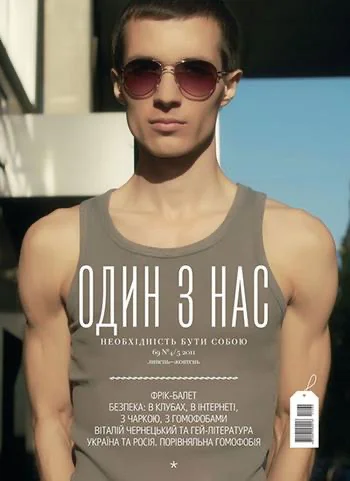
Cover of the One of Us magazine. Source: wikipedia.org

Activist Volodymyr Somov launched a dating service in Mariupol: he mailed out catalogs with contacts of those looking for partners. In a village near the town of Volnovakha, an alleged apostolic mission called “Rising Sun” hosted only men.
“They kept in touch with Americans, prayed, and not only prayed. The whole village knew about it, but it didn’t cause problems for anyone,” Kasianchuk recalled.
“Large urban areas offered anonymity,” the researcher noted. “The Donetsk-Makiivka agglomeration had almost two million people, 90% urban. In Lviv, for example, it was easier to travel to Poland for a disco than risk being exposed at home. That’s why eastern cities became the first hubs.”
In Moscow in the early 1990s, the “Pink Triangle” emerged — one of the first registered LGBT organizations in the USSR. When it collapsed, two volunteers returned to Luhansk. They brought back the idea that the community needed its own voice, its own texts, visibility. That’s how the magazine Our World appeared in 1994: A5 paper, no erotica — just texts about and for the community. The initiative later grew into the organization “Our World,” which still operates today.
Around the same time, another LGBT organization, “Liga,” emerged in Mykolaiv, initially connected to a local AIDS center. It quickly became independent, growing into one of the largest LGBT organizations in Ukraine. Its main focus was HIV/AIDS prevention among men who have sex with men, as international donors at the time funneled money specifically into that area.
“By 2004, you could count the organizations on your fingers,” said Kasianchuk. “Then, with the arrival of the Global Fund, their number shot up. But women’s initiatives had a much harder time without funding.”
In Kyiv, at the end of the 1990s, the first clubs began introducing “women’s nights” — safe events for lesbians and bisexual women. These were “regular” clubs or bars that agreed to dedicate one evening a week or month for women. Entry usually happened through word of mouth: tickets or invitations were distributed via friends, phone calls, or even text messages passed along within the community.
The early 2000s saw the formation of the “Energy” group – an information circle of lesbians and bisexual women who met every Saturday at a local Kyiv park. “They played sports: soccer, volleyball, sometimes just had picnics. It was a way to meet outside clubs, without alcohol,” said Dzvenislava. “For many young women, ‘Energy’ became their first entry point into the community. Students, journalists, office workers came looking for a circle of support.”
A new stage for lesbian initiatives in Ukraine began in 2000 with the creation of the “Women’s Network.” It was the first community to openly declare a feminist position and combine LGBT activism with a feminist perspective. At the time, not all lesbians identified as feminists — conservative views about “traditional gender roles” still persisted.
The “Women’s Network,” however, tried to break those stereotypes. Its members organized feminist educational camps, music festivals, sports events, and community-building activities. It became a platform not only for cultural and educational projects but also for nurturing a new generation of activists.
The organization ceased to exist in 2009, but many future leaders of today’s initiatives came from it — including Kharkiv’s “Sfera,” Kyiv’s “Insight,” and Kherson’s “Other.”
“The Women’s Network was important precisely because it defined itself as separate from gay organizations,” Shcherba explained. “Before that, women could be involved in the same organizations as men, but they didn’t have their own agency. At best, there were occasional events ‘for women,’ but it wasn’t the kind of visibility the Network provided.”
The move into the public sphere
As the number of organizations grew, they began trying to cooperate. At a certain point, a new generation of LGBT people joined them. That influenced the decision to step into public space.
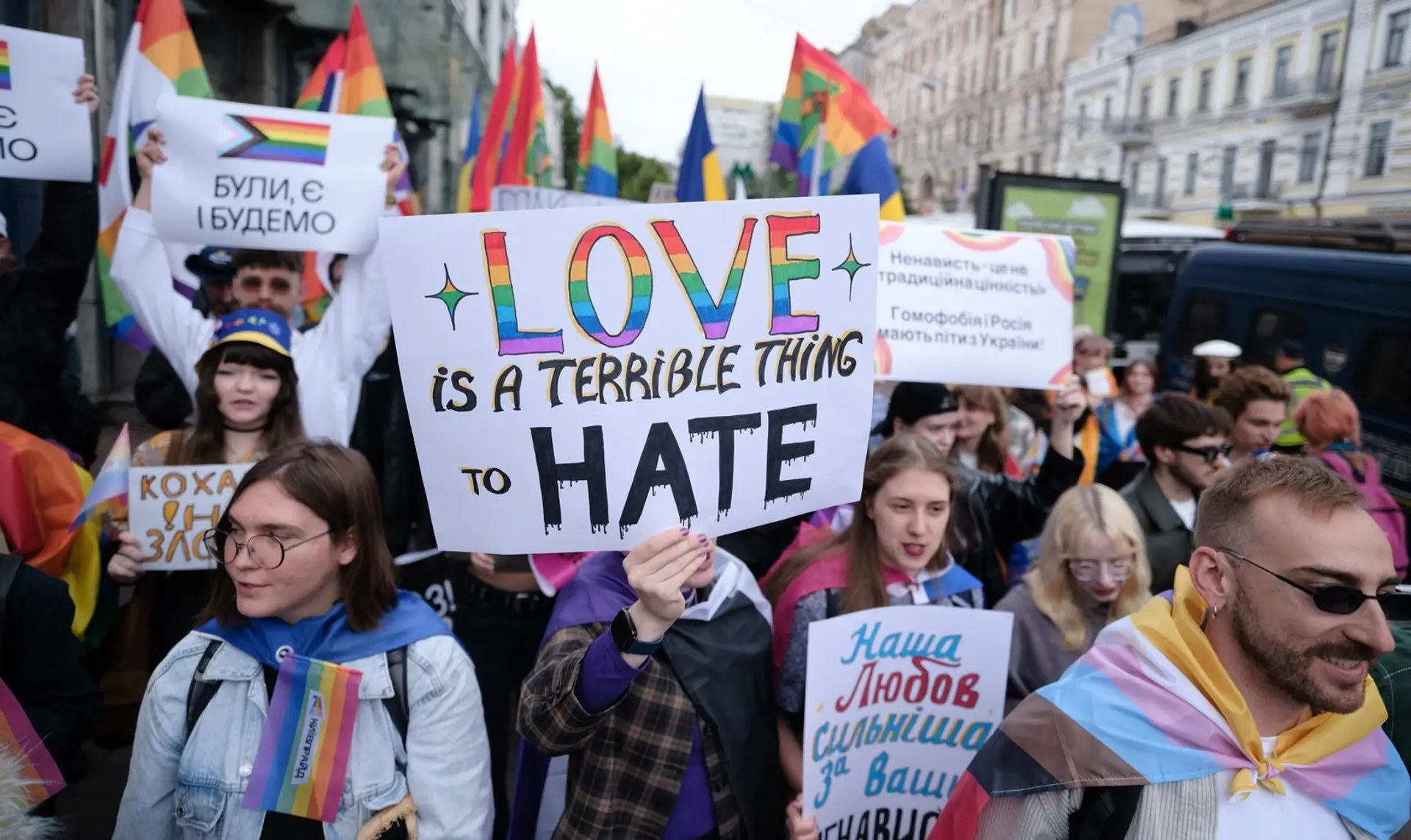
In 2012, Kyiv hosted the first march for queer rights. It stretched just 150 meters near the Dnipro metro station, and was remembered for a violent attack on participants right in front of television cameras.
“I was simply knocked to the ground,” recalled Kasianchuk, whose photo being beaten is one of the first images that comes up on Google when searching for Pride 2012. “But it was exactly that beating that flipped society’s perception.”
According to him, media monitoring showed that before May 2012, press coverage of LGBT issues was overwhelmingly negative. After the attack, things began to change. “People saw: these weren’t abstract ‘gays,’ but real people being beaten just for who they are.”
In the following years, Pride marches became regular. In 2013, the rally took place near the Dovzhenko Film Studio, surrounded by several police cordons. In 2015, the march was held on the Obolon embankment and accompanied by clashes. But over time, the number of participants grew, and deputies and diplomats began joining.
The year 2015 was also a landmark in legislation: as part of the “visa-free package,” Ukraine’s parliament amended the Labor Code to prohibit discrimination based on sexual orientation. It was the first step, but it has remained the only clear anti-discrimination mechanism so far.
War made the issue of LGBT rights even more urgent. In 2018, service members spoke anonymously about belonging to the community. For example, in Anton Shebetko’s project We Were Here, people in camouflage told their stories of military service. Still, most faces were hidden and voices distorted.
The next year, an LGBT military column appeared at Pride. That year’s march drew over 8,000 people, divided into 30 columns. Among them were also columns of LGBT+ people with disabilities and of parents of LGBT+ children.
Today, there is no doubt that LGBT people serve in the Armed Forces of Ukraine. Back in 2023, LGBT soldier Petro Zherukha filed a petition to the president urging support for bill No. 9103 “On Registered Partnerships.” It quickly gathered the required 25,000 signatures.
Zelenskyy acknowledged the problem but reminded that “it is impossible to amend the Constitution during wartime,” while adding that “Ukraine’s Ministry of Justice is currently working on comprehensive legislation to introduce civil partnerships.” The ministry registered the draft law in 2023, but parliament has yet to consider it.
Public opinion has shifted dramatically. If before 2012 most Ukrainians expressed negative views toward LGBT people, a sharp break came in 2016. “It looks like a switch,” said Kasianchuk. “For a long time, nothing happens — then click — and society becomes more tolerant.” According to the latest polls, more than 70% of Ukrainians support equal rights for LGBT people.
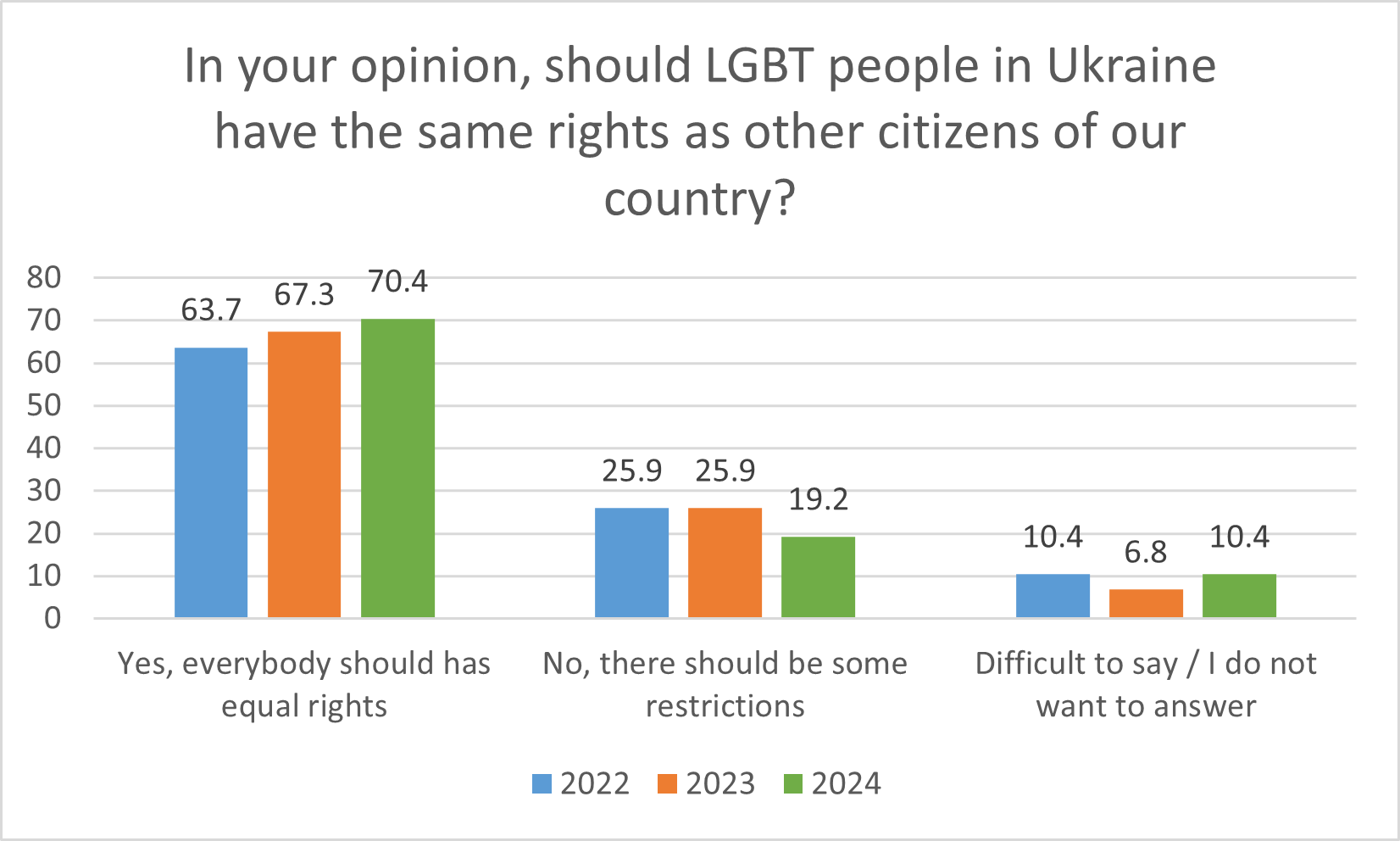
Chart: KIIS
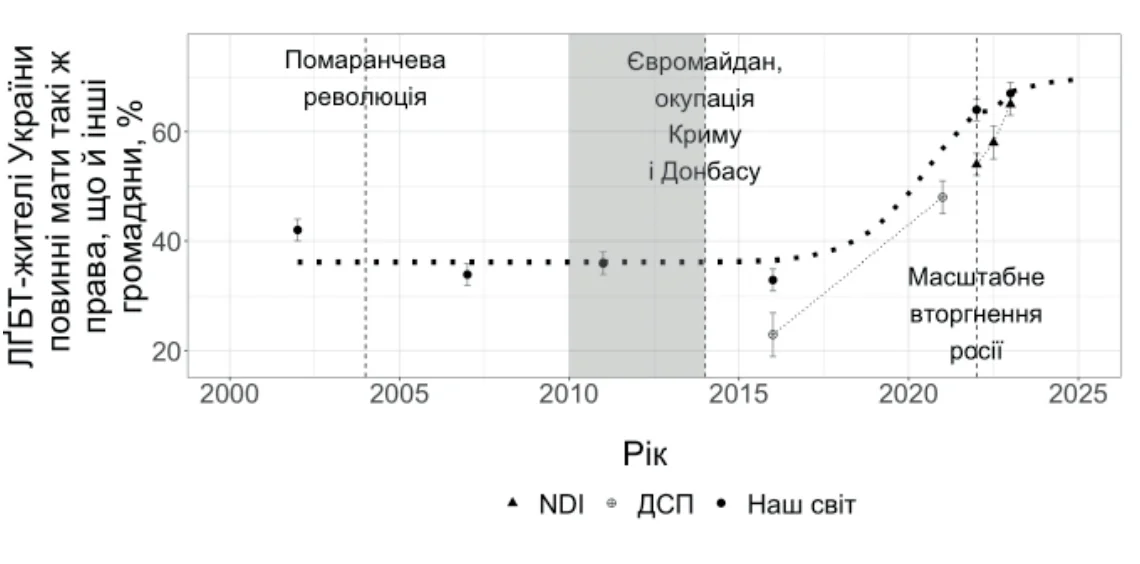
Changes in Ukrainian public attitudes toward equal rights for LGBT people, based on data from “Our World” Center, Donbas-SocProject (DSP), and the National Democratic Institute (NDI), from an article by Maksym Kasyanchuk. / Photo: Maksym Kasyanchuk
The fight for rights
During every visit to Kyiv, Anna goes to the cemetery. On her Instagram, there are photos of two drinks she brings to Maria’s grave — one for herself, one for Maria.
“I’m convinced civil partnerships must exist. Not being able to get into a hospital or even a morgue is a huge problem,” Anna told NV. “I was only able to see Maria’s body because her comrade made arrangements for me.”
She recalled how, on her psychologist’s advice, she tried to find support groups for people grieving the loss of a partner at war. But she wasn’t accepted:
“They openly told me it might not be comfortable for other women to have me there. After all, they lost husbands in the war, they have children,” Anna said. “That loneliness is deeply etched into grief. You feel excluded from society. It hurts. My family and a few friends keep me going. But I want to speak out so other couples aren’t left in the shadows.”
Oleksandr Zhuhan stressed that society must recognize the existence of LGBT people.
“When the war ends, Ukraine wins, reclaims all its territories, and Russia collapses into atoms, we’ll meet the homophobes on opposite sides of the barricades. But there won’t be a situation anymore where LGBT people are just victims being beaten,” Oleksandr told NV. “I see that the ones spewing homophobic nonsense are usually those sitting in headquarters. All the guys I met on the front lines didn’t talk about it, didn’t think about it — there, it just doesn’t matter.”
He concluded: “If I have the courage to fight against a gas-station country with 140 million people, then I sure as hell have the courage to fight for my rights in my own state.”
Read more articles from the Issue
Nothing Found
Criminalized and Invisible: The Long Fight of Queer Ukrainians
Conversion Practices in Germany: Violence in the Name of God
Valentyna Salon: Beauty Practices of the Ukrainian Queer Community
“There is a lot of shame in our community”
How Ukraine’s Queer Artists and Activists are Safeguarding LGBTQIA+ Memory in Wartime

Eastern Queerope Belarus: Stories of Resistance, Repression, and Cultural Renewal
Homophobia at the Core of Putinism’s Ideology
Strange Embrace: Paradoxes of Homosexual Desire in the Third Reich
Beauty as a Shelter: Ukrainian Women Rebuild Their Lives in Bucharest’s Salons

Angels from the East
Passing the Paintbrush: Historic Queer Jewish Artists in Berlin
Searching for Oneself at Random: How LGBTQI+ Communities Emerged in the Donetsk Region, 1991-2014

“I Have Nothing to Hide”

When We Stopped Hating Ourselves: Gay Life Under Persecution In Poland And Germany

Unsafe in The Country of Origin

The Bible, Putin, AfD: Four Misanthropic Myths to Abandon

Queer Resistance in Ukraine: Between War and Disinformation

No Safe Place

“A Place You Can Always Come To”: Shaping Polish Diasporic Queer Communities in Germany

Asylum Discourse: What Are “Safe” Countries of Origin for Queers?
19th Century ‘Friendships’ to 90s Drag: Eastern Queerope Returns
Queer Fronts
Moving Stories: LGBTQIA+ Ukrainian Refugees
Beyond the Binary
Queer Rights and Marriage Equality Under War, Authoritarianism, and Democracy
Gaps in Remembrance – Queer Biographies during National Socialism
Queer and Trans People Have Always Been Here. These Are Their Stories
New Stories from Eastern Queerope
The Prisoners with the Pink Triangle
Queerly Beloved: Romani Resistance Through the Ages
Intertwined Queer Stories: First LGBTIQ+ Museum in Eastern Europe
“The Smaller the Settlement, the Greater the Influence of Religion”: Belarusian Trans Non-Binary Activist in Poland
Queer Holocaust Voices – the Price of Silence
Forgotten Stories of Eastern European Queer Heroes
“I Accept Myself with All My Features”: Ukrainian Queer Person and Her Identity in Catholic Poland
Belarusian on Bisexuality, Theatre and Emigration
Shelters, Help and Support: How Uzhhorod Became a New Home for Queer People
Diversity in Brandenburg: Queers Take a Stand
Being Yourself. How Kharkiv’s LGBTQI Community Fights for Their Rights