Asylum Discourse: What Are “Safe” Countries of Origin for Queers?
This article was originally published in German on Siegessäule
Those seeking asylum in Germany must prove that they are being persecuted in their home country because of their sexual orientation and gender identity. Recently, countries that are by no means safe for LGBTIQ+ people are being declared “safe.” A look at Georgia and Hungary
When it comes to the much-discussed topic of migration policy, a clear trend has been emerging for several years: Germany and the EU are working toward isolation. These are the times of border controls, restrictive payment cards (special credit cards that restrict where asylum seekers can spend money), and the suspension of family reunification. And now the German government classifies certain countries as “safe countries of origin.” People from these countries then have little hope of protection in Germany. Given the increase in the number of asylum applications based on LGBTIQ+ identity, the question arises: What does “safe” really mean for queer people?
The case of a gay Georgian man shows how this works in practice. The Düsseldorf Administrative Court confirmed Georgia’s classification as safe from persecution for LGBTIQ+ people, and his asylum application was rejected. In the country, which has been considered a “safe country of origin” since 2023, mass protests are currently taking place. The majority of the population is dissatisfied with the Russia-oriented government under the populist Georgian Dream party. Violent repression, especially against protesting women and queer people, has been documented.
Georgia: Protests despite penalties
“As a queer person, I experience everything that happens in Georgia,” says Neo, who asked to be identified only by his first name and not have his photo published. Like many others, Neo has been fined heavily several times for participating in protests. The situation is particularly unsafe for LGBTIQ+ people, who face a series of anti-queer laws in Georgia. One of these criminalizes the display of queer symbols in public spaces.
“Even if you wear something rainbow-colored during protests on the street, maybe just a Pink Floyd T-shirt, it’s considered propaganda, and you can go to prison for it,” Neo explains.
Nevertheless, the protests also give cause for hope: “Everyone is protesting. Even the people who would otherwise vent their hatred at you on the street. You stand next to them and together you defend democracy,” says Neo. And the LGBTIQ+ community continues to plan events, albeit in secret. Given this community solidarity, it feels difficult to emigrate. Neo is considering trying to leave the country on a work or study visa. A large part of the community has already left, Neo says.
“Many often risk everything to leave the country, without any certainty as to how it will end for them.” Friends of Neo who have applied for asylum in the EU report that it is a difficult process. Not least because they are not allowed to work while they wait for a decision. It is well known that anti-LGBTIQ+ laws and protests also exist within the EU, such as in Hungary – even though all EU countries are classified as safe. The Southeastern European country, which has been ruled for years by the extreme right-wing Viktor Orbán, has made headlines in recent months for banning Budapest Pride and the successful resistance to this ban.
Repressions persist within the EU
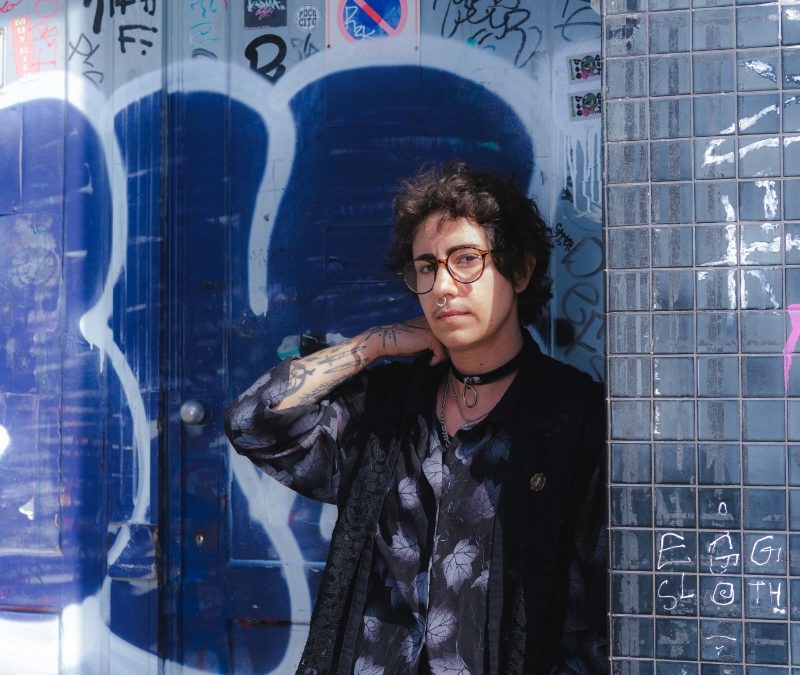
Hungarian activist Léna Hoschek lives in Berlin and has been fighting against the undermining of Hungarian democracy from here for several years. Léna sees the issue of safety as complex. The hate campaigns initiated by the government and legal restrictions on same-sex marriage, adoption, and transition have made life difficult. The situation is becoming increasingly hopeless, especially for trans people. Access to medical care and gender transition is becoming increasingly restricted, as the recent arrest of two doctors shows.

Hungarian activist Léna Hoschek lives in Berlin. Photo: Nat Gass
“I know that at least I have a good doctor here, which allows me to continue my transition and hormone therapy, and this provides me with a safe environment in Berlin,” Léna tells SIEGESSÄULE.
But even though legal and medical support is better in Germany, there are still inequalities in practice. “If something happens to me as a queer person, be it discrimination or harassment, I feel safer when the law is on my side. But that has to work in practice, too.”
Léna points out the financial inequalities that affect the feeling of security in Hungary and also in Germany. “I see this in many of my friends who, as queer or trans migrants, are struggling to keep their jobs. Simply because of the psychological strain of the difficult German job market and all the trauma they bring with them from their home countries.” Above all, the difficulty of supporting protests in their home countries from abroad and the lack of a supportive community made emigration very difficult as a queer person, Léna says.
“Queer safety” remains complicated
Hungarian author and politician Blanka Vay, who now lives in Brandenburg, shares a similar view. Blanka emphasizes the importance of economic security, along with legal protection for queer people. Those who leave Hungary in a state of financial and social stability would feel safe in Germany. Those who emigrate without sufficient funds would remain in a state of insecurity even there.
The idea of “queer safety” remains complicated – an interplay of legal situation, medical care structure, queer-hostile rhetoric, and economic factors.
Simply looking at the general security situation in the country or rankings of LGBTIQ+ rights is not enough (for example, Germany ranks 8th in the ILGA ranking, while countries such as Georgia and Hungary rank in the bottom quarter).
Individual fates cannot simply be forced into categories. Rather, the intersectional complexity of queer experiences must be taken into account in asylum decisions. Safety and protection remain inviolable human rights, even under the German Grundgesetz – their guarantee must not be decided in a competition between categories of discrimination and countries.
Read more articles from the Issue
Nothing Found
Criminalized and Invisible: The Long Fight of Queer Ukrainians
Conversion Practices in Germany: Violence in the Name of God
Valentyna Salon: Beauty Practices of the Ukrainian Queer Community
“There is a lot of shame in our community”

How Ukraine’s Queer Artists and Activists are Safeguarding LGBTQIA+ Memory in Wartime

Eastern Queerope Belarus: Stories of Resistance, Repression, and Cultural Renewal

Homophobia at the Core of Putinism’s Ideology
Strange Embrace: Paradoxes of Homosexual Desire in the Third Reich
Beauty as a Shelter: Ukrainian Women Rebuild Their Lives in Bucharest’s Salons

Angels from the East

Passing the Paintbrush: Historic Queer Jewish Artists in Berlin
Searching for Oneself at Random: How LGBTQI+ Communities Emerged in the Donetsk Region, 1991-2014

“I Have Nothing to Hide”

When We Stopped Hating Ourselves: Gay Life Under Persecution In Poland And Germany

How Queer Soldiers Shape Ukraine’s Defense And Future

Unsafe in The Country of Origin

The Bible, Putin, AfD: Four Misanthropic Myths to Abandon

Queer Resistance in Ukraine: Between War and Disinformation

No Safe Place

“A Place You Can Always Come To”: Shaping Polish Diasporic Queer Communities in Germany
19th Century ‘Friendships’ to 90s Drag: Eastern Queerope Returns
Queer Fronts
Moving Stories: LGBTQIA+ Ukrainian Refugees
Beyond the Binary
Queer Rights and Marriage Equality Under War, Authoritarianism, and Democracy
Gaps in Remembrance – Queer Biographies during National Socialism
Queer and Trans People Have Always Been Here. These Are Their Stories
New Stories from Eastern Queerope
Queerly Beloved: Romani Resistance Through the Ages
The Prisoners with the Pink Triangle
Intertwined Queer Stories: First LGBTIQ+ Museum in Eastern Europe
“The Smaller the Settlement, the Greater the Influence of Religion”: Belarusian Trans Non-Binary Activist in Poland

Queer Holocaust Voices – the Price of Silence

Forgotten Stories of Eastern European Queer Heroes
“I Accept Myself with All My Features”: Ukrainian Queer Person and Her Identity in Catholic Poland
Belarusian on Bisexuality, Theatre and Emigration
Shelters, Help and Support: How Uzhhorod Became a New Home for Queer People
Diversity in Brandenburg: Queers Take a Stand
Being Yourself. How Kharkiv’s LGBTQI Community Fights for Their Rights