No Safe Place
The article was initially published in German by Tagebuch, online and in print

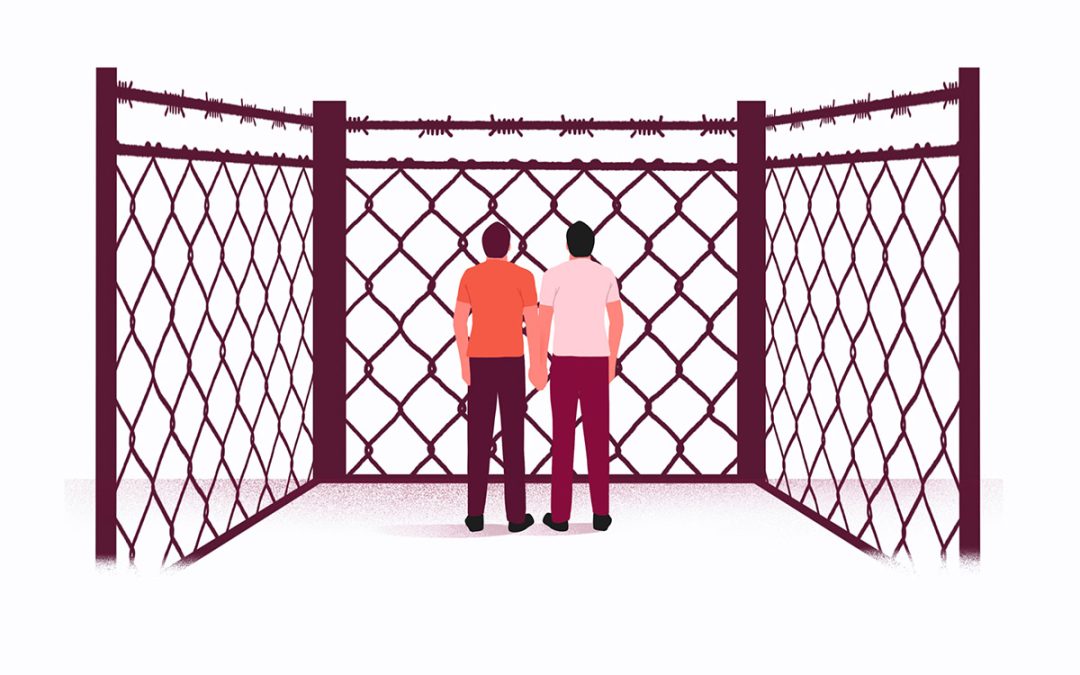
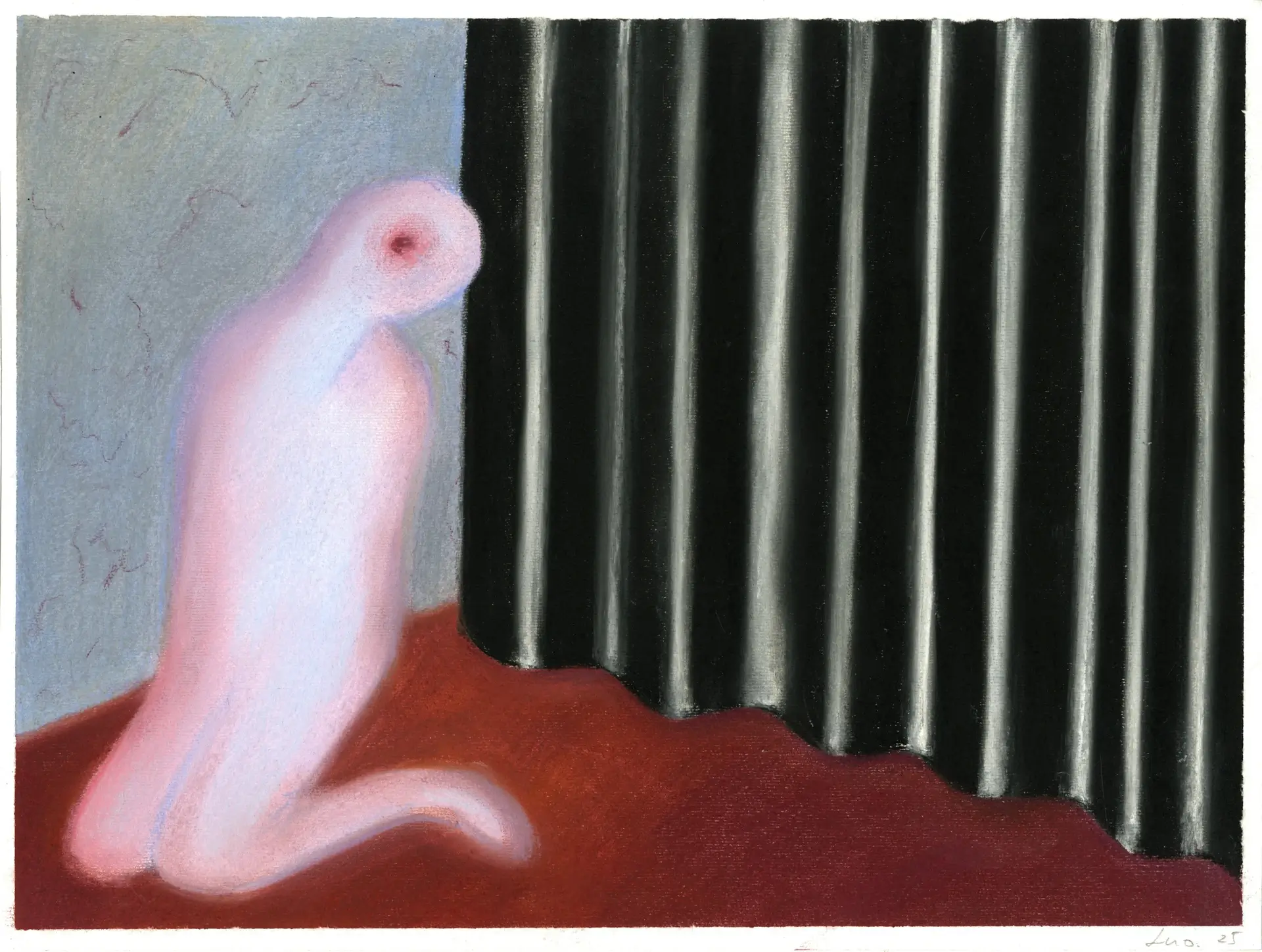
Illustration by Lou Kiss
Their initial destination was Poland. Their initial plan was just to escape war-torn Kyiv. This was what Frank and his partner Max were thinking about as they were fleeing Ukraine in March 2022; both are in their forties, neurodivergent, non-binary, and use male pronouns. Soon upon arrival, however, the couple decided to move further, as they saw very little opportunities in Poland for people like themselves. They managed to get to Iceland and have stayed there for over a year. “It was a nice place, friendly and with a good support system”, remembers Frank. As Ukrainian refugees, he and Max were offered language courses and financial aid. The couple felt safe.
“Where can I feel safe?” is an everyday question for many queer people. Countries are often categorised into “queer-friendly” — mostly those in the West, — or “queer-hostile”. But this simplified classification is outdated as anti-queer hostility is on the rise in the Western countries, such as the US and Austria, where attacks against queer communities have recently increased. Asylum legislation, which was supposed to protect queer individuals, cannot keep up with these developments. Queer people therefore find themselves at an impasse: their potential “new home countries” do not see them as “enough endangered”, whereas neither their countries of origin nor their “countries of choice” are actually offering them enough safety.
Starting anew
Even though Frank and Max arrived at a “nice place” in Iceland, the combination of forced displacement and lack of future perspectives took a profound effect on Frank’s mental health, his chronic depression impacting him very deeply. Also, the beginning of his medical transition was halted by the years-long waiting lists for transgender people to access healthcare. So, when Frank’s friends in the US offered to be visa sponsors for the couple, the two decided to start over again — and so Frank and Max crossed the ocean.
Many struggles were waiting for them in the US. Securing proper employment was hard despite Frank’s near-native English, and their relationships with the hosts soured pretty soon, leaving the couple in a precarious housing situation. But as queer people, they felt okay, even though they’ve landed in a conservative, “red” state. Frank was able to proceed with transition, and his HRT was covered even by the most basic insurance he received as a refugee, Medicaid. It was also legally possible to have a non-binary “X” gender marker in the documents. And, of course, Frank and Max were able to tie the knot: an option still unavailable to queer people in Ukraine in any legal shape, neither as a marriage nor as a civil partnership.
It was Trump’s victory in the elections that has rapidly changed everything for the worse. “It felt like he’d signed some crazy new law every day”, recalls Frank. The new government promptly wiped HRT off Medicaid (a decision that was later reverted), started bans of LGBT literature from the libraries, and eliminated non-binary gender markers. The migrant communities went under attack simultaneously with queer: just a week after Trump’s inauguration, the U4U program, under which Ukrainians could flee from the war to the US, was “indefinitely paused”. This amplified Frank and Max’s jobseek struggles, as the employers didn’t want to “risk hiring a Ukrainian who could be soon deported”.
That was when Frank and Max decided it was time to move again:
“We wanted to leave on our own terms before Trump would make us illegal”, recalls Frank.
But where would they go this time? The couple not having any assets back in Kyiv while fighting multiple mental and physical health challenges put returning to Ukraine out of question, the country still being at war — and still not offering any protection and acknowledgement to LGBTQ+ people and their families. Germany, on the other hand, seemed like a viable option first: queer-friendly, with strong and mostly immediate support for incoming Ukrainian refugees as well as multiple opportunities. Frank, who used to work as a model and actor, hoped to pick up some gigs upon arrival and revive his creative career. The couple applied for Temporary Protection, a special type of residence permit allowing displaced Ukrainians immediate access to the job market and healthcare. The application, however, was promptly rejected. The explanation sounded hard to believe for the couple: “You cannot receive Temporary Protection in Germany, since you have already had residence in the USA, and it was a safe country. Sorry”.
Trump’s anti-queer and anti-immigrant escapades were already all over the news, yet it wasn’t enough to change the authorities’ decision. Then the couple tried applying for asylum under the Dublin Convention procedure — a step Frank now refers to as a big mistake. They were placed in a refugee camp, barred from working or attending language courses. It was overcrowded and couldn’t offer decent healthcare, which resulted in Max getting a severe pneumonia which cut his respiratory function in half. “Food consisted mostly of bread and cheap cheese”, recalls Frank, “And my pre-diabetic husband definitely couldn’t exist on these amounts of bread. We weren’t allowed to cook anything ourselves. But hey, at least there were no rats running around, like in some other camps we were told about”. Another problem was that there was no “X” gender option for the camp ID system (or pretty much elsewhere) for non-binary people, so the couple was constantly misgendered.
The dire camp conditions, however, weren’t Frank and Max’s biggest problem: the system’s inability to fully comprehend their case was. The couple was quickly notified that their case was unlikely to be approved. Ukraine, their country of origin, wasn’t considered to be dangerous for queers. A denied asylum request would most likely result in Frank and Max being deported either to Poland or to Iceland. “They said we’d stand a chance only if one had been personally attacked as a queer person back in Ukraine and could prove it”, recalls Frank. Max actually has endured several attacks back in Kyiv and once was even abducted by some alt-right men — but proving this to German authorities now, several years later, is nearly impossible. Frank himself managed to escape violence by staying in the closet before leaving Ukraine.
Despite all this, Frank sounded hopeful until recently. A local queer organisation, Hyacinth e.V., connected them to an immigration attorney who is now waging a legal fight for the couple’s future in Germany, exploring all possibilities to delay deportation decision and allow the couple to stay legally. Initial plans and hopes for the future were starting to take shape: Frank was volunteering for a local theatre, hoping to turn it into employment. Max planned to start training as an animal keeper. The couple was also finally transferred from a refugee camp to a dorm, where it was easier to create some sort of a homely atmosphere.
But then a notification of impending deportation to Iceland came. Currently, their attorney is still fighting for them. But there is a chance that Frank and Max will soon have to start over again, — and then, probably, once more if displaced Ukrainians are sent back to their country of origin once (and if) the Russian war against Ukraine is over.
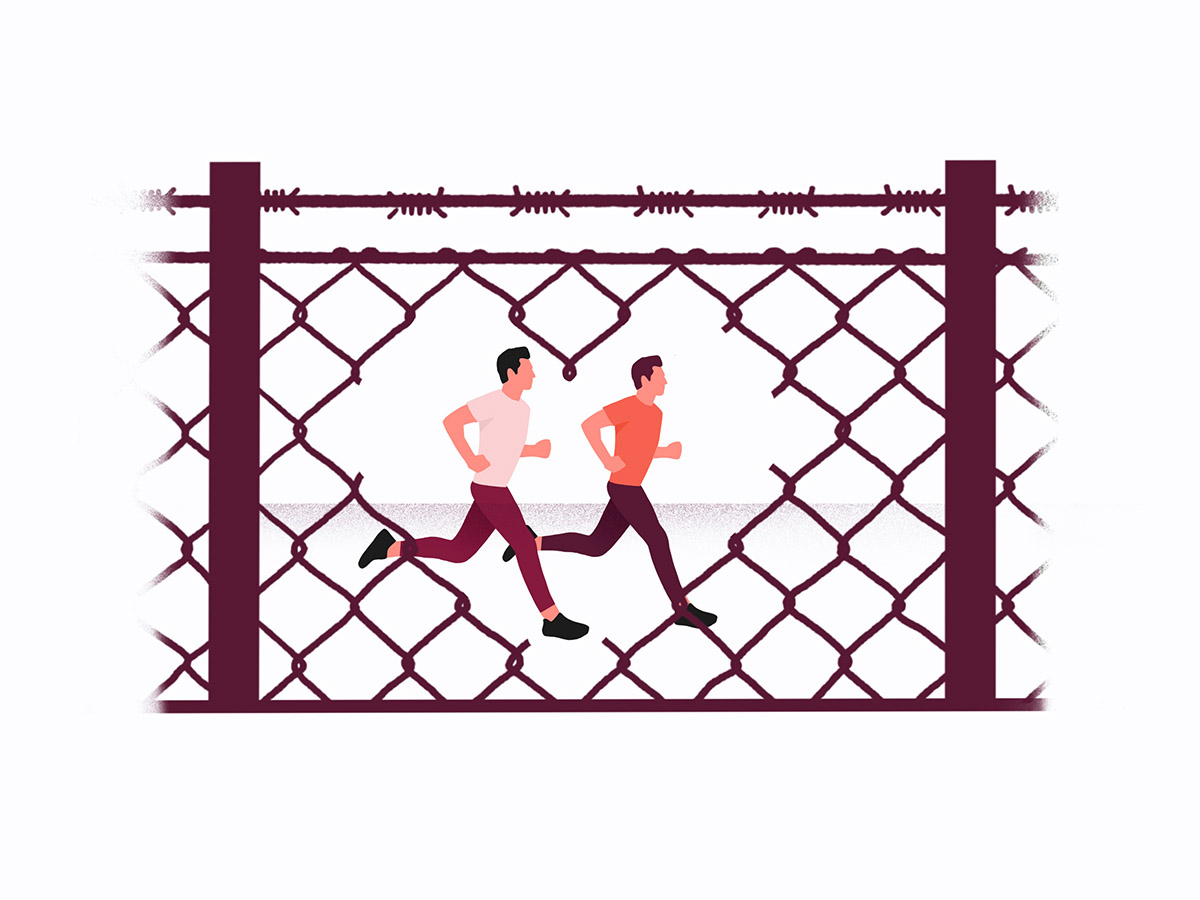
Illustration by Lou Kiss
Life on hold
Nastya, educator and activist from Belarus, was in her early twenties when she left the country in 2021. “Lukashenko came to power before I was even born”, she says. “I have never known a different Belarus. And as a queer person, I realised very early it wasn’t a place where I could spend my whole life”. The 2020 protests against the government and following mass repressions enhanced Nastya’s perspective. Her brother was arrested, and she herself was subpoenaed for police interrogation several times. At some point Nastya’s employers, a state education organisation, told her she needed to leave the country. “As soon as your employment contract with us expires, nothing will stop the authorities from throwing you to prison”, they said.
Nastya took this seriously and started looking for opportunities to leave. She didn’t want to apply for a humanitarian visa as each application was tracked by the government and would jeopardize her family. It took Nastya six months to find a volunteership in Germany: she entered the country on a volunteer visa and had spent a year working with refugees from such countries as Iraq, Syria, Nigeria — and then Ukraine. The beginning of Russia’s full-scale invasion of Ukraine put an end to Nastya’s last opportunities to visit Belarus safely: many of her friends were arrested during anti-war protests. Their chats with Nastya were read by the police, and the content of these chats was enough to arrest her upon arrival.
After a year in Germany, Nastya went to Vienna where she did a Master’s. As she graduated, the senses of joy and pride were mixing with growing anxiety: as a freshly graduated “third-country national” in the EU, Nastya received a “jobseeker visa”, and the countdown began. She had around a year to find a stable employment meeting the necessary income requirement to be allowed to stay in Austria. And she already knew it wouldn’t be easy as her job search had started several months prior to graduation, with no success.
Applying for a humanitarian visa at that point made no sense for Nastya: “Germany and Austria only ever issue very few such visas to Belarusians; one’d have to go to Poland or Lithuania to get some adequate support”, she says. “And if I applied for asylum, that’d mean putting my career and my whole life on hold for several years, because one cannot neither work nor travel while they process the application. I really didn’t want that”.
A year later, Nastya hasn’t found a local job yet. Her main obstacles are high requirements for German language proficiency as well as employers’ unwillingness to deal with non-EU citizens. Currently, Nastya works remotely for a Belarusian human rights organisation while continuing her Austrian job search. However, her current work increasingly resembles a volunteership, as funding opportunities for Belarusian organisations have been steadily drying up over the past several years.
No way back
At the university Nastya met a Ukrainian girl called Olya; they fell in love and became a couple. Olya, too, came under bureaucratic pressure upon graduation: unlike thousands of other Ukrainians, she wasn’t eligible for Temporary Protection as she was residing outside of Ukraine when Russia’s 2022 invasion started. She held the US “green card” (permanent residency permit), yet it was of little help now that Trump had won the elections. Luckily, Olya found a job soon enough, which provided her with a Rot-Weiss-Rot residence permit. The couple got married, and Nastya received a “family reunion” residence permit, tied to Olya’s job visa.
“For now, we have some sort of stability and relief”, says Nastya: “We can only hope Olya’s work contract gets prolonged next year”. In Austria, Nastya definitely feels safe as a queer person. However, she had faced some anti-LGBT discrimination there, too — like that time when she and Olya were denied a rental apartment after they said they didn’t need a second bed. “But at least I know the law protects me here, even if some people are homophobes.
The officials, no matter whether they like me or not, will have to protect me as a queer person if something happens to me”, says Nastya.
Back in Belarus, she mostly felt safe on the streets: “I could hold my girlfriend’s hand in public. Sure, kissing wasn’t a good idea, but otherwise most people would simply mind their own business”. Yet being queer instantly made her much more vulnerable to state repressions: “Belarusian LGBT community has always been a convenient target for state scapegoating”. In April 2024, the government equated the ‘depiction of non-traditional relationships’ — such as a photo of two men or two women holding hands — to pornography, punishable with up to four years of prison. In September 2024, a new wave of repressions against queer people began. This time, the state security forces are increasingly trying to recruit queer people as informants. Currently, the Belarusian government wants to impose fines for ‘positive statements’ about homosexuality, gender transition and childlessness — like in Russia. The local Belarusian queer community persists, asserts Nastya, but it has to stay completely under the radar.
In two years, Nastya’s Belarusian travel passport will expire. She will not be able to request a new one as since 2023 the Belarusian government has halted all passport renewals outside of the country. This means she won’t be able to travel anywhere: “Basically, I have to choose where I am okay to get stuck until I get another citizenship”, she says. Nastya doesn’t think she will ever be able to permanently return to Belarus, even if Lukashenko dies or gets overturned. “That would be enough for me to visit, but not to live there. I believe and hope things will eventually get better, also for the queer people. But I’m afraid it will take too long for same-sex marriages to be legalised in Belarus, or at least for those registered abroad to be recognised. Too long for me to ever be able to move back there with my queer family”.
Eugenia Seleznova is a Ukrainian author and a PhD Candidate at Central European University, Vienna.
Lili Somogyi is an activist, researcher, and journalist. She lives in Warsaw and Berlin.
Read more articles from the Issue
Nothing Found
Criminalized and Invisible: The Long Fight of Queer Ukrainians
Conversion Practices in Germany: Violence in the Name of God
Valentyna Salon: Beauty Practices of the Ukrainian Queer Community
“There is a lot of shame in our community”
How Ukraine’s Queer Artists and Activists are Safeguarding LGBTQIA+ Memory in Wartime

Eastern Queerope Belarus: Stories of Resistance, Repression, and Cultural Renewal

Homophobia at the Core of Putinism’s Ideology
Strange Embrace: Paradoxes of Homosexual Desire in the Third Reich
Beauty as a Shelter: Ukrainian Women Rebuild Their Lives in Bucharest’s Salons

Angels from the East
Passing the Paintbrush: Historic Queer Jewish Artists in Berlin
Searching for Oneself at Random: How LGBTQI+ Communities Emerged in the Donetsk Region, 1991-2014

“I Have Nothing to Hide”

When We Stopped Hating Ourselves: Gay Life Under Persecution In Poland And Germany

How Queer Soldiers Shape Ukraine’s Defense And Future

Unsafe in The Country of Origin

The Bible, Putin, AfD: Four Misanthropic Myths to Abandon

Queer Resistance in Ukraine: Between War and Disinformation

“A Place You Can Always Come To”: Shaping Polish Diasporic Queer Communities in Germany
19th Century ‘Friendships’ to 90s Drag: Eastern Queerope Returns

Asylum Discourse: What Are “Safe” Countries of Origin for Queers?
Queer Fronts
Moving Stories: LGBTQIA+ Ukrainian Refugees
Beyond the Binary
Queer Rights and Marriage Equality Under War, Authoritarianism, and Democracy
Gaps in Remembrance – Queer Biographies during National Socialism
Queer and Trans People Have Always Been Here. These Are Their Stories
New Stories from Eastern Queerope
Queerly Beloved: Romani Resistance Through the Ages
The Prisoners with the Pink Triangle
Intertwined Queer Stories: First LGBTIQ+ Museum in Eastern Europe
“The Smaller the Settlement, the Greater the Influence of Religion”: Belarusian Trans Non-Binary Activist in Poland
Queer Holocaust Voices – the Price of Silence

Forgotten Stories of Eastern European Queer Heroes
“I Accept Myself with All My Features”: Ukrainian Queer Person and Her Identity in Catholic Poland
Belarusian on Bisexuality, Theatre and Emigration
Shelters, Help and Support: How Uzhhorod Became a New Home for Queer People
Diversity in Brandenburg: Queers Take a Stand
Being Yourself. How Kharkiv’s LGBTQI Community Fights for Their Rights