Angels from the East
This article was originally published in Belarusian on GPress.info

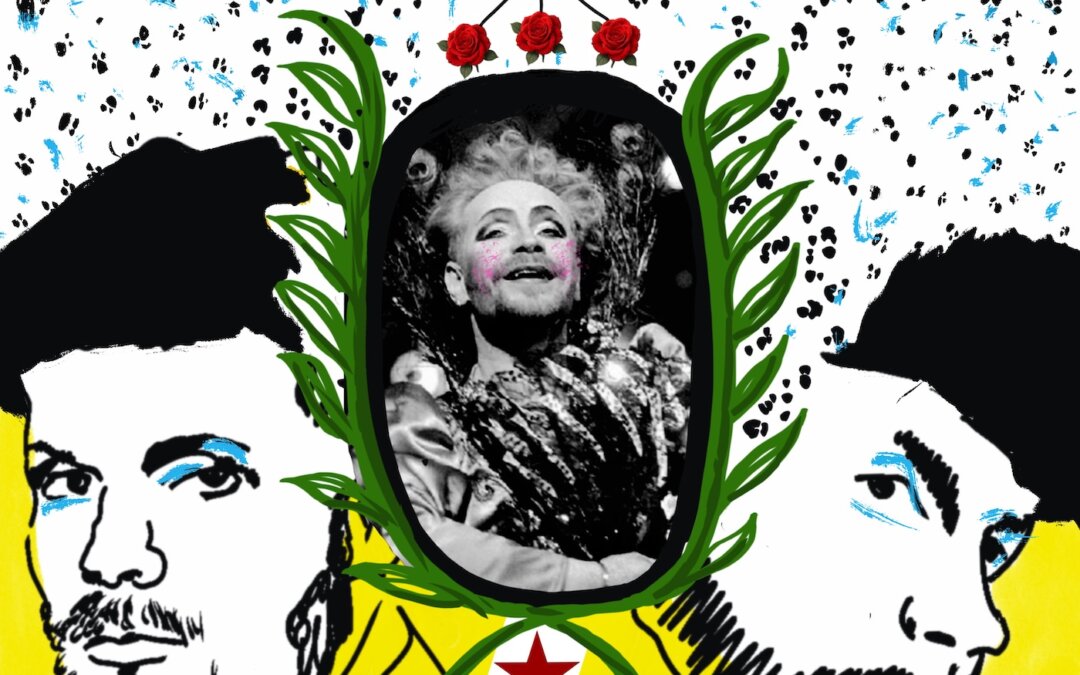
Boris Moiseev aka Bertha (USSR / Russia – Belarus)
Illustration: Sophie von Essenbeck
Trans* identity and aesthetics have found diverse expression in the performing arts of post-communist countries: in the personalities of characters, their appearance and behaviour, in overt and covert contexts or interpretations of style. In general, the emergence of queer imagery on the stages of Ukraine, Belarus, and Moldova was made possible by the democratisation of public life in the late 1980s and early 1990s. It was during this period that sensuality, intimacy, subtle psychological insight, and a previously unknown openness to the inner world of the heroine or hero gradually became normalised in artistic and everyday culture.
Bertha
After the collapse of the USSR, Russia inherited the propaganda machine of central television, and the influence of Russian mass culture on independent national republics in the 1990s and 2000s remains enormous. Another important factor is that until the 2010s, knowledge of gender theory was not widespread in post-Soviet countries, even among LGBTQ+ activists. Thus, in the minds of most queer people, transgenderism was inextricably linked to homosexuality, and for the average consumer of cultural products, this attitude remains unchanged to this day.
Within this context, the career of Boris Moiseev (1954, Mogilev, Byelorussian SSR – 2022, Moscow, Russian Federation) – Soviet and Russian dancer, performer, and pop artist – stands out as groundbreaking. After coming out as gay, Moiseev embraced trans* aesthetics both as artistic expression and self-presentation. His trio “Ekspressiya” (in Russian “Expression”) performed with Alla Pugacheva, the Soviet superstar and gay icon, and toured in Italy, France, and the U.S. There he encountered Western gay nightlife, drag performance, eurodance, and rave culture. Returning to Russia in the early 1990s, he brought those influences home.
With composer, lyricist and sound-producer Viktor Chayka, Moiseev launched the controversial queer project “Ditya poroka” (in Russian “Child of Vice”). The 1996 album of the same name – half-spoken, half-sung in a dramatic, rap-inspired style – became a sensation across the former USSR.
The most famous singles from the album are: “Ditya poroka”, “Tango-kokain” (in Russian “Tango Cocaine”), “Egoist” and “Ya naveshchu svoyu lubov’ v rayu” (in Russian “I Will Visit My Love in Paradise”). In concert and theatre programmes promoting the album – the play “Ditya poroka” in 1995 and the elite-show “Padshyi angel” (in Russian “Fallen Angel”) in 1996 – Boris calls himself Bertha and performs as a gender-queer drag-queen. Today it’s almost impossible to imagine that such open queer performance once thrived in Russian pop culture…
Theatrical archaism
At the turn of the 1990s and 2000s most queer representation in regional theater had retreated into caricature. On the repertory stage, gay male characters were reduced to effeminate stereotypes – comic relief, never protagonists – eliciting laughter meant to reinforce social prejudice.
Cross-dressing by cisgender men became common in post-Soviet comedy, but was usually played for ridicule, reinforcing transphobic tropes.
Farces like Ken Ludwig’s “Leading Ladies” and Walter Brandon Thomas’s “Charley’s Aunt” became staples of this conservative repertoire – for example “Primadonny, ili V teatre tol’ko devushki” (in Russian “Primadonnas or Only Girls in the Theatre”) at the A. Chekhov State Russian Drama Theatre in Chisinau or “Zdrastujte, ya vasha tіton’ka!” (in Ukrainian “Hello, I’m Your Aunt!”) at the “Actor” Academic Theatre in Kiev.
Belarus Free Theater
Independent experimental theatres, which began to develop in the mid-2000s to 2010s, have made a significant contribution to positive changes in the image of LGBTQ+ people. The activities of the international company Belarus Free Theatre are based on the principles of freedom of speech and focused on social justice and the fight for individual rights.
The only documentary-historical play in the history of Belarusian theatre about the fate of transgender people – “Merry Christmas, Miss Meadows…” (playwright, director, set designer – Uladzimir Shcherban, premiere – 2013, Great Britain). While working on it, the creators of the Free Theatre conducted research on the phenomenon of transgenderism during expeditions to Africa and Southeast Asia. The final text includes stories from people from Ghana, Thailand, Malaysia, India, Serbia, Albania, Great Britain, Russia, Belarus and other countries, as well as excerpts from the works of Ovid and Plato.
The story of a transgender woman who taught at a primary school in Lancashire becomes the framework onto which the fates of many people are strung. The play could be called an encyclopedia of global trans* culture. The team draws viewers’ attention to cultural phenomena such as India’s hijras, Albania’s burnesha, the feminization of low-caste male prisoners in the USSR or Bosnian-Herzegovinian transgender model Andreja Pejić.
Spălătorie
Moldova’s Spălătorie Theater emerged after the 2009 “Twitter Revolution” responding to a stagnant public theater system unable to shed light on the contemporary issues. From its inception, Spălătorie positioned itself as a political, anti-discriminatory collective, opposing capitalism, authoritarianism and patriarchy. Its name – in Romanian “The Laundry” – symbolizes a collective act of cleansing: washing away corruption, xenophobia, and the residue of totalitarianism.
In its documentary sound drama “Abolition of the Family” (dramaturgy and direction – Nicoleta Esinencu and theatre actresses and actors, premiere – 2019, Germany) everyday Moldovan and Soviet objects become percussive instruments. The work centers on an intimate monologue by Nicoleta reflecting on her relationship with her parents as her mother slowly dies.
The play is structured verbatim. The experiences of Moldovan LGBTQ+ community intersect with women’s rights narratives – such as the story of a Romani woman named Illana. One of the most powerful moments is Artiom Zavadovski’s monologue as a gender-nonbinary character, ending with the quiet manifesto that captures the essence of post-Soviet queer theater:
“I want us all to be remembered as we truly feel ourselves to be”.
Another performer, Doy ‘Romanţa’ Dochiţan, a transgender man, actor, photographer, drag-artist and trans* activist, regularly appears with Spălătorie. His public visibility has made him a key figure in Chisinau queer-art-scene, and his story is documented in the films “Patru suflete” (in Romanian “Four Souls”) directed by Ghena Moroșanu (2015) and “Between Two Worlds” directed by Ana Gurdiș (work-in-progress).
Zi Faámelu
An equally remarkable case is that of Ukrainian singer Zi Faámelu, whose career began in 2008 on the TV show “Fabrika Zirok” (in Ukrainian “Star Factory”). Performing under the name Boris Apryel’ (before transition, in Russian ‘April’), she reached the show’s final through audience voting and was later dubbed Ukraine’s “Most Controversial Artist of 2009”, winning the “Kryshtalyowyi Mikrofon” (in Ukrainian “Crystal Microphone”) in the category “Riddle of the Year”.
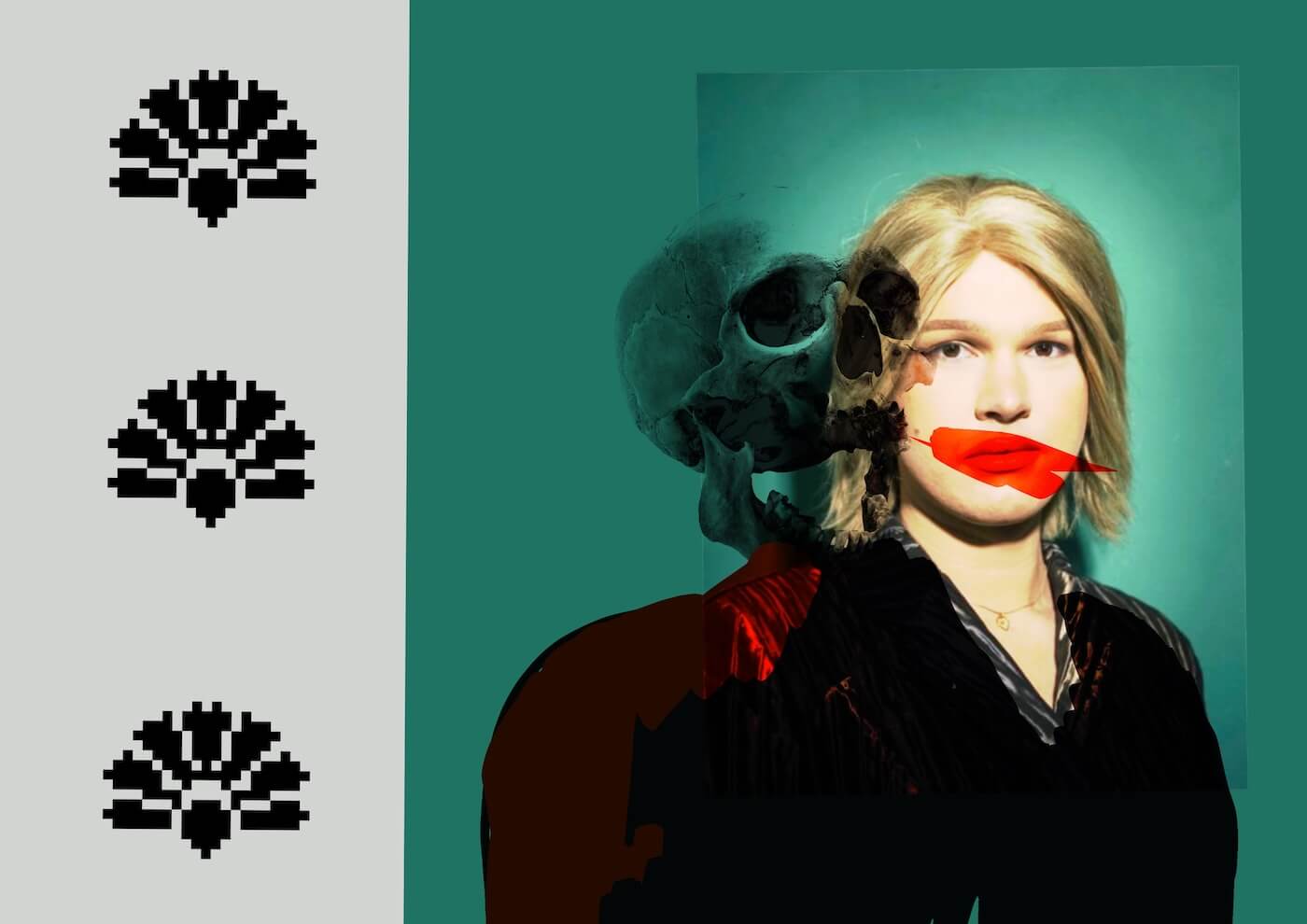
Zi Faámelu (Ukraine)
Illustration: Sophie von Essenbeck
After her transition, she moved to the U.S. in 2014, performing as Anna April, and later returned to Ukraine for “Holos Krainy” (in Ukrainian “The Voice of Country”) under the name Zianja. Since 2020, she has performed as Zi Faámelu. Following Russia’s full-scale invasion, she fled the country – a complicated process, as her passport still listed her gender as male. She now lives in Germany as a refugee…
Belarusian drag-scene: Vava
In different national contexts and historical periods, the drag-scene developed spontaneously, but the movement itself gained popularity among LGBTQ+ people quite early on, probably due to the deep cultural roots of male cross-dressing on stage.
The difficult experience of grassroots, authentic drag-art in Minsk in the late 1990s is represented by the work of Vava (Eduard Mishkutyonak; 1980, Mozyr, Byelorussian SSR – 2019, Moscow, Russian Federation). In an interview published in the magazine Forum Lambda (2001, No. 20, pp. 37–38), the young man talks about casual sexual relationships, alcohol addiction, and a competition for the best carnival costume at the Babylon club with a prize fund of $20. In essence, Vava’s artistic expression was not a style or repertoire, but a performance of the everyday life of the Minsk queer community at that time.
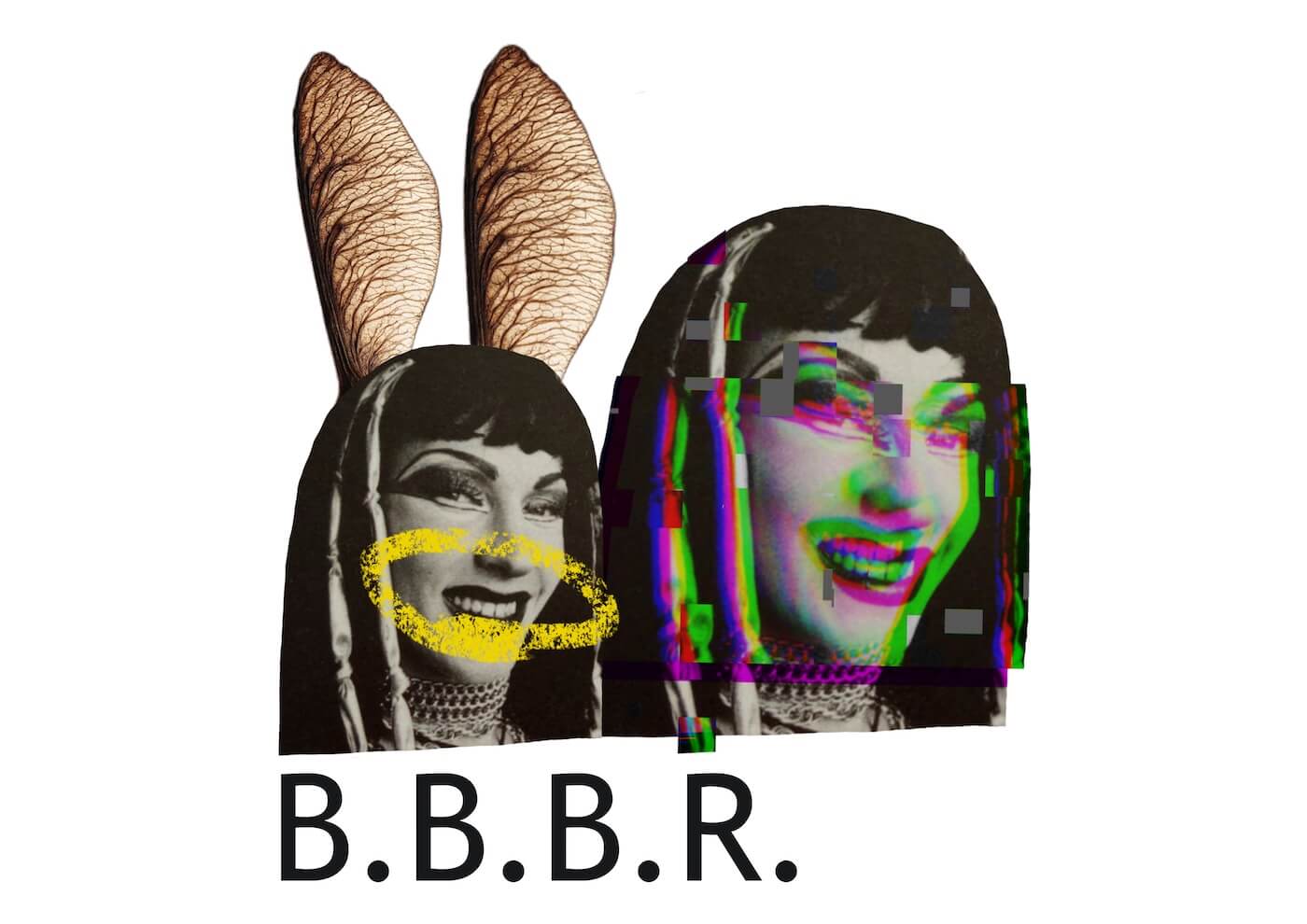
Vava (Belarus)
Illustration: Sophie von Essenbeck
In an interview, Eduard says:
“A friend from Moscow told me he’d never seen anything like it – a drag queen not on stage but on the dance floor. Not for money. Just because”.
Nearly a quarter century later, that conversation reads as a historical record of how deeply trans* lives were marginalized in the post-Soviet world.
Moldovan drag-art
By contrast – and perhaps because of that contrast – the contemporary drag and performance art emerging in Moldova feels all the more vital. In 2023, Chisinau Queer Café Community Center became home to a new collective – “Mamă DRAGă”. In Romanian, the name carries a double play of meanings: both “Oh Mother Dear!” and “Mother of Drag.”
The group grew out of workshops led by the Greek drag diva Chraja and grounds its practice in body-positivity, LGBTQ+ solidarity, and the creative visibility of women. “Mamă DRAGă” freely re-imagines drag, vogue, and burlesque, fusing them into an exuberant hybrid of movement, humor, and self-affirmation.
Pavel Ermacov, an actor and administrator at Chisinau Luceafărul Theater (“Luceafărul” – in Romanian “Morning Star”), has performed since 2023 under the persona Medeеa. His shows confront gender stereotypes, safe-sex awareness and the persistence of xenophobia within both society and the Church.
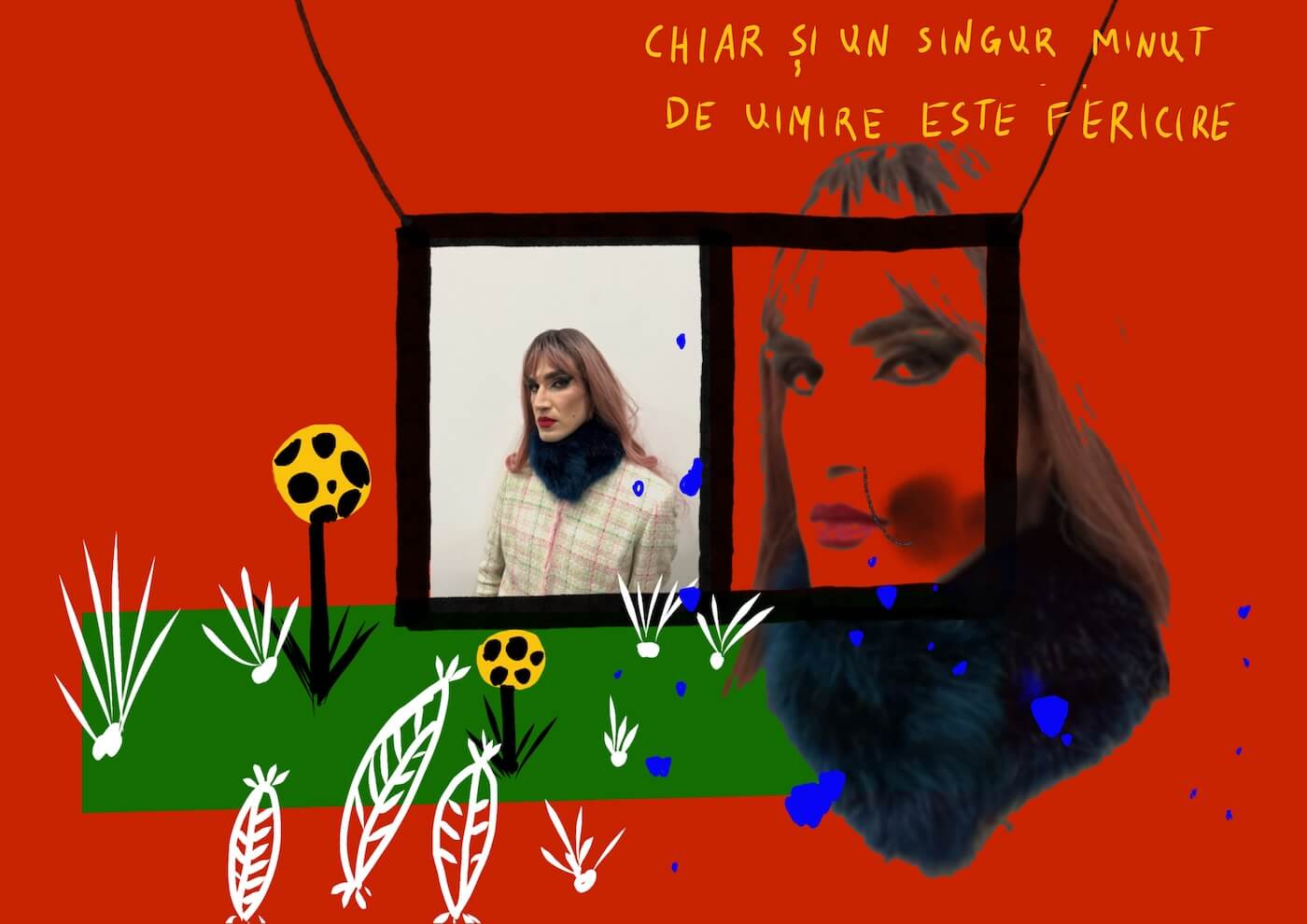
Medeea (Moldova)
Illustration: Sophie von Essenbeck
Ermacov’s fascination with Euripides’ tragic heroine dates back to his student years, when classmates first nicknamed him ‘Medea’. Drawing on neo-baroque aesthetics, mid-century fashion, and the glamour of Hollywood’s Golden Age, he defines his style as gender-funk drag. The artist’s mission is to empower the Moldovan queer community. Pasha comments on the image he has created in precisely this way:
“Medeеa is neither man nor woman; she embraces both sides of herself. She wears no wig, no false breasts – she is beautiful as she is”.
Conclusion
During the collapse of communist regimes, the restoration of sovereignty by countries in the European part of the former USSR, the construction of neoliberal democratic societies, and the emergence of new autocracies – society’s attitude towards ‘otherness’ has undergone a complex evolution with humanistic achievements and periods of obvious regression. Ukraine, Belarus, and Moldova remain within Russia’s sphere of influence, from which they are fiercely trying to free themselves at the level of states or democratically oriented civil societies.
Through its channels, the Putin’s regime promotes the thesis that gender diversity is artificial and imposed from outside (in 2023, the dictator and war criminal called transgender people ‘transformers’, i.e., fantastical, fictional robots). However, the fairly broad and diverse representation of transgender culture and aesthetics in general (bearing in mind that this article does not cover all possible examples) serves as a reminder of the vitality of these phenomena, whose roots go back to the dawn of human history.
Read more articles from the Issue
Nothing Found
Criminalized and Invisible: The Long Fight of Queer Ukrainians
Conversion Practices in Germany: Violence in the Name of God
Valentyna Salon: Beauty Practices of the Ukrainian Queer Community
“There is a lot of shame in our community”
How Ukraine’s Queer Artists and Activists are Safeguarding LGBTQIA+ Memory in Wartime

Eastern Queerope Belarus: Stories of Resistance, Repression, and Cultural Renewal
Homophobia at the Core of Putinism’s Ideology
Strange Embrace: Paradoxes of Homosexual Desire in the Third Reich
Beauty as a Shelter: Ukrainian Women Rebuild Their Lives in Bucharest’s Salons

Passing the Paintbrush: Historic Queer Jewish Artists in Berlin
Searching for Oneself at Random: How LGBTQI+ Communities Emerged in the Donetsk Region, 1991-2014

“I Have Nothing to Hide”

When We Stopped Hating Ourselves: Gay Life Under Persecution In Poland And Germany

How Queer Soldiers Shape Ukraine’s Defense And Future

Unsafe in The Country of Origin

The Bible, Putin, AfD: Four Misanthropic Myths to Abandon

Queer Resistance in Ukraine: Between War and Disinformation

No Safe Place

“A Place You Can Always Come To”: Shaping Polish Diasporic Queer Communities in Germany
19th Century ‘Friendships’ to 90s Drag: Eastern Queerope Returns

Asylum Discourse: What Are “Safe” Countries of Origin for Queers?
Queer Fronts
Moving Stories: LGBTQIA+ Ukrainian Refugees
Beyond the Binary
Queer Rights and Marriage Equality Under War, Authoritarianism, and Democracy
Gaps in Remembrance – Queer Biographies during National Socialism
Queer and Trans People Have Always Been Here. These Are Their Stories
New Stories from Eastern Queerope
The Prisoners with the Pink Triangle
Queerly Beloved: Romani Resistance Through the Ages
Intertwined Queer Stories: First LGBTIQ+ Museum in Eastern Europe
“The Smaller the Settlement, the Greater the Influence of Religion”: Belarusian Trans Non-Binary Activist in Poland
Queer Holocaust Voices – the Price of Silence
Forgotten Stories of Eastern European Queer Heroes
“I Accept Myself with All My Features”: Ukrainian Queer Person and Her Identity in Catholic Poland
Belarusian on Bisexuality, Theatre and Emigration
Shelters, Help and Support: How Uzhhorod Became a New Home for Queer People
Diversity in Brandenburg: Queers Take a Stand
Being Yourself. How Kharkiv’s LGBTQI Community Fights for Their Rights