Queer Resistance in Ukraine: Between War and Disinformation
This article was originally published in German on Deine Korrespondentin

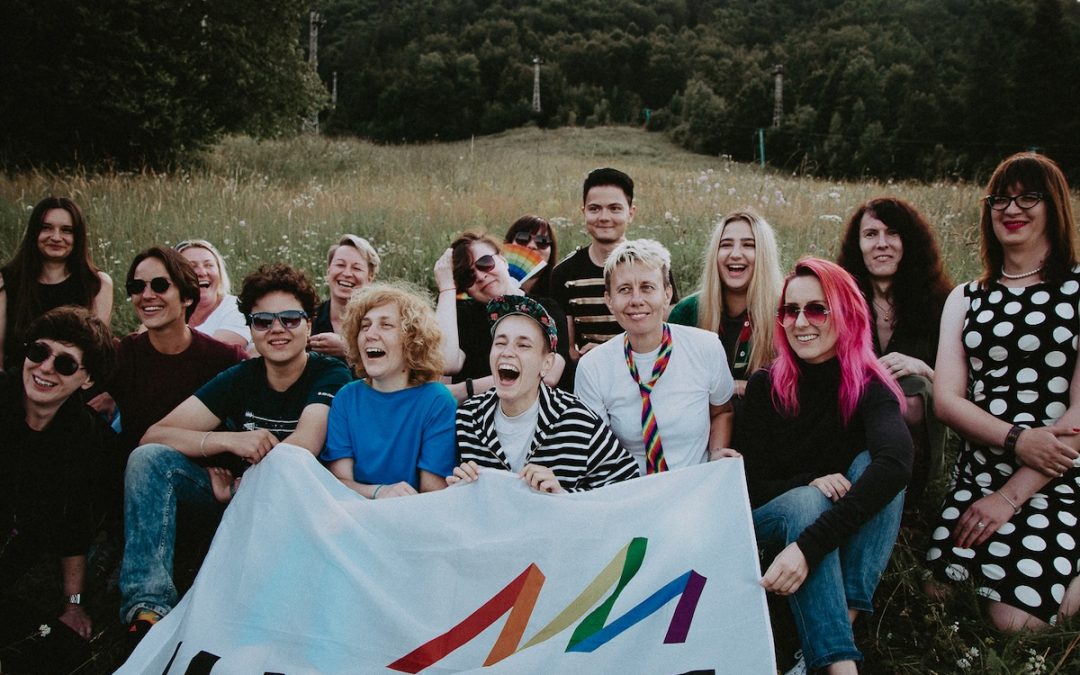
The team of the Ukrainian non-profit organisation Insight, which campaigns for the rights of LGBTIQ+ people and women.
Only a few countries pursue digital disinformation campaigns as systematically as Russia. Ukraine is a prime target: the Kremlin promotes the narrative of a “gay Europe” to frame its full-scale war as a defense of traditional values. Queer visibility is cast as evidence of moral decline. But how do such narratives affect the daily lives of LGBTIQ+ people in Ukraine?
A man stands before two scenes: on the left, set against a blue background, the devil in stockings, the EU and Pride flags, two men kissing, an array of drugs, and Hitler. On the right, against red, an angel in the form of a young boy, a heterosexual couple with six children, military vehicles, cosmonaut Yuri Gagarin, and the Kremlin. Surreal as it sounds, this meme was spread widely in 2013 in connection with the proposed Association Agreement between the EU and Ukraine.
At the time, Ukraine was preparing to sign a deal that would ease trade and visa regulations with the EU and pave the way for a potential membership. But pro-Russian president Viktor Yanukovych backed out at the last minute, which ignited the revolutionary Maidan protests.
The meme may be over a decade old, but its message is still relevant today. The man represents Ukraine, forced to choose between Europe and Russia. In this framing, the EU symbolizes Western decadence, moral decay, and fascism, while Russia embodies traditional values, military power, and scientific progress. Back then, the goal was to stir up opposition to closer ties with Europe. Today, it serves to justify the full-scale war against Ukraine.
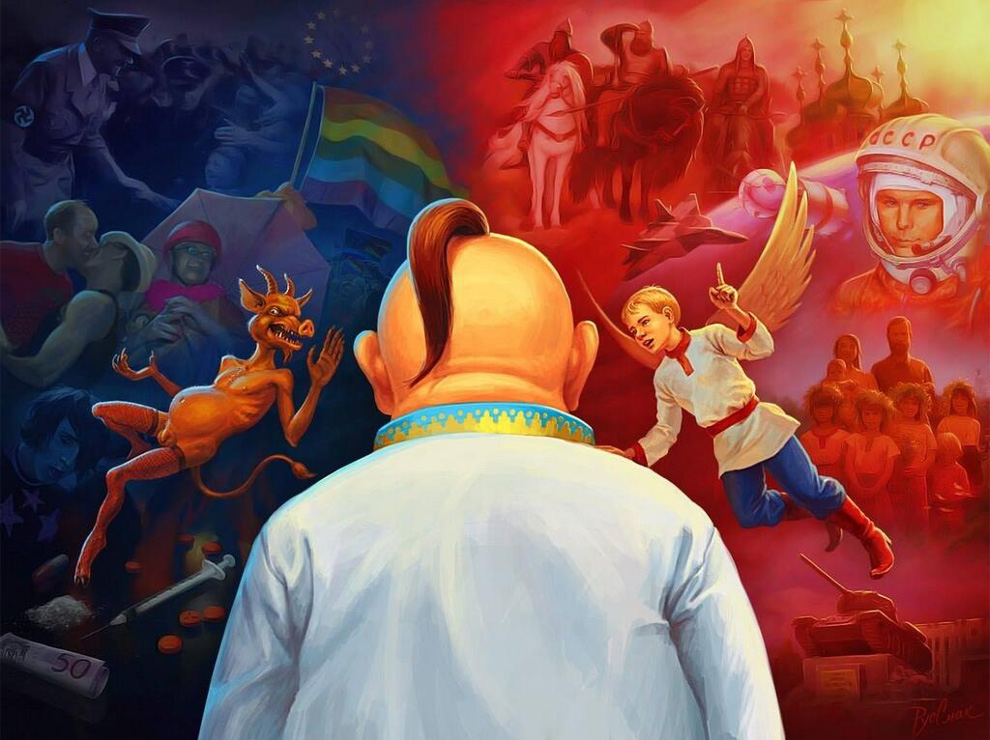
As relevant today as it was then: the anti-Maidan meme depicts Ukraine caught between a “decadent, queer” EU and a supposedly heroic, traditional Russia.
The West as Enemy
The image appeared frequently in the work of Dr. Lisa Gaufman, who conducts research in Russian discourse and politics. “Memes like this show how deeply debates are infused with ideas about gender and sexuality,” she explains. “The EU is staged as a force seeking to impose itself on Ukraine.” The point is made visually by setting a heteronormative family in contrast to a gay couple. Pairing Hitler with queerness, she adds, illustrates how Russia distorts history: schools rarely teach that the Nazis persecuted not only Jews, but also queer people and Sinti and Roma. That gap allows the Kremlin to push the absurd claim that Ukraine is a neo-Nazi state full of so-called LGBTIQ+ propaganda.
Queerphobia, misogyny, and hostility towards the West form the core of Russia’s disinformation playbook. This is also evident in the anti-European rhetoric of the term “Gayropa” – a derogatory neologism combining the words “gay” and “Europe”, explains Gaufman. The meme is just one of many examples depicting both the EU and Ukraine as “effeminate,” “drug-obsessed,” and “gay.”
These very narratives have also been reflected in campaigns against President Volodymyr Zelenskyy: In 2021, a press photo of him receiving a COVID vaccination went viral. He was mocked for shaving his chest, derided as weak and coded as homosexual. A year later, a manipulated video circulated on Facebook in which Zelenskyy was alleged to have said in an interview that he liked to use drugs.
According to a 2024 study by Princeton University, Russia is the world’s leading actor in online disinformation:
Around 60 percent of “foreign influence efforts” can be traced back to Russia.
This refers to coordinated campaigns that use media channels and social media to specifically influence politics in another country, with content designed to appear as if it originated in the targeted country.
One of the most notorious examples is the “Doppelgänger” campaign. Since 2022, Russia has cloned Western news and government websites and filled them with false stories, often demonizing Ukraine’s leadership and politics. Major German news sites such as Der Spiegel and the Süddeutsche Zeitung were also affected.
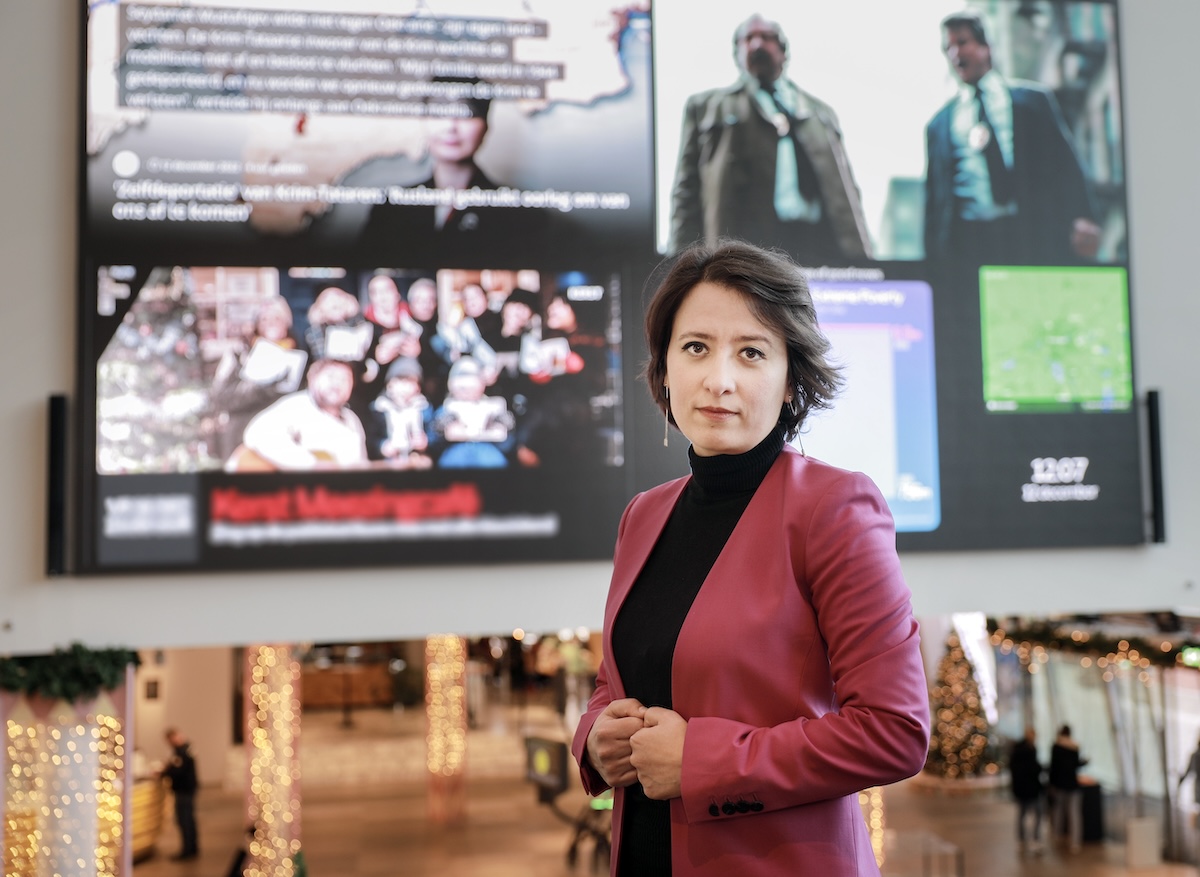
Lisa Gaufman, assistant professor at the University of Groningen, researches Russian propaganda, discourse and enemy narratives. | Photo: Henk Veenstra
The Ideal of a ‘Male’ State
Journalist Yuliana Skibitska, who reports on LGBTIQ+ issues and human rights from Kyiv, sees the same tactics deployed against Ukrainian society at large. “Russian propaganda emphasizes that there are many gay and queer people in the Ukrainian army, even claiming there is an alleged LGBTIQ+ battalion. From this, the Kremlin concludes that our country is gay and therefore that the military, the media, and society are too liberal and morally corrupt,” she says.
Because many women and queer people serve in Ukraine’s military, Russia uses this to portray the nation as weak or “unmanly,” adds Gaufman. This, in turn, supported Putin’s argument that “gay” Ukraine is not a real state. “Such narratives call into question, among other things, the Ukrainian language and culture, attributing their existence solely to Soviet structures,” says Gaufman.
Queerphobia, however, is not just imported. “Many Ukrainians, on the other hand, have claimed that LGBTIQ+ people do not join the army, do not defend our country, but rather flee,” says Skibitska. The reality, however, is different, and people like Skibitska therefore try to tell the stories of female and queer soldiers in Ukraine: “This visibility has helped change public opinion and reporting in Ukraine in recent years, making them more queer-friendly.”
Olena Shevchenko, founder of the Ukrainian NGO Insight, argues that countering queerphobic propaganda is not enough: “It will never work to only react to and fight against anti-queer disinformation. We also need to set our own narratives.” Public attitudes are indeed shifting. A representative survey conducted by the Kyiv International Institute of Sociology in May 2024 found that 70.4 percent of Ukrainians believe queer people should have equal rights.
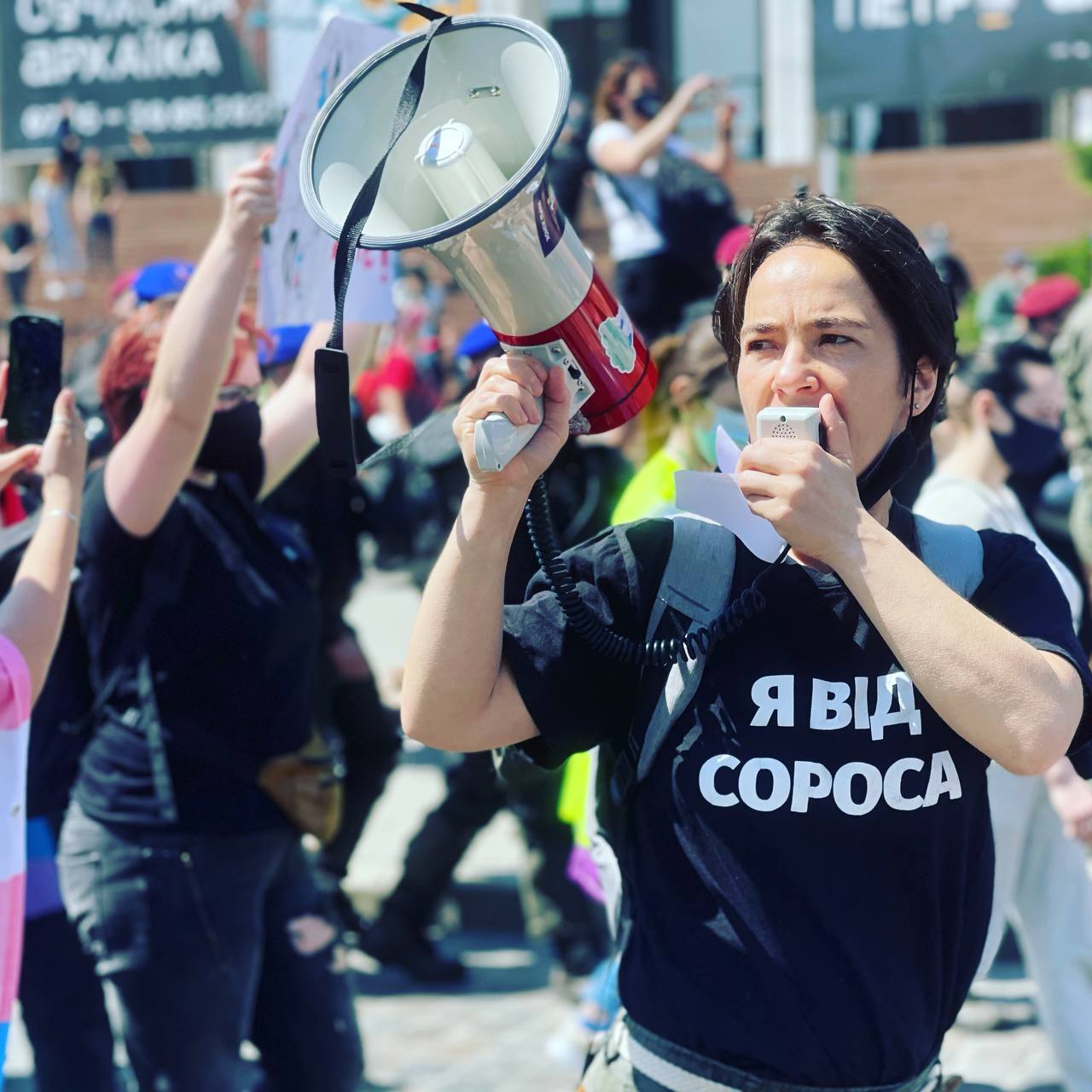
Olena Shevchenko, the well-known Ukrainian activist and head of the NGO Insight. | Photo: Private
“Even though I personally feel that queerphobia has increased in recent years, the figures actually show a positive development,” says Skibitska. Olena Shevchenko can understand the personal impression that, despite positive polling numbers, the country overall has become more hostile toward queer people: “This is connected to the negative shifts and anti-queer campaigns on social media. But we must not forget that many posts or comments come from Russian bots.”
Between Recognition and Hostility
On July 3, 2025, Kyiv’s Desnianskyi District Court officially recognized a gay couple as a family. The ruling could mark a turning point for LGBTIQ+ rights in Ukraine. Activists at Insight had fought for this outcome for years. But it remains contested terrain: conservative and right-wing voices still carry weight, especially in western Ukraine, where many local politicians openly oppose the community.
The journalist sees another problem in the loss of trust in the media: “Some believe that Ukrainian media is funded and influenced by foreign money. Others criticize that the media survives only on grants and does nothing for Ukrainian society. And then there is also the myth that the media unconditionally supports Zelenskyy,” says Skibitska.
Disillusioned citizens often turn to alternative channels like Telegram – platforms rife with disinformation.
“There are many bloggers who pretend to be pro-Ukrainian, although, in reality, they work directly or indirectly for Russia,” she explains. They would spread either Russian propaganda or their own homophobic narratives, reaching many people in the process. People who deeply distrust their government are particularly susceptible to disinformation, Gaufman confirms.
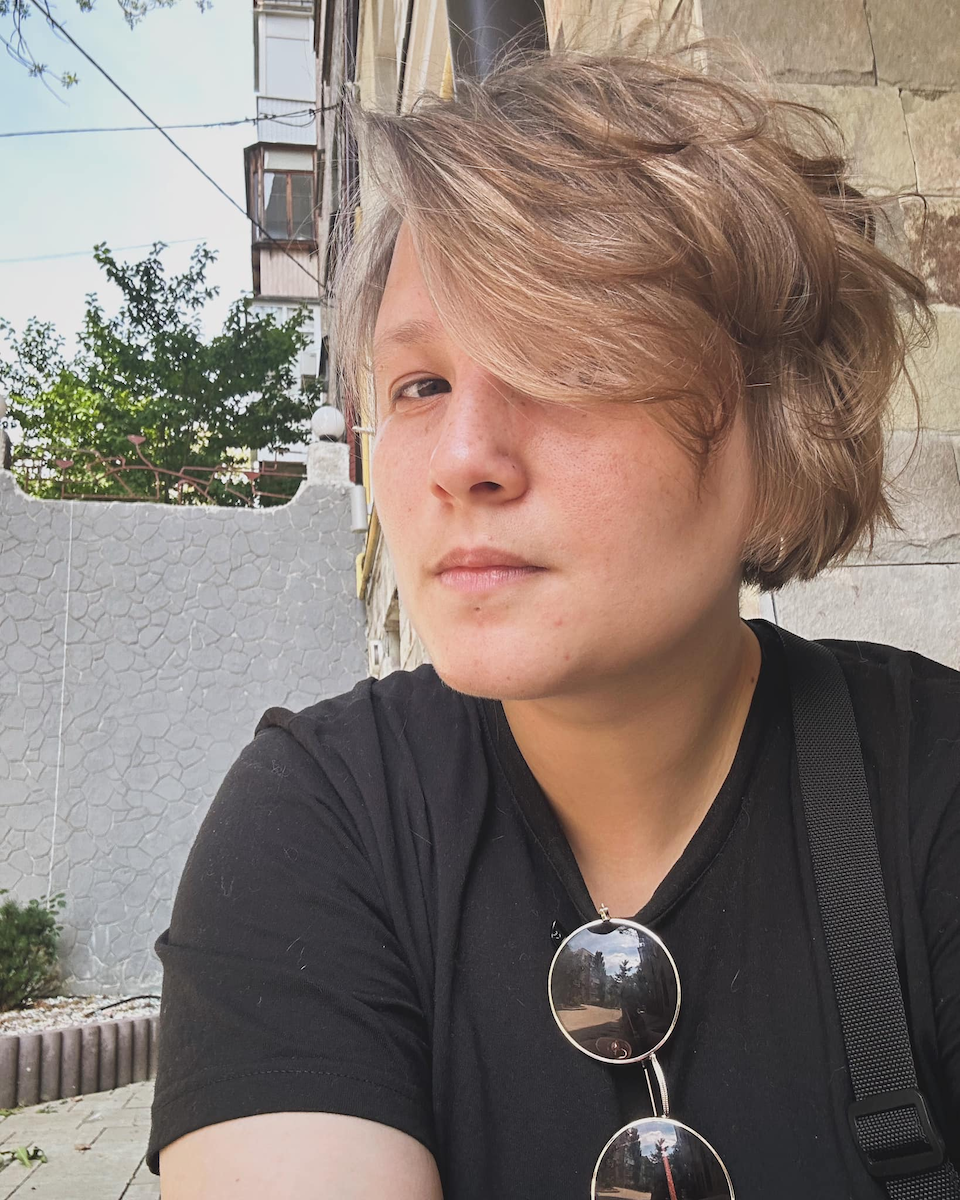
Journalist Yuliana Skibitska. | Photo: private archive
Skibitska is convinced: “Russian propaganda affects everyone in Ukraine. It is everywhere, in every aspect of our lives. That is why it is so important to understand these tools and to protect and make queer people in Ukraine visible.” She acknowledges that amid daily attacks and growing war fatigue, LGBTIQ+ issues risk being sidelined – but that, she says, is all the more reason to keep raising awareness.
“Ukraine has many strong independent media outlets, and we can be proud of that,” says Shevchenko. “Cooperation between NGOs, civil society organizations, and the media is working very well, and we are able to advance our topics.” Yet financial constraints threaten progress. Skibitska says: “Without funding, we cannot report on the occupied territories or continue this fight against anti-queer disinformation. Since 2014, we have been able to change public opinion step by step, and we must continue this work.”
Read more articles from the Issue
Nothing Found
Criminalized and Invisible: The Long Fight of Queer Ukrainians
Conversion Practices in Germany: Violence in the Name of God
Valentyna Salon: Beauty Practices of the Ukrainian Queer Community
“There is a lot of shame in our community”
How Ukraine’s Queer Artists and Activists are Safeguarding LGBTQIA+ Memory in Wartime

Eastern Queerope Belarus: Stories of Resistance, Repression, and Cultural Renewal

Homophobia at the Core of Putinism’s Ideology
Strange Embrace: Paradoxes of Homosexual Desire in the Third Reich
Beauty as a Shelter: Ukrainian Women Rebuild Their Lives in Bucharest’s Salons

Angels from the East
Passing the Paintbrush: Historic Queer Jewish Artists in Berlin
Searching for Oneself at Random: How LGBTQI+ Communities Emerged in the Donetsk Region, 1991-2014

“I Have Nothing to Hide”

When We Stopped Hating Ourselves: Gay Life Under Persecution In Poland And Germany

How Queer Soldiers Shape Ukraine’s Defense And Future

Unsafe in The Country of Origin

The Bible, Putin, AfD: Four Misanthropic Myths to Abandon

No Safe Place

“A Place You Can Always Come To”: Shaping Polish Diasporic Queer Communities in Germany
19th Century ‘Friendships’ to 90s Drag: Eastern Queerope Returns

Asylum Discourse: What Are “Safe” Countries of Origin for Queers?
Queer Fronts
Moving Stories: LGBTQIA+ Ukrainian Refugees
Beyond the Binary
Queer Rights and Marriage Equality Under War, Authoritarianism, and Democracy
Gaps in Remembrance – Queer Biographies during National Socialism
Queer and Trans People Have Always Been Here. These Are Their Stories
New Stories from Eastern Queerope
The Prisoners with the Pink Triangle
Queerly Beloved: Romani Resistance Through the Ages
Intertwined Queer Stories: First LGBTIQ+ Museum in Eastern Europe
“The Smaller the Settlement, the Greater the Influence of Religion”: Belarusian Trans Non-Binary Activist in Poland
Queer Holocaust Voices – the Price of Silence
Forgotten Stories of Eastern European Queer Heroes
“I Accept Myself with All My Features”: Ukrainian Queer Person and Her Identity in Catholic Poland
Belarusian on Bisexuality, Theatre and Emigration
Shelters, Help and Support: How Uzhhorod Became a New Home for Queer People
Diversity in Brandenburg: Queers Take a Stand
Being Yourself. How Kharkiv’s LGBTQI Community Fights for Their Rights