The Bible, Putin, AfD: Four Misanthropic Myths to Abandon
This article was originally published in German on Perspective Daily

Source: Wikipedia commons / Collage: Frauke Berger, Perspective Daily. CC BY-SA 3.0 DE

- Anti-queer myths have a long tradition and are still being exploited politically today.
- In times of crisis, such narratives serve as a means of creating enemy stereotypes and securing power, regardless of political affiliation.
- Visibility, historical reappraisal, and the protection of queer institutions are key strategies for countering disinformation and discrimination.
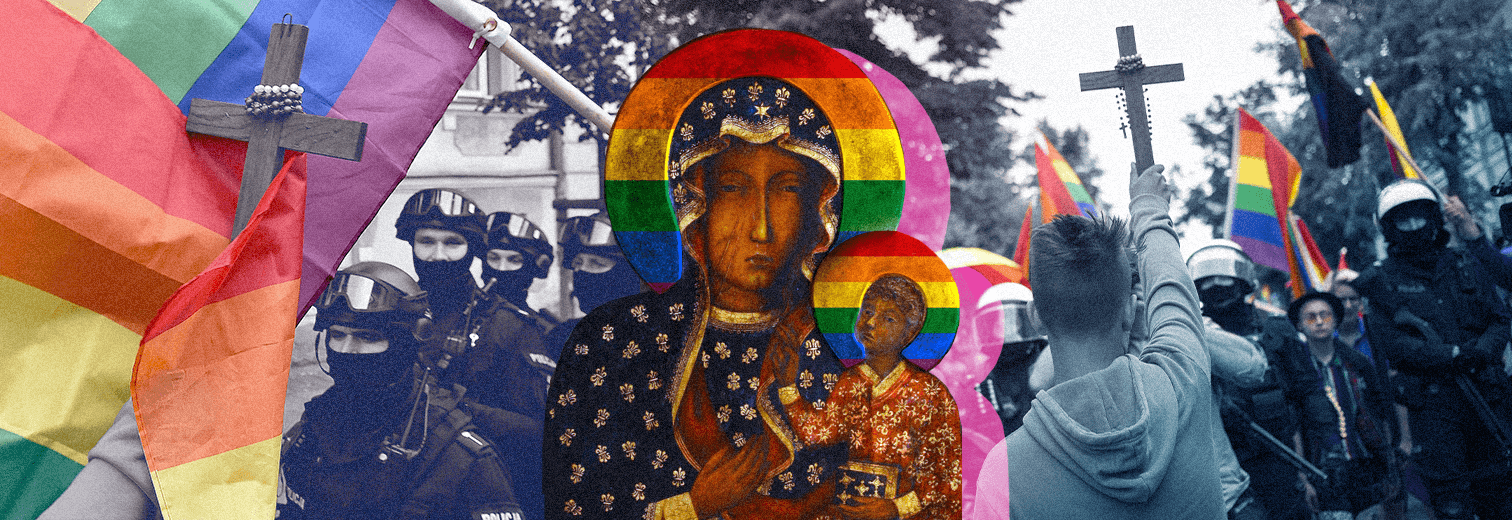
Europe is sending gay men to daycare centers and forcing Ukraine to introduce marriage for all—that’s what Russian propaganda has been claiming for years. In Poland, a bishop describes queerness as a “rainbow plague,” and former President Andrzej Duda talks about LGBTIQ+ as an ideology in his 2020 election campaign. In Germany, AfD members of parliament see sexual diversity as an “attack on children” and want to protect them from “trans pop culture” in schools and daycare centers.
There are many myths and false claims circulating about queer people. A look at history shows that this is not a new phenomenon – political camps from the right to the left have been using similar narratives for centuries to stir up fear and legitimize claims to power.
Myth 1: Sin as a perennial issue
In ancient Greece, men having sex with men was part of everyday life. But with the spread of Christianity, an important foundation stone was laid for the history of queer-hostile disinformation in Europe: since then, certain passages from the Bible have been used to justify the rejection of homosexuality. The Apostle Paul described same-sex love in the Bible as “unnatural fornication” – thereby establishing the very term that was later used to ban homosexuality in the German Empire in Section 175 of the Criminal Code.
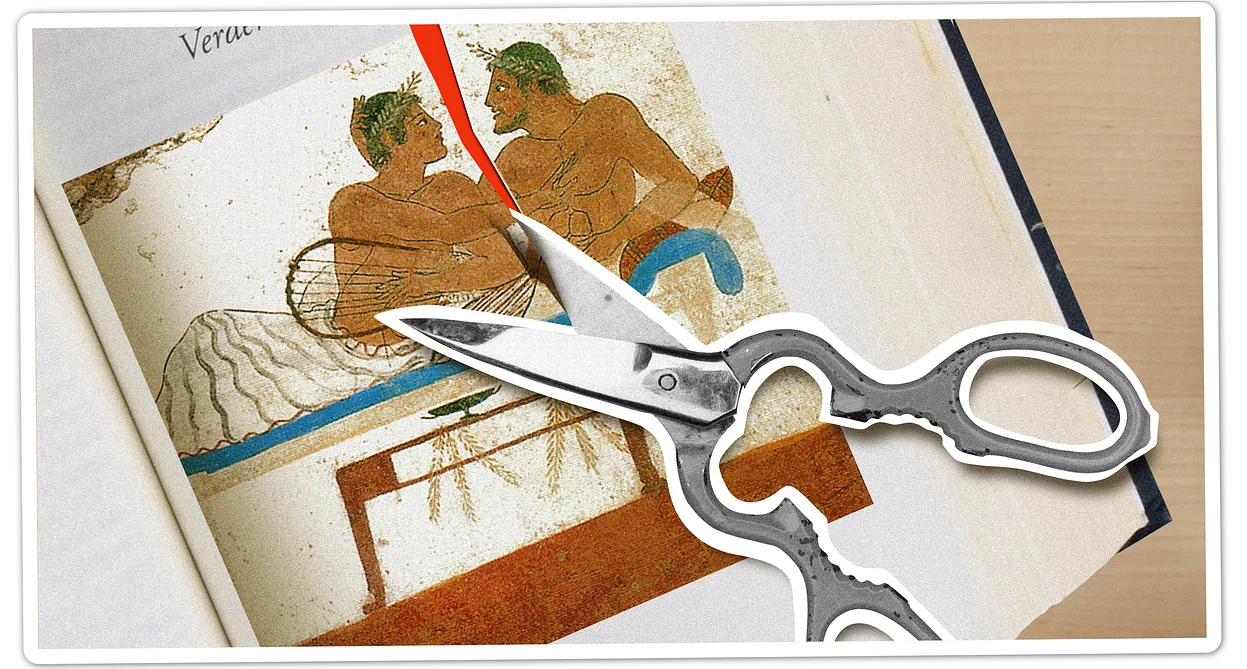
Fresco from the Tomb of the Diver in Paestum. Source: Wikimedia commons / Collage: Frauke Berger, Perspective Daily. Public domain

A passage from the third book of Moses is also frequently quoted. It states: “Thou shalt not lie with mankind, as with womankind: it is abomination.” In late antiquity, this sentence began to be interpreted as a condemnation of homosexuality. However, the interpretation of such biblical passages always depends on the respective translation: depending on the historical context, a German translation of a biblical term such as “Lustknabe” (“lust boy”), which was equated with homosexuality, could stand for a rejection of supposedly feminine characteristics in men or for male prostitution. Some religious scholars therefore believe today that translations of the Bible have always been ideologically influenced.
With colonialism, European powers spread their Christian moral values worldwide from the 15th century onwards and criminalized homosexuality in the colonial states. When the colonial rulers left these countries hundreds of years later, the laws remained in place in many former colonies. Paradoxically, homosexuality is now seen as a “Western import” in some of these countries.
Even in European countries, the idea of homosexuality as a “sin” persists to this day: just this year, a German pastor had his salary cut because he referred to queer people as ‘criminals’ and spoke of a ‘devilish gay lobby’.
Myth 2: A powerful elite planning to overthrow the system
A powerful elite secretly planning to overthrow the system – this is the picture painted by many conspiracy myths. They offer a seemingly simple explanation for complex social developments.
Such narratives were very popular during the Nazi era. For example, the physician and sexologist Magnus Hirschfeld fell victim to anti-gay Nazi propaganda: In the 20th century, Hirschfeld was one of the most important pioneers of modern sexology. He was one of the first scientists in Europe to understand homosexuality and transidentity as natural expressions of human sexuality, which made him a thorn in the side of the right-wing press.
As a Jew and a social democrat, he was repeatedly the target of disinformation campaigns by the Nazis, who portrayed him in the weekly newspaper Der Völkische Beobachter as a living example of a “perversion of the Jewish religion.” After an assassination attempt on Hirschfeld in 1920, which he survived with serious injuries, the völkisch media reported on it with derision. During the large-scale book burning in 1933, the Nazis also ransacked Hirschfeld’s Institute for Sexual Science and destroyed what was then the largest collection of writings on sexuality and gender.
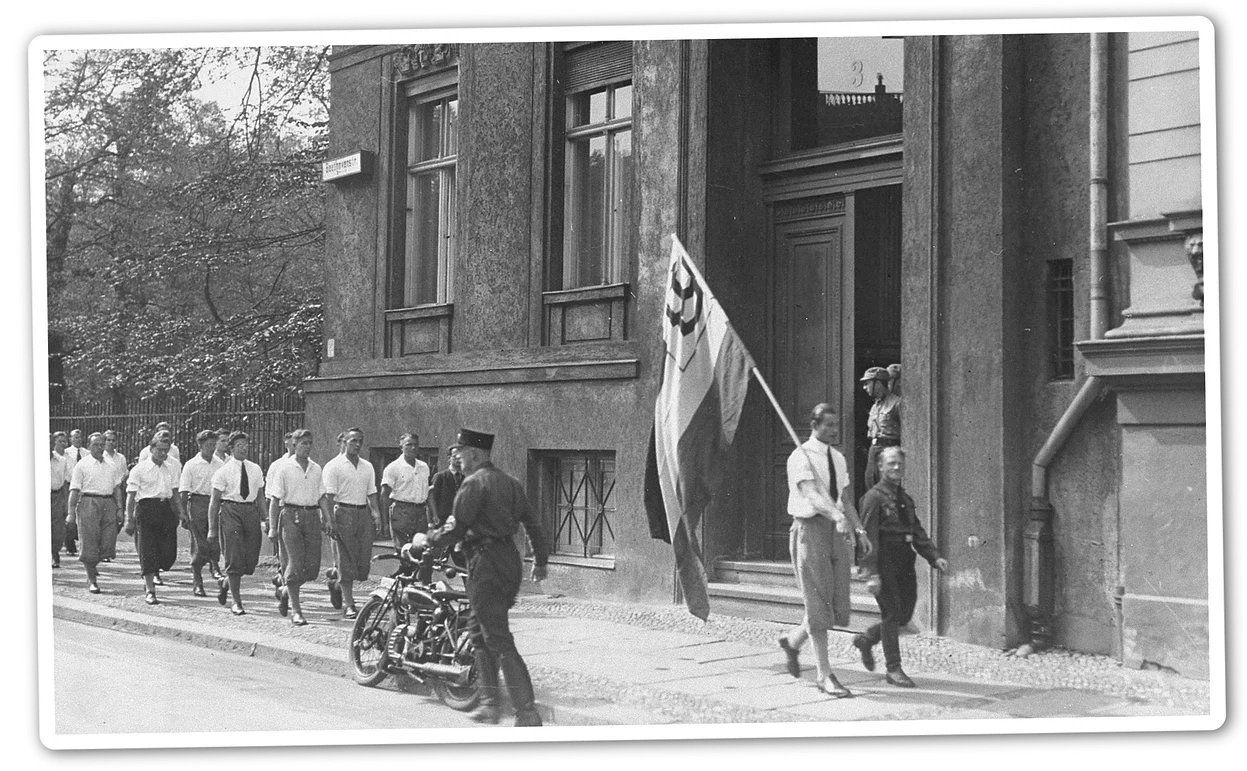
March of Nazi students in front of the Institute for Sexual Science immediately prior to its looting and destruction on 6 May 1933. Source: Wikimedia commons. Public domain
Even independently of Hirschfeld, the National Socialists claimed that the efforts at that time to secure more rights and social acceptance for homosexual people were part of a Jewish conspiracy to undermine German morality. But it was not only right-wing political camps that exploited homosexuality to discredit their opponents. Left-wing media also seized on the case of Nazi officer Ernst Röhm in the hope of weakening the Nazis. Röhm, who was chief of staff of the Sturmabteilung (SA) at the time, spoke openly about his homosexuality in private circles. After attacks from the left, Röhm was initially defended by his party, but as Röhm’s power grew, the NSDAP also made his homosexuality public and spread rumors of an impending coup. In 1934, these reports served as justification for the “Night of the Long Knives,” in which Röhm and numerous other SA officials were murdered.
Röhm’s example shows how homophobia is always exploited when it serves one’s own political agenda.
This strategy continued throughout the Cold War. Despite ideological differences, during this period both East and West Germany shared the ideal of a heteronormative family as the moral foundation of society. In the West, people fantasized about secret circles of men who wanted to introduce communism; in the East, homosexuality was considered a symptom of fascism. To this day, conspiracy theorists around the world continue to fantasize about a secret elite.
Myth 3: Queerness as a sign of (female) weakness
“Like it or not, beauty, you have to put up with it!” This is what Russian President Vladimir Putin said about Ukrainian President Volodymyr Zelensky after the full-scale invasion began in 2022 – symbolically pushing Ukraine into a subordinate female role. Russian propaganda also uses the fact that women and queer people serve in the Ukrainian army to portray the country as weak and effeminate. Russia is portrayed as a masculine entity exercising control over weak Ukraine.
To understand why Russia uses this misogynistic rhetoric, it is worth taking a look back at the 19th century: with the growing importance of the military, there was also a growing need across Europe to control men of conscription age – including their sexuality. After the founding of the German Empire in 1871, conscription was introduced and sex between men was made a criminal offense under Section 175 of the German Criminal Code. Military strength and masculinity increasingly merged into an ideal, while homosexuality was considered feminine, passive, and dangerous to order and discipline.
Myth 4: Queerness as a danger to children and young people – the most powerful specter
On the occasion of a reading by drag queens for children in Munich in 2023, the AfD put up posters with the slogan “Hands off our children!” The poster depicted a supposed drag queen reaching for a little boy. During a vote on a motion to protect queer people in 2024, AfD state parliament member Horst Förster from Mecklenburg-Western Pomerania also drew a connection between queerness and pedophilia.
The narrative that LGBTIQ+ and queerness are a danger to children is particularly emotionally charged. According to historian Jennifer Evans, who researches contemporary German and European history, this rhetoric is increasingly finding its way into the mainstream—a “creeping attack from the right on the center,” as she puts it. The blanket assumption that LGBTIQ+ people indoctrinate children is nothing more than a specter.
However, in order to effectively counter such myths, it is important to critically examine one’s own history, says Evans.
“In some parts of the West German gay movement, pedo activists were tolerated and even collaborated with for a time”, Evans says. This is precisely what is currently being brought to light: among other things, the Gay Museum in Berlin dedicated itself to examining this topic in 2023, collaborating with the Archive of the German Youth Movement.
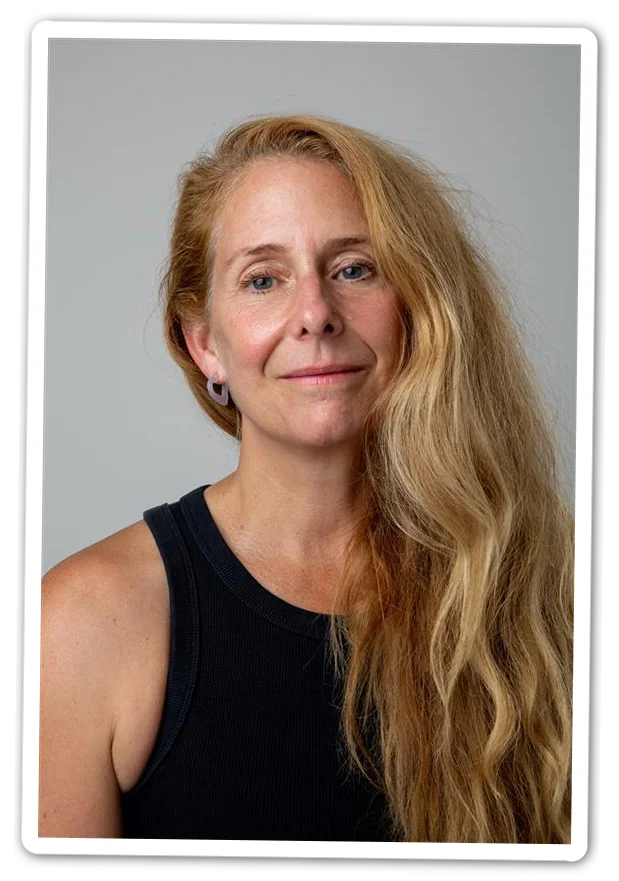
Historian Jennifer Evans. Photo © Olivia Johnston
But where does the myth that homosexuals are a danger to children come from? Same-sex acts were already classified as a “deviation from the norm” in the 19th century and associated with pedophilia and zoophilia. Lisa Gaufman, who researches Russian discourse and politics, says: “Soviet medical textbooks described queer sexuality as a deviation or disorder.” This classification is still evident today in prejudices and disinformation campaigns and led to the passing of a law in Russia in 2013 that prohibits “propaganda for non-traditional sexual relationships” towards minors. In 2022, this law was expanded to also prohibit “propaganda for pedophilia,” further reinforcing the equation of homosexuality with pedophilia.
Transgender people in particular are often falsely accused of indoctrinating children or undermining their sexual identity. For Jennifer Evans, this is also the result of what is actually a positive development: transgender people are now more visible in public. However, the question now arises as to whether these old fears of “pedophile homosexuals” are simply being transferred to another population group today.
Countering disinformation today
The lesbian and gay movement and feminist struggles achieved important successes in the 20th century: in 1990, the World Health Organization (WHO) removed homosexuality from its list of diseases, in 1994 Paragraph 175 was abolished in Germany, and in 2022 transidentity was depathologized. But despite this progress, queerphobic disinformation is experiencing a resurgence in popularity today. How can we counteract it?
German media outlets are increasingly picking up on disinformation and correcting it. However, in a 2024 article for the German Institute for International and Security Affairs, security expert Aldo Kleemann concluded that fact-checking is not necessarily an effective method for combating the spread of disinformation.
While some studies suggested that correcting misinformation was effective, other studies indicated that “the impact of fact-checking depends primarily on how closely the misinformation aligns with the beliefs of those affected.” Even if it is known that a piece of information is false, this does not necessarily lead to a change in attitude or behavior.
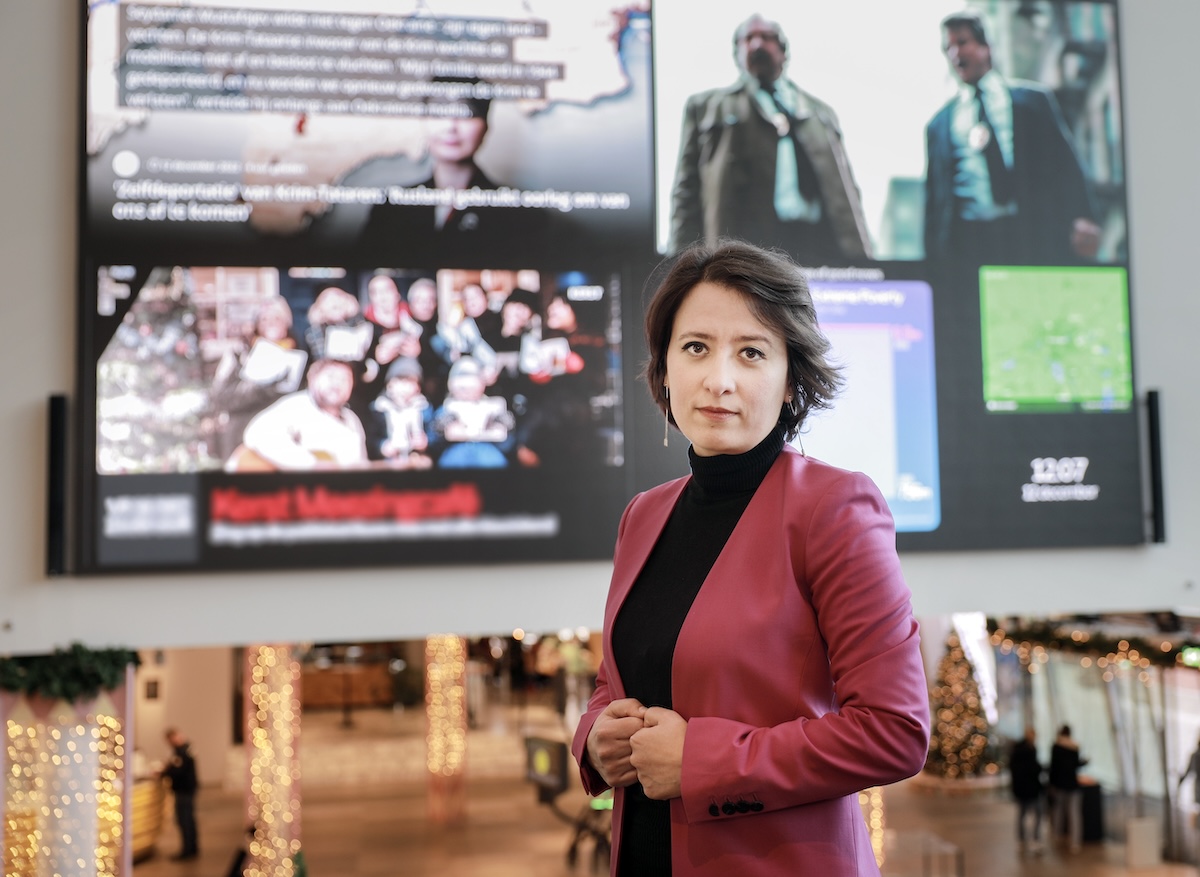
Lisa Gaufman conducts research on Russian discourse and politics. Photo © Henk Veenstra
In his article for the German Institute for International and Security Affairs, Aldo Kleemann cites the labeling of controversial or false content as a more effective method—for example, adding warnings or context to news items.
Learning from history: fighting for visibility
In times of crisis, marginalized groups are often made scapegoats, says historian Evans, and when marginalized groups have gained certain rights, there has often been a kind of backlash.
“A good example of this is Magnus Hirschfeld, who almost succeeded in repealing Paragraph 175 in the 1920s. At that time, there was incredible public visibility of transsexuality in Berlin and a vibrant queer press. And it was precisely at this moment that other people tried to undermine these achievements.”
It is important to learn from these patterns today. That is precisely why it is worth looking at resistance in the past: Evans cites the Homosexual Interest Group Berlin (HIB) as a positive example, which organized meetings and parties in East Berlin in the 1970s and also included trans people in its work. Despite state repression and ideological differences within the groups, an intersectional platform for queer life emerged here, which later gave rise to the “Sonntags-Club” (Sunday Club), which is still active today. “This was very different from West Germany, where there were very few trans counseling centers and these were completely outside the gay movement,” says Evans.
Even today, queer archives and institutions increasingly have to fear for their existence, as the example of Berlin shows: SchwuZ, Berlin’s largest queer club since the 1970s, is insolvent. The aforementioned Sonntags-Club is threatened by cuts from the Senate administration, and the Gay Museum is also affected by the Senate’s austerity measures. “The institutions that protect queer histories are on the brink. So we have to find ways to support them,” says Evans. It is not enough to keep these stories alive in archives: “We also have to bring queer and trans stories into classrooms and everyday museums so that people can see that they are a very essential part of our history.”
Read more articles from the Issue
Nothing Found
Criminalized and Invisible: The Long Fight of Queer Ukrainians
Conversion Practices in Germany: Violence in the Name of God
Valentyna Salon: Beauty Practices of the Ukrainian Queer Community
“There is a lot of shame in our community”

How Ukraine’s Queer Artists and Activists are Safeguarding LGBTQIA+ Memory in Wartime

Eastern Queerope Belarus: Stories of Resistance, Repression, and Cultural Renewal

Homophobia at the Core of Putinism’s Ideology
Strange Embrace: Paradoxes of Homosexual Desire in the Third Reich
Beauty as a Shelter: Ukrainian Women Rebuild Their Lives in Bucharest’s Salons

Angels from the East

Passing the Paintbrush: Historic Queer Jewish Artists in Berlin
Searching for Oneself at Random: How LGBTQI+ Communities Emerged in the Donetsk Region, 1991-2014

“I Have Nothing to Hide”

When We Stopped Hating Ourselves: Gay Life Under Persecution In Poland And Germany

How Queer Soldiers Shape Ukraine’s Defense And Future

Unsafe in The Country of Origin

Queer Resistance in Ukraine: Between War and Disinformation

No Safe Place

“A Place You Can Always Come To”: Shaping Polish Diasporic Queer Communities in Germany
19th Century ‘Friendships’ to 90s Drag: Eastern Queerope Returns

Asylum Discourse: What Are “Safe” Countries of Origin for Queers?
Queer Fronts
Moving Stories: LGBTQIA+ Ukrainian Refugees
Beyond the Binary
Queer Rights and Marriage Equality Under War, Authoritarianism, and Democracy
Gaps in Remembrance – Queer Biographies during National Socialism
Queer and Trans People Have Always Been Here. These Are Their Stories
New Stories from Eastern Queerope
The Prisoners with the Pink Triangle
Queerly Beloved: Romani Resistance Through the Ages
Intertwined Queer Stories: First LGBTIQ+ Museum in Eastern Europe
“The Smaller the Settlement, the Greater the Influence of Religion”: Belarusian Trans Non-Binary Activist in Poland

Queer Holocaust Voices – the Price of Silence
Forgotten Stories of Eastern European Queer Heroes
“I Accept Myself with All My Features”: Ukrainian Queer Person and Her Identity in Catholic Poland
Belarusian on Bisexuality, Theatre and Emigration
Shelters, Help and Support: How Uzhhorod Became a New Home for Queer People
Diversity in Brandenburg: Queers Take a Stand
Being Yourself. How Kharkiv’s LGBTQI Community Fights for Their Rights