When We Stopped Hating Ourselves: Gay Life Under Persecution In Poland And Germany
This article was originally published in German on Tagesspiegel and in Polish on Oko.press

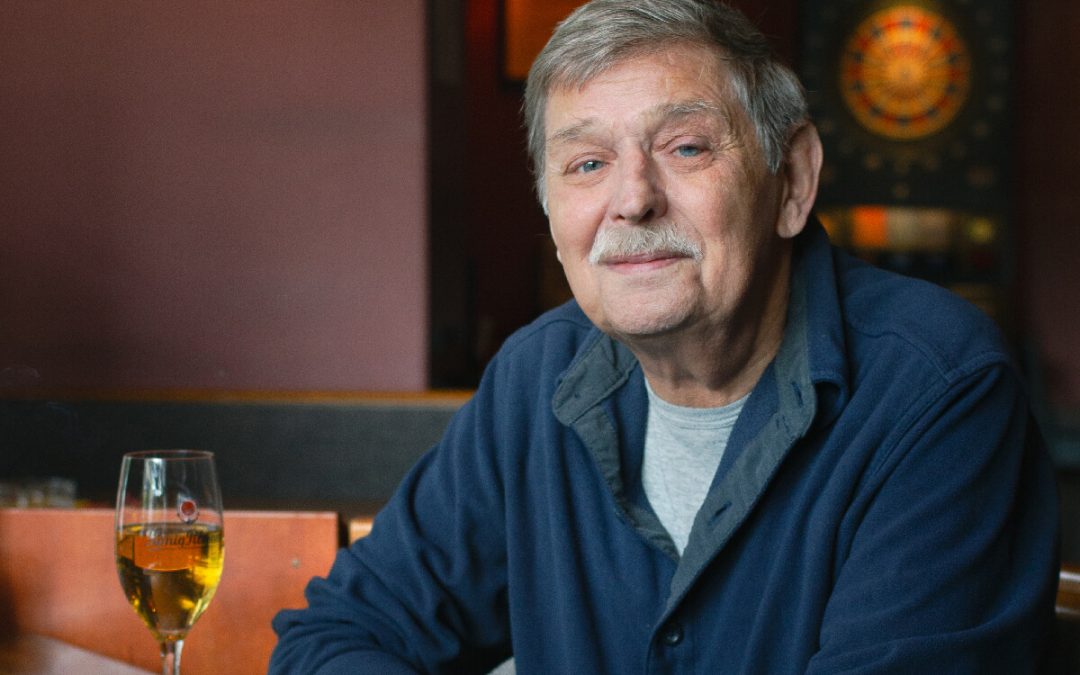
Wolfram Michaelis. Photo © Charlie Spiegelfeld
In both Poland and Germany, the visibility of LGBTQ+ people has always provoked opposition, both social and legal, because it deviated from the prevailing heterosexual norm. In Poland, however, homosexual relations were decriminalized as early as 1932, when they were removed from the criminal code. The law didn’t change after World War II. The decriminalization of same-sex relationships was a rarity and distinguished Poland from many countries, such as Romania, the USSR, or Great Britain, which systematically persecuted non-heterosexual people for decades. Yet tolerance in Poland seems to have existed only on paper.
In Germany, the history of persecution of homosexual men goes back a long way. For decades, same-sex relationships were punishable by law, stigmatized socially, and carried profound personal consequences. As early as 1871, Paragraph 175 was introduced into the criminal code of the German Empire. It made sexual acts between men a criminal offense. The paragraph remained in place during the Weimar Republic, even though the first tentative movements for the rights of homosexual people were emerging at that time.
With the Nazis’ rise to power, the situation worsened dramatically: from 1935 onwards, Paragraph 175 was significantly expanded. Even mere suspicion was enough to warrant criminal prosecution. Between 1933 and 1945, an estimated 100,000 men were arrested for their homosexuality, around 50,000 were convicted, and thousands were deported to concentration camps – many of them did not survive.
Although in Poland people were not imprisoned for “homosexuality,” even a suspicion was enough to smear someone in the press, – a common practice, for example, before World War II – to fire them from their job, or to blackmail them. After 1945, the security services also surveilled homosexual men, detained them for questioning, and attempted to intimidate them. They were often offered collaboration in exchange for “turning a blind eye” to their orientation. Although the law did not prescribe penalties, there were provisions regarding “indecent behavior” or “public morality,” which could be used against people who would today be described as LGBTQ+, and under which they could be imprisoned.
After 1945, Paragraph 175 remained in force in Germany – in West Germany even in the harsher version introduced by the Nazis.
Homosexual men continued to be treated as moral criminals—stigmatized, publicly exposed, and ruined both professionally and socially. Between 1945 and 1969, more than 50,000 men were convicted under Paragraph 175 in the Federal Republic of Germany. Paragraph 175 was only partially relaxed in 1969, reformed further in 1973, and not fully repealed until 1994.
The social ostracism extended far beyond criminal prosecution. Many men suffered throughout their lives from fear, shame, or isolation. Recognition of this injustice came late: it was only in 2002 that the Bundestag annulled Nazi-era convictions of homosexuals. Further rehabilitation and compensation for those convicted after 1945 followed from 2017 onwards.
Despite these political steps, the process of coming to terms with the past remains incomplete, and individual remembrance is often painful. Many victims have never spoken publicly about what was done to them. Their stories risk being forgotten. Yet their accounts provide insight into a chapter of German postwar history that is still far too little known.
By comparing the post-war history of Poland and Germany, we describe not only how state authorities tried to discipline and penalize non-heteronormative people, but we also give voice to some of them. Although our protagonists were separated by a border, their life stories are often surprisingly similar. They are connected not only by attempts to avoid oppression, but above all by the desire to live on their own terms and by the drive to organize and resist oppression.
Four stories from not-so-distant times
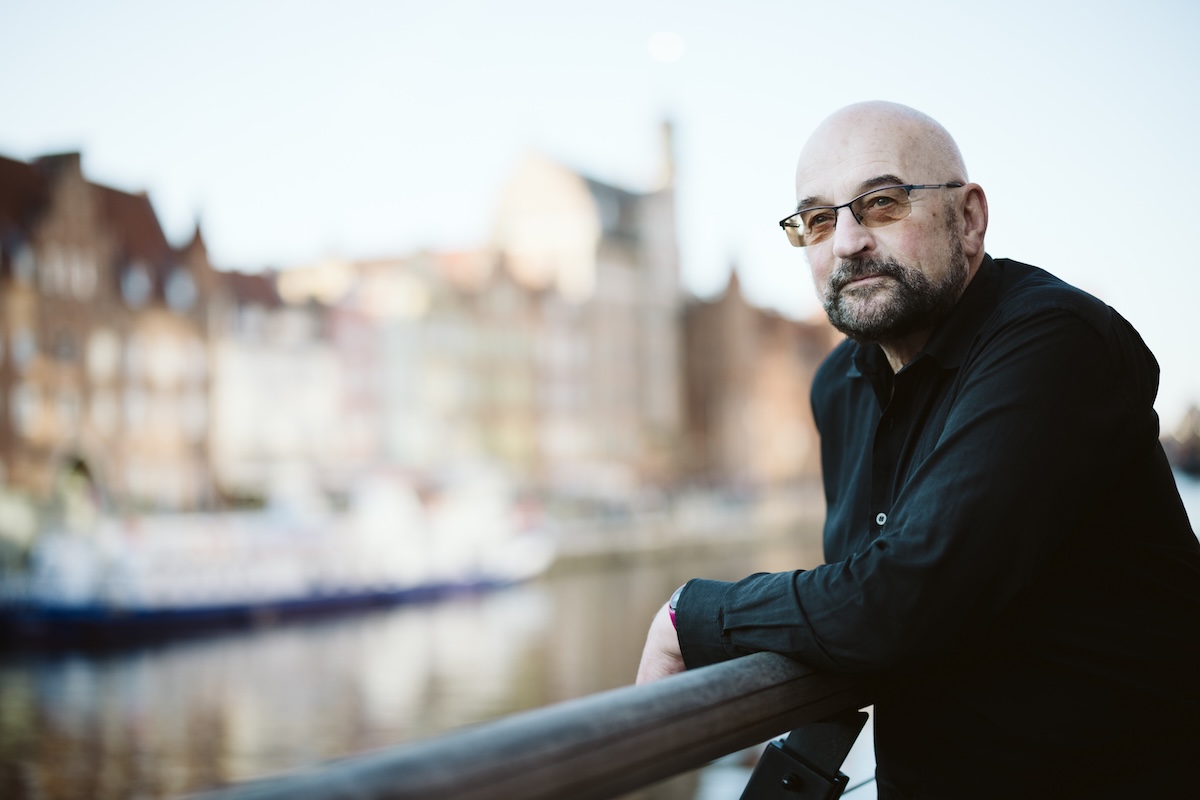
Photo © Martyna Niećko
Ryszard Kisiel, born 1948, Gdańsk
For as long as I can remember, I liked boys, but I didn’t know the word “homosexual” – let alone “gay”. With friends we spoke about ourselves conspiratorially – as “girlfriends.”
One time, I came across a little book – if I recall correctly, an educational one – and found a chapter about “homosexuals.” Everything suddenly became clear to me.I was very green in “those” matters. When I started studying I read in a criminology textbook that the Citizens’ Militia kept records of homosexuals and that there were special meeting places – public toilets and train stations. I had no idea where such places were in the capital. I started looking for them on my own, even though the book noted that they were monitored by the authorities.
I cruised at random. Sometimes I’d hit on a gay guy, sometimes a straight one. Later, on a nudist beach in Gdańsk, I met a boy who introduced me to the Baltic gay world. We mostly met in an all-night public urinal in one of the parks, or at the Monopol Hotel.
Gay life in the People’s Republic of Poland had its own peculiarities. Housing was a problem – if you wanted to have proper sex in a bed, you had to pick up an older man with his own place. It could also be dangerous. There were the “thugs” who attacked and beat people. You’d hear about murders. That’s why we invented ways to protect ourselves. Someone would leave a message, someone else would write down a boy’s details and pass them along. We also recommended men we knew were safe and interested in sex.
On November 15, 1985, at 6:00 a.m., the militia knocked on my door. Someone must have denounced me as gay! They took my address book. They said: “Let’s go.” No reason was given. At the police station, while waiting for questioning, I overheard the commander on the phone. He said he was busy with Operation Hyacinth.
Eventually, they took my fingerprints and photographed me like a criminal. They released me the same day, fairly quickly, because I had to open the copy shop where I worked. But right away I called my gay friends, asking them to warn others.
When the emotions subsided, I decided that since the Citizens’ Militia had done my coming out for me, there was no point in hiding my orientation anymore.
In a way, Operation Hyacinth triggered the explosion of my homosexuality. I talk about it with Karol Radziszewski in the film Kisieland. It was precisely in late 1985 and early 1986 that I began working on my artistic project of erotic slides. I photographed myself with my boyfriend at the time, Waldek. We posed nude, staged sexual encounters, dressed up.
I figured that since they hadn’t put me in prison, they had nothing on me. That’s why I also decided to act for others. I realized the greatest threat was AIDS. I prepared a leaflet about safe sex and mailed it to friends all over the country. Friends passed the text to their friends, and that’s how we built a network of contacts.
I knew that printing fewer than 100 copies was not subject to censorship, so I could operate legally. That was the beginning of Filo. The magazine was meant to inform, educate, integrate – I wrote about culture, films, gave legal advice, but there were also frank articles about sex. People sent letters, ordered subscriptions. I felt what I was doing was needed. The circle kept growing. I met, among others, Andrzej Selerowicz, who was also actively working for the integration of gay men.
Today, looking back, I see that Hyacinth paradoxically brought us gays together. I wanted Filo to give people a sense of community, so we wouldn’t be alone. Back then, many lived a double life – a “fag” at night, a Catholic by day. What I cared about was that we stop hating ourselves.
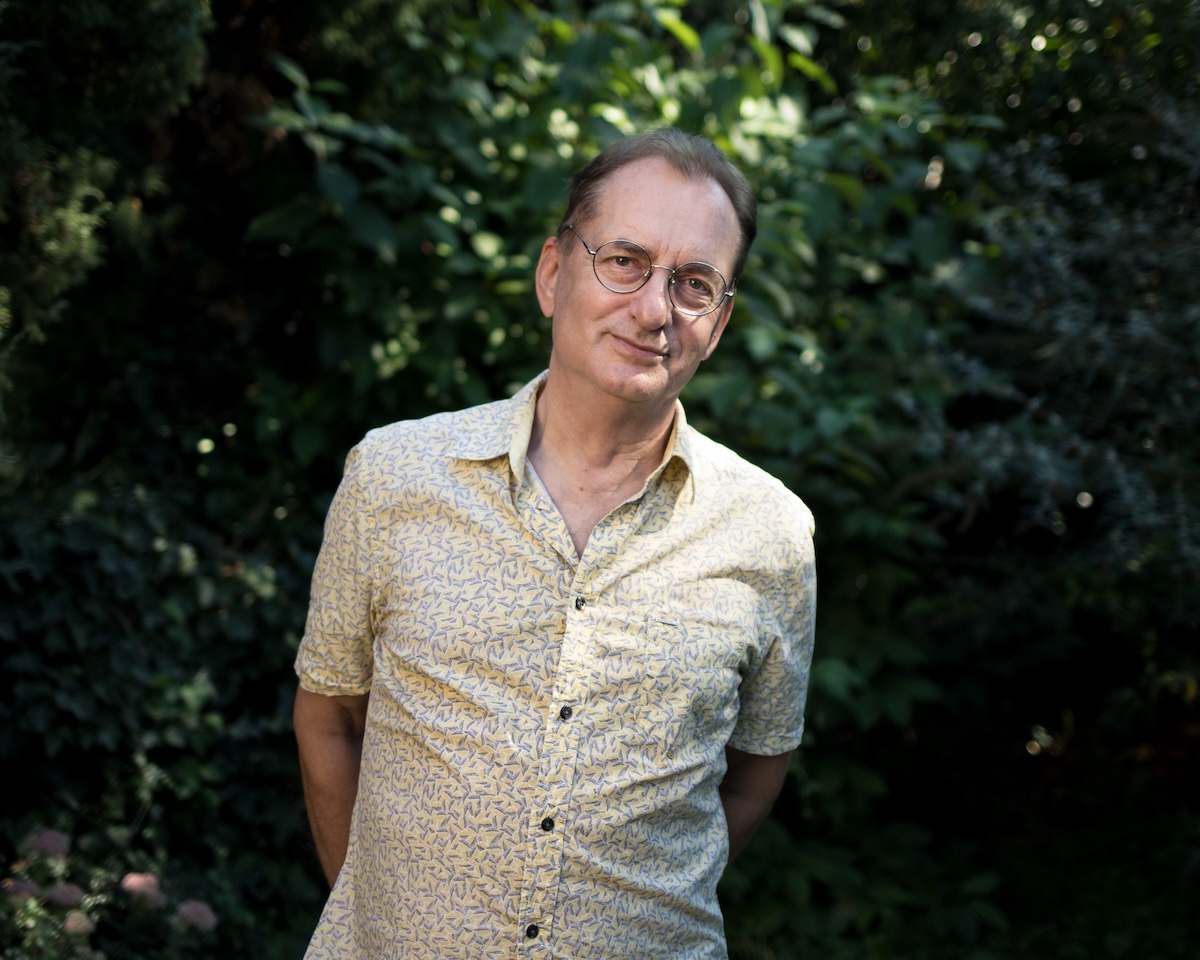
Photo © Hihi Kalisiak
Leszek Truchliński, born 1956, Wrocław
For me, being homosexual was nothing special. Just one of the orientations. I wasn’t drawn to “cruising spots.” Public toilets disgusted me. I met my first partner, Witek, in adulthood. We were introduced by a mutual friend. Witek invited me to a party at his place. We slept together for the first time that night, after the other guests had left.
Instead of the “official” meeting spots of Wrocław homosexuals, I preferred artistic circles. I remember instinctively gravitating toward them from a very young age. I felt safe and free there. I even belonged to the Association of Amateur Artists. I painted. I also made earrings, which I sold to support myself until the 1990s.
One time, two girls, Ewa and “Judy,” came up to my stall. They had bet on whether I was gay – and of them lost! That was the first lesbian couple I met. We quickly bonded. That’s how I entered the lesbian community. We organized candlelit gatherings with refined music, drank wine – the atmosphere was what mattered. I was the token gay man!
“Judy” had contacts in the West, where she got queer press. Together with Ewa, she translated various articles for me. I educated myself. That’s when I first came across the word “gay.”
Once I heard a radio program about homosexuals. Something nudged me, and I wrote a letter to the editors. I don’t remember the details, but it must have been polemical. After a while, I received a single envelope containing letters from gay men all over Poland. The media – newspapers too – started redirecting correspondence from queer people to me. To this day I don’t know how it worked. Still – I replied.
Although I received many letters, I never thought of organizing an association. Under communism we couldn’t legally form groups. But those voices from gay men made me realize there were many of us, that we weren’t alone. They wrote with gratitude and relief, sharing their daily struggles – as if confiding in a friend.
The breakthrough came in 1985. I read the article We Are Different by Krzysztof Darski. When I met the author, he told me about Andrzej Selerowicz and the Vienna-based organization HOSI Wien. They were looking for queer people in Poland willing to work for what we’d now call the LGBTQ+ community. I immediately thought of my pen pals. I myself was ready to get involved. Soon, Selerowicz came to see me as well. He explained how things worked in the West. He inspired me.
That’s how ETAP, the first informal LGBT organization in Poland, was born.
People interested in working with ETAP were directed to me by Selerowicz, who already had many contacts in Poland. We met once a month, but purely socially. We spent time together, talking about current issues. We traveled around the country. Exchanged news. Everything was spontaneous! ETAP had no status, no organizational framework.
We needed each other. That’s how we resisted the regime and social rejection. We had no models to follow.
I learned about Hyacinth in 1986. The militia took my details and brought me to the station. I remember being mocked, ridiculed. Treated like a deviant. When they took my fingerprints, I felt like a criminal.
But I knew I had people behind me, other gays who would stand up for me. At the end of the interrogation, they offered me collaboration – as an informant. I said: “No!”
We kept going. A few years later, Selerowicz sent us Ryszard Ziobro, who in the early 1990s ultimately took over ETAP. He started running the organization his own way. Formal association structures appeared. I was just a regular guy, selling things on the street. Ziobro had a university education, experience. I didn’t feel connected to his vision. Besides, I was busy working, I had a steady partner. I cheered ETAP on from the sidelines.
When in 2014 the Equality Culture Association began operating in Wrocław, I followed their work with great interest. But I didn’t have the courage to join. I was moved when, many years later, I was invited to take part in a seniors’ group. They called it ETAP 2. I accepted the invitation.
History came full circle.
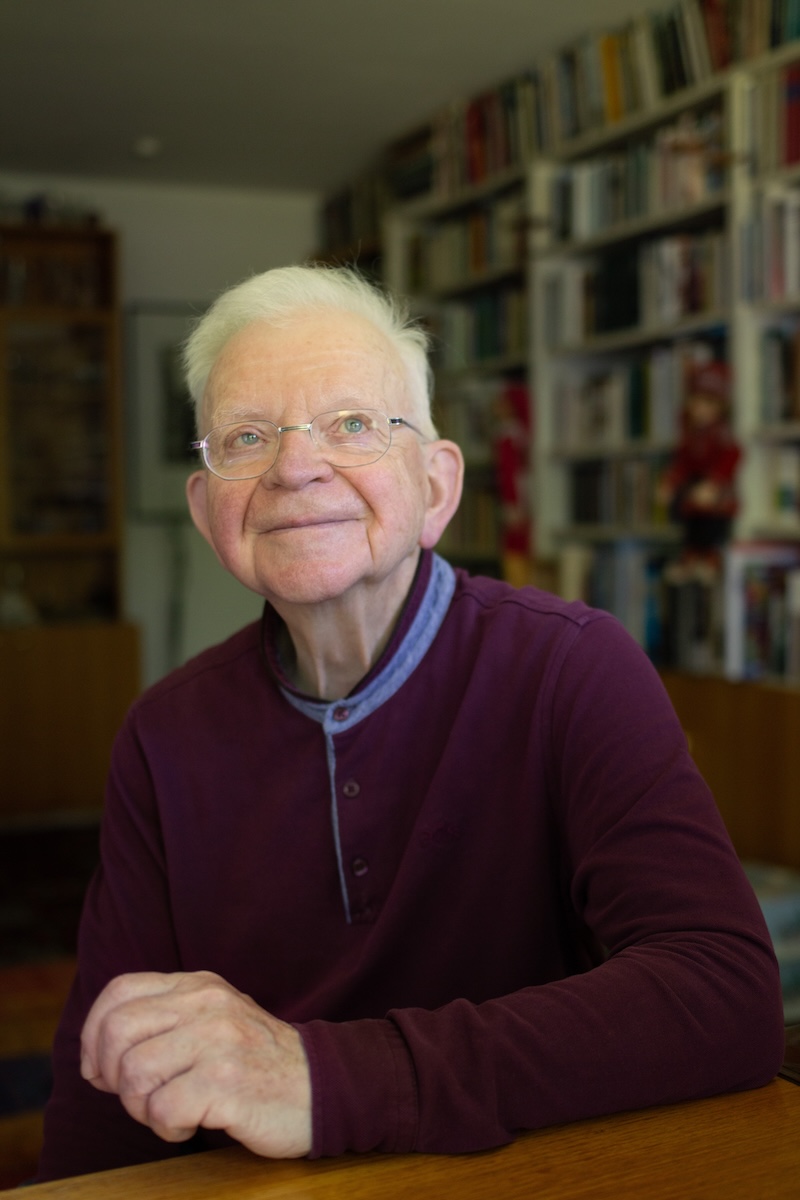
Photo © Charlie Spiegelfeld
Gottfried Lorenz, born 1940, Niederschlesien (GDR)
For a long time, I was afraid of being outed as gay against my will. Gay sex was illegal, so I held back my whole life. And even after it was no longer a criminal offense, society still rejected it. I never felt comfortable in gay bars. Instead, I went to parks, cruising spots, and porn theaters to meet men. Sometimes to have sex.
Once, I was blackmailed there. A man demanded money and threatened to expose my sexual orientation. I decided to go to the police. I wasn’t convicted, but I probably ended up on a ‘pink list’ that the authorities used back then to register gay men. And so the police outed me to my family.
Early on, I knew I would never enter into a sham marriage with a woman. So I focused on my work and kept a low profile. I didn’t have openly gay friends, but through magazines and contacts abroad I learned that many other men felt just the same way I did. I knew I wasn’t alone. Still, I couldn’t escape the situation – gay men were persecuted everywhere. Things weren’t any better in our neighboring countries.
When I was 29 years old, the first reform of Paragraph 175 took place. From then on, gay sex was no longer completely prohibited. Socially, little changed, but for me the reform was a milestone. After that, the paragraph hardly played a role in my life. When I think about my past, I realize how resilient I was. Instead of self-doubt and shame, I accepted myself for who I am.
The compensation that can now be claimed is, in my opinion, purely symbolic. What has happened cannot be undone. It is important to be vigilant. Even today, queer people are once again coming under increased pressure. Prejudice and exclusion are being propagated once more. That is why I want the queer community to stick together, not to remain silent, and to take a firm stand against discrimination.
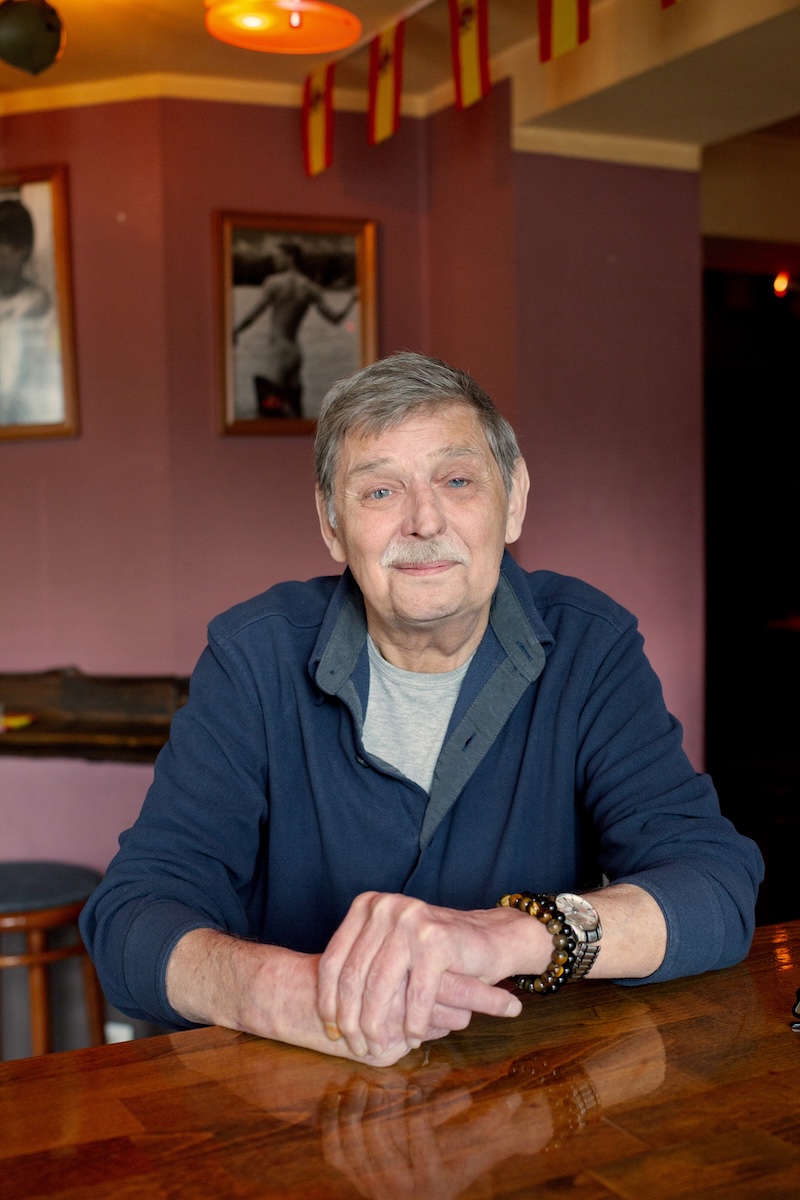
Photo © Charlie Spiegelfeld
Wolfram Michaelis, born 1950, Hamburg
Paragraph 175 used to be a taboo. Among gay men, people did not talk about it. Sex was forbidden, but that didn’t mean people refrained from it. At the age of 14, I was constantly going to gay bars, public toilets, or cruising parks. A certain fear was always there, but life was more important to me. I thought: if they catch me, then that is how it is. At least I had my fun.
Because of this, I had problems with the authorities very early on. To get into a gay bar back then, you always had to ring the bell and were only let in after being checked first. That way, during raids, the men still had time to move away from one another. Then the police could not prove anything. But since I was underage and already going out, I repeatedly ended up in juvenile detention.
At 17, I was sent to prison for the first time. The youth welfare office found out that I was living with a man in Berlin. During a visit to my mother in Hamburg, I was picked up and taken away. I no longer remember how long I was there. But I still remember very clearly that my cell had iron bars.
Afterwards, the authorities did not want me to move back in with my mother. They feared that I would once again spend time in gay bars. So after my release I had to go into a children’s home. There, the other boys stubbed out cigarettes on me and bullied me. Back then, it was still normal for children to be beaten as punishment. But when I misbehaved, I was not only beaten. The director of the home repeatedly assaulted me and sexually abused me.
Because of all these experiences, my relationship with the state today is distant. I want as little as possible to do with the authorities and was never able to rebuild trust. That is also why I decided not to apply for compensation. I do not want to deal once more with everything that happened to me. And since I receive basic welfare benefits, they would probably deduct the money from me anyway.
The Origins of Poland’s Queer Movement
“The everyday life of gay men in the People’s Republic of Poland involved the necessity of meeting in hiding — in public toilets, at train stations, in parks. These places, colloquially called ‘cruising spots,’ existed all over Europe and were not born out of a love of risk but rather out of a lack of other options,” explains Krzysztof Kliszczyński, director of QueerMuzeum in Warsaw. “In Poland, informal codes also functioned — for example, direct eye contact, smiles, in-group slang, and certain spaces like cafés. However, using these places required courage, because knowledge of them was widespread — which meant that one could more easily be recognized, stigmatized, or exposed to violence.”
This ‘gray zone’ carried very real dangers: assaults, robberies, and even murders. The militia knew perfectly well where the non-heteronormative community gathered. Sometimes it monitored them, sometimes it persecuted them, and at times its officers even took part in those meetings, since homosexual men were also present within the security services.
“Gay men were commonly referred to as ‘deviants’ or ‘sexual perverts.’ Under no circumstances did I want to be called that,” recalls Andrzej Selerowicz, born in 1948, later an activist for gay and lesbian rights in Central Europe. “I also didn’t want my parents to be disappointed in me. I was supposed to be a ‘normal,’ ‘healthy’ boy. That’s why I delayed my coming out as long as I possibly could.”
Ewa Majewska, professor of the humanities at SWPS University and head of the research project Public Against Their Will: Subject Formation in the Archives of Operation Hyacinth (funded by the National Science Centre), found in the archives of the Institute of National Remembrance (IPN) many materials from the 1950s and 1960s that reveal the language used by PRL institutions in reference to non-heteronormative people, as well as by civilians who collaborated with the security apparatus.
“What struck me most were the reports written by people who informed on their acquaintances or friends. They pretended closeness, and then wrote denunciations filled with contempt and hatred toward non-heterosexual individuals. At the same time, it is worth noting that this was the language of the informants, not always of the authorities themselves. Paradoxically, the official language of the militia sometimes appeared milder than that of the citizens,” the scholar explains.
Majewska’s research shows that it was only in the 1970s that the Polish authorities officially attempted to gather information about non-heteronormative people. Operation ‘Heather’ (the term ‘operation’ is used here because, as Majewska notes, it is “a technical designation employed in militia and police jargon, referring directly to actions carried out by the militia and the secret police”) was conducted between 1973 and 1975 (a second phase most likely never took place).
The operation targeted—in the words of the documents—“homosexuals, alcoholics, drug addicts, and prostitutes.” Neither homosexuality nor prostitution was illegal in Poland. The law prohibited profiting from another person’s sex work, but prostitution itself was not penalized. Nevertheless, militia documents introduced the notion of “homosexual prostitution,” portrayed as something illegal, dangerous, and crime-generating.
“This shows how the security apparatus constructed the idea of a ‘threat’—to a large extent based on fantasies and stereotypes,” the scholar concludes.
In Operation ‘Heather’, the prevailing mindset was one of pathologization. The authorities decided who was allowed to live freely and who should be locked away.
Homosexuality was placed alongside alcoholism and drug addiction—phenomena treated as social deviations that required repression.
Around the mid-1970s, Andrzej Selerowicz emigrated to Vienna in search of a better life.
Austria did not offer full freedom. Homosexuality was still punishable there. Nevertheless, Selerowicz quickly established contact with the underground organization for the non-heteronormative community, Homosexual Initiative in Vienna (HOSI Wien). In everyday life, however, he worked as a sales representative for Eastern Bloc countries. This gave him the freedom to travel and a network of contacts that would later prove invaluable.
In 1979, Andrzej met John Clark from Chicago in Vienna, with whom he is still together today. He fell in love and, as he himself says, wanted “other gay men to be just as lucky.” That was the motivation for him to become involved in supporting gay men in Poland.
As early as the beginning of the 1980s, Andrzej engaged in the creation of the Eastern Europe Information Point—an initiative that documented the situation of non-heteronormative people behind the Iron Curtain.
In 1983, his first bulletin was published—still untitled, simply called Letter No. 1 (later renamed Biuletyn and eventually transformed into Etap). This marked the beginning of the network Selerowicz began to build. The recipients—initially just a few dozen people across Poland—responded, passed the bulletin along, and shared contacts. Thus, an informal community was born.
Like any letter, Andrzej opened each new edition with the words: “Dear friend…” or “My dear…”. He wrote with care to his compatriots who were “stuck” behind the Iron Curtain.
“At first, gay men didn’t necessarily want to unite. It was nice to meet, have coffee, go to bed together—but to protest?”, adds Kliszczyński. He talks about male movement because lesbians joined in more significantly in the 1990s.
Over time, however, Andrzej Selerowicz, settled in the West but regularly returning to Poland, became living proof that one could fight for space for oneself. He gave people hope and courage.
It was no coincidence that Operation ‘Hyacinth’ shook the then LGBT community. Similar to ‘Heather’, the security apparatus defined homosexual people as physically and morally weak, susceptible to temptations, and vulnerable to crime.
“They were portrayed as the opposite of the healthy, strong, heterosexual man,” adds Ewa Majewska.
The documents from Operation “Hyacinth” cover the years 1985, 1986, and 1987, with some traces of activity still visible in 1988. The activities themselves lasted a maximum of 42 hours. This compression of time, as the scholar recalls, caused enormous intensity: in a very short period, hundreds of people were summoned for questioning, which triggered panic within the community. People called each other, asking whether they had “also been at the militia station.”
In contrast to Operation ‘Heather’, the documents from 1985 are written in a different language: gay men were separated from “pathologies” and became the subject of distinct surveillance. Alcoholics were dealt with by the Ministry of Labor and anti-alcohol funds, drug users by the health service, but homosexuality remained solely in the hands of the police.
“‘Hyacinth’ was a form of discipline. A difference also emerges between an ‘ordinary citizen’ and a homosexual person. During the operation, the state could suddenly come to the latter’s home, take them to the police station, and question them about their intimate life, their partners, their acquaintances,” explains Ewa Majewska.
The documents contain no evidence of murders, although there were likely cases of suicides and other forms of self-harm caused by trauma. People warned each other, called friends, but also feared that something resembling a Holocaust was approaching. This shows the scale of fear, though it does not justify simplistic comparisons.
The most serious consequence of ‘Hyacinth’ was not the interrogations themselves or the lists of gay men (Majewska mentions 11,000 names, not full personal files, as is probably mistakenly believed) known to the militia, but the fact that along with the documentation, a massive dose of stereotypical, harmful notions about homosexual people entered the state apparatus and society. Ideas such as the belief that “gay men have weak souls, vulnerable to evil,” while heterosexual men were supposedly resistant. Even though crime is overwhelmingly heterosexual.
Sometimes police officers even tried to apologize for the absurdity of their questions. But more often, homophobia and contempt dominated, and the very framework of “Hyacinth” enabled blackmail: “We’ll reveal your true identity to your wife, your family, your boss.” It was a method of breaking and humiliating people, not enforcing the law.
Gay men had no real means of defense. In theory, they could file complaints, but most were not out and paid for relative peace with silence, the scholar comments.
“Hyacinth” effectively produced an atmosphere of silence. But it also spurred attempts at organizing among gay men right after the first operation. At that time, Andrzej Selerowicz came to Poland to meet with the people with whom he had been corresponding.
“In my quarterly Bulletin, I presented my vision. I didn’t want gay men to exchange contacts only for sexual purposes, but to unite and spend time together. There is strength in unity!” recalls Selerowicz.
Krzysztof Kliszczyński notes that an equally groundbreaking moment was the article We Are Different by Dariusz Prorok, published in Polityka in 1985, which for the first time in the official press spoke about homosexual people. It called on the authorities to allow non-heterosexual people to organize in the face of the AIDS epidemic. This sparked discussion and revitalized connections.
The first attempts to organize a movement also began. Its shape looked as follows: in Wrocław, ETAP (a magazine and informal gay-lesbian group) operated under the leadership of Leszek Truchliński; in Gdańsk, Ryszard Kisiel published the magazine Filo; and in the capital, the Warsaw Homosexual Movement was founded, which by the late 1980s even attempted to register officially (blocked by the authorities). Meanwhile, in Łódź in December 1989, Kabaret appeared—the first legally published queer magazine in Poland, sold openly at newsstands.
Undoubtedly, the first seeds of the LGBTQ+ community as we know it today, which emerged at the end of the PRL era, were a positive consequence of Operation “Hyacinth.”
At the same time, Ewa Majewska points out that a Solidarność activist could say: “I’m imprisoned for the homeland.” His suffering carried political and ideological meaning. Gay men, detained for several hours at a police station, experienced blackmail, humiliation, and shame. For many of them, this was a trauma just as severe as long-term imprisonment, because it destroyed their identity and sense of self-worth.
“During my research, I discovered that almost all provincial police headquarters still possess documents collected during all three operations. They continue to use them, which is how they justify their refusal to make them available to me and to others studying this matter,” the scholar adds.
The Origins of Germany’s Queer Movement
“Denunciations by landlords, neighbors, or family members played a role in criminal prosecution,” says Michael Schwartz from the Institute for Contemporary History. At that time, the authorities kept so-called pink lists on which suspects were registered. “The police data collection enabled quick access to those affected in future investigations,” says Schwartz. If charges were later brought, any previous records that had already been collected could be used to increase the severity of the punishment. The mere existence of these lists created a climate of fear and silence.
Karl Heinrich Ulrich is not particularly well known, but he is considered the “forefather of the later lesbian and gay movement.” As early as 1864, the German lawyer published writings in which he called for the establishment of a gay association and same-sex marriage. A few years later, in 1867, he called for the abolition of all homophobic laws at the German Lawyers’ Conference in Munich. Due to the commotion during his speech, he was forced to interrupt his presentation.
Four years later, however, the infamous Paragraph 175 was incorporated into the German Criminal Code with the founding of the German Empire. In 1897, with the founding of the Scientific-Humanitarian Committee by Jewish physician and sexologist Magnus Hirschfeld, Germany’s first gay emancipation movement began. In 1919, Hirschfeld founded the world’s first institution for sex research and campaigned for the abolition of homophobic laws.
Hirschfeld’s efforts and progress were destroyed by the rise of the Nazis. During the Nazi regime, the Berlin sex researcher was considered an enemy because of his commitment to the gay rights movement. After seizing power in May 1933, the Nazis stormed Hirschfeld’s institute in Berlin. Hirschfeld was traveling around the world at the time and never returned.
Even long after the end of World War II, gay sex remained a criminal offense in Germany. The notorious Section 175 of the Criminal Code was drastically tightened by the Nazis in 1935. Instead of abolishing this version after 1945, the Federal Republic adopted the stricter version. “Many politicians and lawyers were of the opinion that Paragraph 175 did not contain any specific Nazi injustice and could therefore be retained and even had to be retained,” says Michael Schwartz.
In the GDR, the decision was made as early as 1950/51 not to retain the Nazi version of the paragraph.
Instead, gay men were prosecuted under the old Weimar version of the paragraph. “However, this did not apply to the Nazi version of the additional paragraph 175a,” says Schwartz. According to this, sex with men under the age of 21 continued to be criminalized, as it had been under the Nazis. In 1968, one year before the Federal Republic, homosexual acts between adults were legalized, but “seduction of minors” remained a criminal offense.
The way German cities approached criminal prosecution varied greatly in some cases. In Hamburg, the district office issued dancing bans to deprive gay bars of their economic basis, and the police issued toilet bans to prevent gay men from cruising. In addition, spy mirrors were installed in public toilets, i.e., mirrored windows behind which police officers sat to monitor men and catch them having sex. “On the other hand, the sentences in Hamburg and West Berlin were often more lenient than elsewhere,” says Michael Schwartz.
The consequences of this injustice were severe. Many men lost their jobs, their families, or their homes as a result of investigations. Some took their own lives under the pressure of police interrogations and social ostracism. Legal recourse was virtually impossible: those who fought back risked further humiliation. Silence seemed safer, and it was particularly difficult to develop a confident gay identity.
Nevertheless, gay men also joined forces back then. “Persecution under the law intensified the formation of a gay movement,” says Schwartz. In many German cities, a scene developed with its own bars, porn cinemas, and other meeting places. “Berlin was always an important center, joined by cities such as Frankfurt, Hamburg, Cologne, and Leipzig in the GDR. Since the 1970s, many smaller university towns have also become important,” says Schwartz.
In 1969, the Social Democratic government restricted Section 175: same-sex acts between adults over the age of 21 were decriminalized. However, this did not end the social exclusion of gay men, which is why many gay men joined forces in the wake of the student movement at that time. Many groups formed throughout Germany after the screening of Rosa von Praunheim’s much-discussed film “It is not the homosexual who is perverse, but the situation in which he lives.” In 1972, the first Pride demonstration took place in Münster, with many more to follow.
As in Poland, state repression led to solidarity in the Federal Republic of Germany. The experience of injustice created an awareness of common resistance and became an important driving force behind the emerging queer movement. At the same time, the trauma of Section 175 remained: between 1945 and the 1969 reform, an estimated 50,000 men were convicted—a legacy that left deep scars on the lives of individuals and the community.
Read more articles from the Issue
Nothing Found
Criminalized and Invisible: The Long Fight of Queer Ukrainians
Conversion Practices in Germany: Violence in the Name of God
Valentyna Salon: Beauty Practices of the Ukrainian Queer Community
“There is a lot of shame in our community”
How Ukraine’s Queer Artists and Activists are Safeguarding LGBTQIA+ Memory in Wartime

Eastern Queerope Belarus: Stories of Resistance, Repression, and Cultural Renewal

Homophobia at the Core of Putinism’s Ideology
Strange Embrace: Paradoxes of Homosexual Desire in the Third Reich
Beauty as a Shelter: Ukrainian Women Rebuild Their Lives in Bucharest’s Salons

Angels from the East

Passing the Paintbrush: Historic Queer Jewish Artists in Berlin
Searching for Oneself at Random: How LGBTQI+ Communities Emerged in the Donetsk Region, 1991-2014

“I Have Nothing to Hide”

How Queer Soldiers Shape Ukraine’s Defense And Future

Unsafe in The Country of Origin

The Bible, Putin, AfD: Four Misanthropic Myths to Abandon

Queer Resistance in Ukraine: Between War and Disinformation

No Safe Place

“A Place You Can Always Come To”: Shaping Polish Diasporic Queer Communities in Germany
19th Century ‘Friendships’ to 90s Drag: Eastern Queerope Returns

Asylum Discourse: What Are “Safe” Countries of Origin for Queers?
Queer Fronts
Moving Stories: LGBTQIA+ Ukrainian Refugees
Beyond the Binary
Queer Rights and Marriage Equality Under War, Authoritarianism, and Democracy
Gaps in Remembrance – Queer Biographies during National Socialism
Queer and Trans People Have Always Been Here. These Are Their Stories
New Stories from Eastern Queerope
The Prisoners with the Pink Triangle
Queerly Beloved: Romani Resistance Through the Ages
Intertwined Queer Stories: First LGBTIQ+ Museum in Eastern Europe
“The Smaller the Settlement, the Greater the Influence of Religion”: Belarusian Trans Non-Binary Activist in Poland
Queer Holocaust Voices – the Price of Silence

Forgotten Stories of Eastern European Queer Heroes
“I Accept Myself with All My Features”: Ukrainian Queer Person and Her Identity in Catholic Poland
Belarusian on Bisexuality, Theatre and Emigration
Shelters, Help and Support: How Uzhhorod Became a New Home for Queer People
Diversity in Brandenburg: Queers Take a Stand
Being Yourself. How Kharkiv’s LGBTQI Community Fights for Their Rights